

About this story
WHO's 1980 declaration in Geneva marked the world free of smallpox.
On 8 May 1980, delegates at the Thirty-third World Health Assembly in Geneva adopted resolution WHA33.3 and formally declared that smallpox had been eradicated worldwide. The statement, issued through the World Health Organization, marked the end of a long international campaign against a disease that had killed and scarred people for centuries. But the declaration did not rest on a single dramatic discovery. It came only after years of vaccination, case-finding, field investigation, and careful verification designed to answer a difficult question: how could health authorities be sure that transmission had truly stopped?
That question had shaped the final phase of the campaign. In 1966, the World Health Assembly had launched the Intensified Smallpox Eradication Programme under WHO. At first glance, the goal sounded straightforward: vaccinate enough people and the virus would lose its ability to spread. In practice, the task was uneven and complicated. Smallpox persisted in countries with limited health infrastructure, difficult transport conditions, and gaps in record-keeping. Outbreaks could appear in remote villages as well as crowded towns, and health officials needed to know not only where the disease had been, but where it might still be circulating unnoticed.
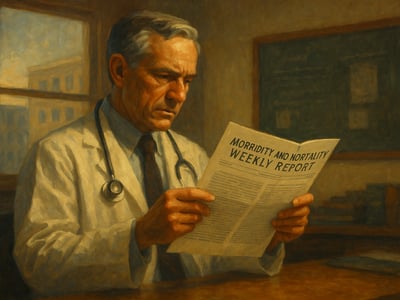
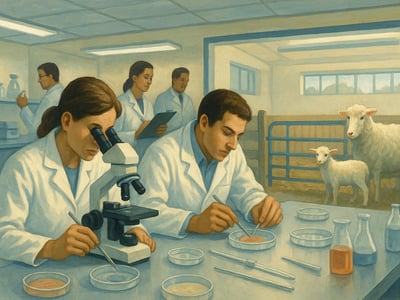
The program increasingly relied on more than broad vaccination alone. Over time, many teams shifted toward a strategy often described as surveillance and containment. Instead of trying to vaccinate entire populations at once in every setting, workers focused on rapid detection of cases, verification in the field, isolation where possible, and vaccination of contacts and surrounding communities. This demanded local reporting networks, trained investigators, and confidence that rumors of disease would be followed up rather than ignored. The work was administrative as much as medical: forms had to be filed, cases confirmed, chains of transmission traced, and absences documented.
Several figures became closely associated with this effort. D. A. Henderson directed the global program during its crucial years. Isao Arita played a central operational role within WHO. Frank Fenner later chaired the Global Commission for the Certification of Smallpox Eradication, the body that reviewed whether the evidence justified an official declaration. Yet the campaign was not only the work of prominent officials. It depended on national ministries, regional staff, vaccinators, laboratory personnel, and local informants who recognized symptoms and reported them.
By the mid-1970s, the map of endemic smallpox had narrowed sharply. On 16 October 1975, Rahima Banu in Bangladesh was recorded as the last known natural case of Variola major, the more severe form of the disease. That was an important milestone, but it was not the end of the story. Another form, Variola minor, still had to be tracked with the same care. Then, on 26 October 1977, Ali Maow Maalin in Merca, Somalia, developed what is recorded as the last known naturally acquired case of smallpox.
Even that did not immediately produce a declaration of victory. A single final case could not by itself prove worldwide eradication. Health authorities still had to show that no hidden chains of transmission remained. That required sustained surveillance after the apparent end of the disease in nature. Reports had to continue, suspicious cases had to be investigated, and countries had to demonstrate that systems were still capable of detecting smallpox if it reappeared. Declaring success too early would have risked missing undetected transmission or accepting incomplete reporting as proof.
This was the central tension of the final years: the closer the world came to eradication, the harder it became to prove. When disease is common, evidence of its presence is tragically visible. When disease disappears, the evidence is indirect. Officials had to rely on the quality of reporting networks, on field visits, on laboratory review, and on confidence that silence meant absence rather than failure to notice. In that sense, the campaign became a test of international trust and verification as much as of vaccination.
In December 1979, the Global Commission for the Certification of Smallpox Eradication signed its report concluding that smallpox had been eradicated. That report did not erase the caution of the previous years; it summarized it. The commission had examined national and regional evidence and concluded that transmission had ended. Only then did the matter move to the World Health Assembly, where member states could act on the commission's findings.
The declaration in Geneva in May 1980 therefore represented both a scientific and institutional conclusion. It confirmed that the world had not merely reduced smallpox or pushed it into retreat, but had ended naturally occurring transmission everywhere. For WHO and its member states, that was a rare kind of achievement: a global public-health outcome that depended on cooperation across borders, standardized reporting, and agreement on what counted as sufficient proof.
Why it still matters
The 1980 declaration remains a benchmark in the history of public health because it is the clearest documented case of a human infectious disease being eradicated through coordinated international action. It showed that vaccination campaigns are most effective when paired with surveillance systems capable of finding outbreaks quickly and with verification systems capable of judging the evidence carefully.
It also established a model for certification. The smallpox campaign did not end with optimistic claims; it ended with commissions, field review, and formal adoption by the World Health Assembly. That process continues to matter whenever health authorities discuss the difference between controlling a disease, eliminating it in a region, or eradicating it worldwide. The standards of proof became part of the legacy.
The story also shaped later policy in practical ways. It influenced thinking about vaccine supply, outbreak preparedness, reporting networks, and the control of remaining laboratory virus stocks. Even after eradication, questions remained about how to manage samples, maintain expertise, and prepare for the possibility of accidental or intentional release. In that sense, the declaration closed one chapter but did not end the administrative responsibilities created by success.
What happened on 8 May 1980 is often remembered as a triumph over a virus. Just as important, it was a demonstration that global health decisions require durable systems for evidence, verification, and coordination. Smallpox disappeared from natural transmission before the declaration was made. The assembly's act in Geneva mattered because it turned that hard-won conclusion into an official, shared fact accepted by the international community.
Timeline
- Intensified Smallpox Eradication Programme launched
- Last known natural variola major case in Bangladesh
- Last known naturally acquired smallpox case in Somalia
- Global Commission certifies smallpox eradication
- World Health Assembly declares smallpox eradicated
What you uncovered
Proving an Absence
You didn't just… complete a puzzle; you traced the moment when public health authorities decided the evidence was finally strong enough to say a disease was gone worldwide.
The 1980 declaration was not simply the endpoint of a vaccine campaign. It also depended on building enough surveillance, reporting, and verification to convince countries that no hidden chain of transmission remained. That made eradication an administrative and political achievement as much as a medical one, and it is why later disease-control efforts still rely so heavily on certification systems and field investigation.
In December 1979, the Global Commission for the Certification of Smallpox Eradication signed the report that concluded smallpox had been eradicated before the World Health Assembly adopted resolution WHA33.3 in May 1980.
FAQ
What did the World Health Assembly declare on 8 May 1980?
On 8 May 1980, the Thirty-third World Health Assembly adopted resolution WHA33.3 declaring the world free of smallpox. The declaration was made in Geneva through the World Health Organization.
Who were the last known people infected with naturally occurring smallpox?
The last known natural case of Variola major was Rahima Banu in Bangladesh on 16 October 1975. The last known naturally acquired case of smallpox was Ali Maow Maalin in Merca, Somalia, on 26 October 1977.
How was the end of smallpox transmission verified worldwide?
WHO relied on an international eradication program based on vaccination, case detection, surveillance, and verification. In December 1979, the Global Commission for the Certification of Smallpox Eradication signed its report concluding that smallpox had been eradicated.
When did WHO begin the intensified smallpox eradication program?
The World Health Assembly launched the Intensified Smallpox Eradication Programme in 1966 under the World Health Organization. That program continued until the disease was certified eradicated.