
About this story
8 May 1945 in Czechoslovakia as Germany’s surrender took effect
On 8 May 1945, the German surrender came into effect across Europe, and the date was marked in Czechoslovakia as the end of Nazi rule and the collapse of German military authority. Yet the moment was not as simple as a single hour on a clock. While the surrender created a formal end point for the war in Europe, armed conflict still continued in parts of former Czechoslovakia, most notably in Prague, where an uprising had already begun and fighting did not stop immediately.
The legal framework for that day had been set the previous morning. On 7 May 1945, at Supreme Headquarters Allied Expeditionary Force in Reims, France, Colonel General Alfred Jodl signed the German Instrument of Surrender. The terms fixed 8 May 1945 at 23:01 Central European Time as the moment when German armed forces were to cease operations. This gave the surrender a precise international timetable, but it also created a gap between the signing of the document and the reality faced by soldiers, local authorities, and civilians in places where front lines were still active.
That gap mattered greatly in Czechoslovakia. By early May, the war had already moved into its final phase there, but it had not fully ended. Bratislava had been liberated in April during the advance of Soviet forces into Slovak territory, and German control had been weakening. Even so, military units remained armed and mobile in various areas. Roads were crowded with retreating forces, local administrations were unstable, and civilians had to judge events from fragmentary information and rumor as much as from official announcements.
Prague was the clearest example of how formal surrender and local combat could run on different timelines. The Prague Uprising began on 5 May 1945, before the surrender took effect. Czech resistance forces, local fighters, and civilians confronted German units in a city that had become both a military and political flashpoint. Barricades were erected, communications were contested, and the immediate issue was no longer simply whether Germany had lost the war, but how authority would pass from one set of armed actors to another without destroying the city or causing even greater civilian loss.
As 8 May arrived, the larger diplomatic and military picture was still being completed. On that same day, Field Marshal Wilhelm Keitel signed a further ratification of Germany’s surrender in Berlin-Karlshorst before Soviet, American, British, and French representatives. That second ceremony reinforced the surrender’s authority among the Allied powers, but it did not instantly settle the practical questions confronting people in Czechoslovakia. Commanders on the ground still had to decide whether to withdraw, resist, negotiate, or wait for further orders. Local representatives had to make judgments under pressure, often with little certainty that all sides would obey the same chain of command.
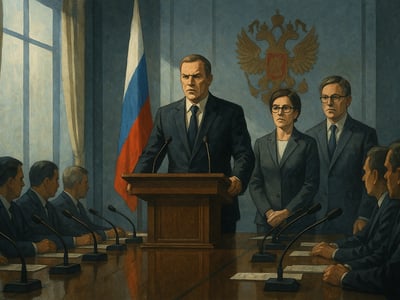
In Prague, those decisions became urgent. On 8 May, representatives of the Czech National Council and German command elements in the city concluded arrangements for German evacuation. This was a local attempt to translate the wider surrender into action on the streets. It showed that a signed international document did not by itself remove troops from a city, clear roads, or protect civilians sheltering from gunfire. Implementation depended on negotiation as well as force, and on whether units in contact with one another accepted that the war was truly ending.
That acceptance was uneven. Fighting in Prague continued after the general surrender timetable, and the city remained dangerous even as people elsewhere in Europe celebrated Victory in Europe Day. The persistence of combat was not a contradiction of the surrender so much as evidence of the disorderly way major wars often end. Units became separated from higher command, some attempted to move westward, some sought escape or better surrender conditions, and some continued to fight amid confusion. For civilians, the distinction between a legal end to the war and an actual end to danger could be painfully clear.
The wider military situation underlined the same point. Soviet forces of the 1st, 2nd, and 4th Ukrainian Fronts were conducting the Prague offensive from 6 to 11 May 1945, including operations in the territory of former Czechoslovakia. In other words, even after 8 May became the symbolic date of victory in Europe, military operations continued in Central Europe. The offensive and the uprising overlapped with the surrender process, making Czechoslovakia one of the places where the end of the war in Europe was both officially defined and still actively contested on the ground.
This is one reason 8 May has such a complex place in the history of Czechoslovakia and later Slovakia and the Czech Republic. It is a date of formal closure, but not of complete simultaneity. In Slovak territory, liberation had advanced through different places at different moments. In Prague, events moved according to the logic of urban uprising and final military operations. The public meaning later attached to 8 May brought these experiences together into a shared commemorative frame, but the lived chronology remained more uneven.
Why it still matters
The events of 8 May 1945 still matter because they show that the end of a war is rarely a single instant. International law can specify a ceasefire, governments can announce victory, and commemorations can settle on a date, but local realities often move more slowly. In Czechoslovakia, the surrender marked the collapse of German power, yet the last dangers did not disappear at once.
That difference helps explain why remembrance in Central Europe is tied both to 8 May and to local liberation dates. For many communities, the war ended not when documents were signed in Reims or ratified in Berlin-Karlshorst, but when shooting stopped in their own streets, when occupying forces withdrew, or when liberating armies arrived. These memories are not necessarily in conflict; they reflect different levels of the same historical process.
The date also remains important because it marks the end of occupation structures that had shaped life in Slovak and Czech lands during the war. Remembering 8 May is therefore not only about military surrender. It is also about the restoration of civic life, the reopening of public institutions, and the difficult beginning of a postwar order whose consequences would shape the region for decades.
Victory in Europe Day in Czechoslovakia was, then, both a moment of relief and a reminder that history does not always obey the neat boundaries of a calendar. The surrender that took effect on 8 May 1945 mattered immediately and decisively. But in Prague and elsewhere, its meaning had to be carried into reality by people navigating danger, uncertainty, and the final movements of a war that was ending, though not yet everywhere ended.
Timeline
- Prague Uprising begins
- Instrument of Surrender signed in Reims
- Germany surrender takes effect
- Ratification signed in Berlin-Karlshorst
- Prague offensive ends
What you uncovered
When the war ended unevenly
You didn't just complete a date puzzle—you traced a moment when formal surrender and lived reality in Czechoslovakia still did not fully match.
8 May 1945 became a powerful symbol because it offered a clear legal and commemorative endpoint to a war that ended far less neatly on the ground. In Czechoslovakia, the surrender documents mattered, but so did local command decisions, ongoing operations, and the conditions civilians faced in places where fighting had not yet stopped. That gap helps explain why remembrance, military chronology, and legal history can point to the same event while emphasizing different dates and meanings.
The surrender signed at Reims on 7 May 1945 set the ceasefire to take effect on 8 May at 23:01 Central European Time.
FAQ
What happened on 8 May 1945 in Europe?
The German Instrument of Surrender came into effect on 8 May 1945 at 23:01 Central European Time, formally ending the war in Europe. That date became Victory in Europe Day.
Who signed the German surrender documents in May 1945?
Colonel General Alfred Jodl signed the surrender at SHAEF headquarters in Reims on 7 May 1945. Field Marshal Wilhelm Keitel later signed a further ratification in Berlin-Karlshorst on 8 May 1945.
What was happening in Prague on 8 May 1945?
The Prague Uprising had begun on 5 May 1945, and fighting in the city continued after 8 May despite the surrender timetable. On that day, Czech National Council representatives and German command elements in Prague also arranged German evacuation from the city.
Why did fighting continue after Germany surrendered in 1945?
The surrender was a formal act, but German military units remained armed and active in some places when it took effect. In Czechoslovakia, that meant combat conditions still existed on the ground even after 8 May 1945.