

About this story
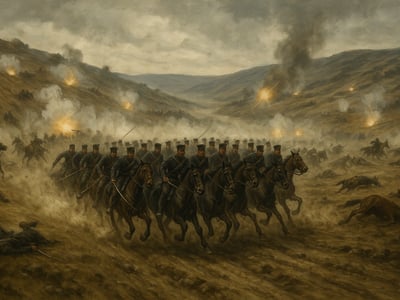
The Battle of Culloden, fought near Inverness, Scotland, on 16 April 1746.
On 16 April 1746, on Drummossie Moor near Culloden east of Inverness, the Battle of Culloden brought the Jacobite rising of 1745 to its decisive end. Jacobite forces fighting for Charles Edward Stuart met the British government army commanded by William Augustus, Duke of Cumberland. The battle lasted less than an hour, but its result was far larger than the brief fighting suggests: the main Jacobite field army was broken, and the political and administrative aftermath reshaped the Scottish Highlands.
Culloden did not come out of nowhere. The rising had begun the previous year, when Charles Edward Stuart landed in Scotland and gathered support, especially in parts of the Highlands. Jacobite forces won early successes and marched deep into Britain, reaching Derby in December 1745 before turning back. That retreat north changed the character of the campaign. What had briefly looked like a serious bid to restore the Stuart dynasty became a struggle to hold together an army under increasing pressure from government forces.
By the spring of 1746, the Jacobite position had grown more difficult. Supplies were strained, morale was uneven, and strategic choices had narrowed. Government troops, by contrast, had regrouped and advanced with stronger organization and resources. Cumberland's army moved north in a more disciplined and prepared condition, while Jacobite commanders faced the problem of how to fight with a force that had already been worn down by months of campaigning.
The hours before the battle were especially important. On the night before Culloden, the Jacobites attempted a march intended to disrupt Cumberland's force. It did not succeed. Men became exhausted, units were delayed or scattered, and many returned hungry and tired. That failed night action shaped the battle that followed. When the armies faced one another on 16 April, the Jacobites were in a weaker condition than they had hoped to be.
Leadership within the Jacobite camp also mattered. Charles Edward Stuart was present with the army, but military decisions involved experienced subordinates as well, including George Murray and Lord John Drummond. The choice to stand and fight on the moor has remained one of the central issues in accounts of Culloden. Drummossie Moor offered open, exposed ground that limited the Jacobites' best-known offensive method, the Highland charge. On terrain less favorable to speed and shock, their attack would have to cross ground under heavy fire before reaching the government line.
Cumberland's army was arranged in prepared formation. The government troops had artillery and infantry positioned to absorb and answer an assault. This mattered because the Jacobite army depended on breaking the enemy line quickly. If the charge faltered, the battle could turn against them very fast.
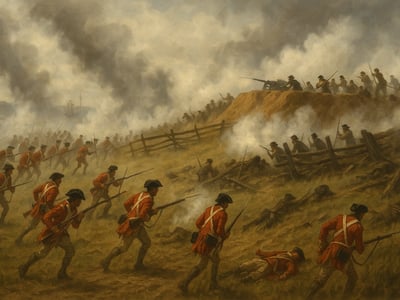
That is largely what happened. Once the action began, government artillery and musket fire hit the Jacobite lines as they advanced. Parts of the Jacobite front moved forward with determination, but the attack did not strike evenly across the field. Some units were slowed by the ground and by the disorder left from the failed night march. Others had to cross longer distances under fire. Instead of one coordinated shock, the assault became fragmented.
Where Jacobite troops reached the government line, there was fierce close fighting. But the government army held. Its formation did not collapse, and its disciplined response prevented the Jacobites from turning initial momentum into a breakthrough. On open ground, with exhausted men and uneven advance, the charge could not achieve what it needed to achieve. The Jacobite force then began to break.
The battle was short, but its conclusion was decisive. Once the Jacobite line gave way, the rising lost its main army. Charles Edward Stuart escaped, but the military effort to restore the Stuarts could no longer continue in the same form. Culloden therefore stands not simply as another battle in a long dynastic contest, but as the point at which that particular campaign ceased to be viable.
The immediate aftermath was severe. Government pursuit followed the defeat, and reprisals became a lasting part of how Culloden was remembered. The event entered historical memory not only through the fighting itself, but through what came after it: searches, arrests, punishments, and sustained state attention to the Highlands. For many historians, that aftermath is as important as the battlefield outcome.
Why it still matters
Culloden still matters because it helps explain how a military defeat led quickly to broader state intervention. After the battle, Parliament passed the Act of Proscription in 1746 as part of measures directed at the Highlands. Alongside other legislation, including the Heritable Jurisdictions (Scotland) Act 1746, these measures aimed to reduce the power structures that had supported rebellion and to strengthen central authority.
For that reason, Culloden is studied as more than the final battle on British soil often highlighted in popular accounts. It is central to understanding the relationship between military force, law, and administration in eighteenth-century Britain. The battle showed the failure of the Jacobite rising in military terms, but its longer significance lies in what followed: disarmament, changes in jurisdiction, and a deeper extension of state power into Highland society.
The battle also remains important in cultural memory. In Scotland, and especially in Highland history, Culloden has become a reference point for debates about identity, loyalty, and loss. Because of that, historians tend to approach it carefully, distinguishing between what can be documented about the battle itself and the larger meanings later attached to it.
Seen in that broader frame, Culloden was brief but not small. On a single morning near Inverness, the outcome of one battle ended the last major Jacobite rising. In the months and years that followed, its consequences were carried into law, administration, and remembrance, making Culloden one of the clearest examples of how a short engagement can leave a long historical shadow.
Timeline
- Jacobite rising of 1745
- Jacobite retreat from Derby
- Failed night march before Culloden
- Pursuit and reprisals after Culloden
- Act of Proscription
- Heritable Jurisdictions Act
- Battle of Culloden
- Battle of Culloden
What you uncovered
A Short Battle, Long Reach
You didn't just…piece together a battlefield scene; you traced how exhaustion, exposed ground, and command choices helped turn the Jacobite rising into a decisive collapse.
Culloden matters not only because the fighting was brief, but because its consequences extended far beyond the field. A battle shaped by terrain, fatigue, and failed timing quickly became a turning point in how the British state dealt with the Highlands. That is why historians often study Culloden through legislation, administration, and cultural memory as much as through tactics.
After Culloden, Parliament passed the Act of Proscription in 1746 as part of broader measures directed at the Highlands.
FAQ
When did the Battle of Culloden take place?
The Battle of Culloden was fought on 16 April 1746. It took place during the Jacobite rising of 1745.
Where was the Battle of Culloden fought?
It was fought on Drummossie Moor east of Inverness, Scotland. The site is often described as near Inverness.
Who commanded the two armies at Culloden?
Charles Edward Stuart was present with the Jacobite army. The British government army was commanded by William Augustus, Duke of Cumberland.
Why did the Jacobite army lose at Culloden?
The Jacobite force attacked on open ground after an unsuccessful night march, which limited the effect of a Highland charge. The government army advanced in prepared formation and held its line.
What happened in the Highlands after Culloden?
After the battle, Parliament passed the Act of Proscription in 1746 as part of measures directed at the Highlands. Culloden is closely linked with later disarmament and state intervention in the region.