

About this story
Nationwide Earth Day events in the United States on 22 April 1970
On April 22, 1970, communities across the United States marked the first Earth Day with teach-ins, marches, rallies, cleanup efforts, and public demonstrations focused on pollution, conservation, and environmental protection. What made the day unusual was not a single speech or gathering in one capital city, but the scale of its coordination. Events were held on college campuses, in town centers, and in major cities at the same time, turning environmental concern into a visible national civic action.
The idea had taken shape in the previous year. Senator Gaylord Nelson of Wisconsin had been looking for a way to push environmental issues higher on the public agenda. He had seen the political effect of the 1969 oil spill off Santa Barbara, California, which brought vivid images of environmental damage into newspapers and television coverage. At a time when Americans were already becoming more aware of smog, water pollution, pesticides, and industrial waste, Nelson proposed a nationwide environmental teach-in.
The teach-in format mattered. In the late 1960s, teach-ins had become a recognizable way to connect public discussion, student activism, and political attention. Rather than build the event around one centralized demonstration, organizers adapted that model for environmental issues. The choice involved risk. Without one focal point, the entire effort depended on thousands of local groups deciding to participate, plan events, and attract audiences on the same day.
Denis Hayes, a young activist and organizer, was selected as national coordinator. Working from the Earth Day national office in Washington, D.C., he helped turn a broad proposal into a functioning network. That meant contacting campuses, community groups, civic organizations, and local leaders across the country. Representative Pete McCloskey, a Republican from California, joined Nelson as a bipartisan co-chair, giving the effort a broader political profile. That bipartisan association was significant in 1970, when environmental protection was not yet sorted into the hardened political alignments that would characterize later decades.
The organizers' challenge was practical as much as political. They had to create enough shared identity for the event to feel national, while leaving local participants free to shape their own programs. A campus might host lectures by scientists, lawyers, and students; a city might stage a march or rally; neighborhood groups might organize litter pickups or local conservation efforts. The result was not a single script but a common date, a common theme, and a common sense that environmental problems deserved public attention on a scale equal to other major national concerns.
That decentralized structure turned out to be one of the day's strengths. Because there was no single center, Earth Day could appear almost everywhere at once. In Washington, D.C., New York City, and many other places, public events drew attention from local and national media. On campuses across the United States, students and faculty participated in discussions that connected scientific findings with questions of law, industry, public health, and everyday life. The environmental crisis was presented not as a narrow technical issue, but as something that touched air, water, cities, agriculture, and education.
Contemporary reporting the following day described participation in the millions. Those figures were estimates rather than exact counts, but the overall picture was clear: the first Earth Day had reached a scale that could not be dismissed as a small or isolated protest. Its visibility came from the sheer number of places involved. A demonstration in one city might be ignored; a coordinated day of action across the country was harder for officials, institutions, and news organizations to overlook.
The timing also helped. By 1970, concerns about pollution had become easier to recognize in daily life. Rivers were visibly contaminated in some industrial areas, urban air quality was a public issue, and highly publicized environmental disasters had made abstract concerns concrete. Earth Day gave these scattered anxieties a shared date and vocabulary. Instead of remaining separate local complaints, they were presented as parts of a broader environmental problem requiring national attention.
Just as important, Earth Day connected several kinds of public life that do not always move together. It joined student organizing to established politics, scientific concerns to media coverage, and local activism to national policymaking. Nelson brought the authority of a U.S. senator. Hayes supplied organizing energy and coordination. McCloskey added bipartisan legitimacy. Local organizers supplied the crowds, programs, and visibility that made the event real.
The first Earth Day did not, by itself, solve the problems it highlighted. Pollution and environmental damage remained ongoing issues, and debates over regulation, economic growth, and public responsibility continued. But the day demonstrated that environmental protection could command sustained public attention. That mattered in a political system where visibility often shapes what becomes urgent.
Why it still matters
The first Earth Day remains important because it showed how a decentralized public action could create national focus without depending on one leader, one city, or one organization. That model has been used repeatedly in later advocacy campaigns: build local participation, concentrate it on a single date, and make dispersed concern visible enough to influence institutions.
It also helped place environmental protection more firmly within mainstream civic and educational life. Earth Day was not only a protest; it was also a public lesson, structured around teach-ins and community events. That blend of activism and education gave the movement a durable form. Schools, colleges, municipalities, and nonprofits could return to it year after year.
The event is also remembered in connection with a broader shift in U.S. environmental policy in 1970. Earth Day was part of the atmosphere of public attention that surrounded major institutional changes in that period, including the creation of the Environmental Protection Agency later that year and the passage of major environmental legislation such as the Clean Air Act of 1970. It would be too simple to say one day caused those outcomes on its own, but it clearly demonstrated that environmental issues had become a major public concern.
Over time, Earth Day expanded far beyond the United States. Yet the first observance still stands out because it showed how diffuse worries about pollution could be translated into a recognizable national event. Its organizers did not invent environmental concern, but they gave it a date, a public form, and a scale that made it newly visible. That is why April 22, 1970, remains a reference point in the history of modern environmental activism.
Timeline
- Growth of anti-pollution and conservation campaigns
- Santa Barbara oil spill draws environmental attention
- Planning of national environmental teach-in begins
- Gaylord Nelson announces national environmental teach-in proposal
- Campus activism and local environmental organizing expand
- First Earth Day in the United States
- United States Environmental Protection Agency established
What you uncovered
From Concern to Common Cause
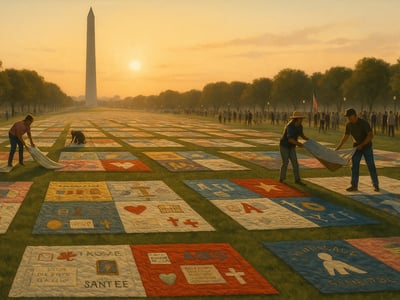
You didn't just… complete a picture; you reconstructed a moment when dispersed local action was turned into a visible national demonstration.
The first Earth Day mattered not only because many people took part, but because it gave environmental concern a shared date, format, and public presence. That structure made pollution and conservation harder to treat as isolated local issues. By linking campuses, community events, and news coverage, organizers created a model for turning broad concern into something policymakers could not easily ignore.
Senator Gaylord Nelson announced plans for a nationwide environmental teach-in in 1969 after seeing the impact of the Santa Barbara oil spill.
FAQ
What happened on 22 April 1970?
Earth Day was observed across the United States as a coordinated national environmental teach-in. Activities included teach-ins, marches, rallies, and local environmental events in cities, towns, and on college campuses.
Who organized the first Earth Day in 1970?
Senator Gaylord Nelson announced the nationwide teach-in plan in 1969, and Denis Hayes served as national coordinator for the 22 April 1970 event. Representative Pete McCloskey joined Nelson as a bipartisan co-chair.
Why was 22 April chosen for Earth Day?
The brief does not give a specific reason for choosing 22 April. It states that the nationwide environmental teach-in was planned for that date and coordinated from Washington, D.C.
How many people took part in the first Earth Day?
Contemporary reporting described participation in the millions. Because early counts were estimates, the exact total is not presented as a fixed figure in the source material.