

About this story
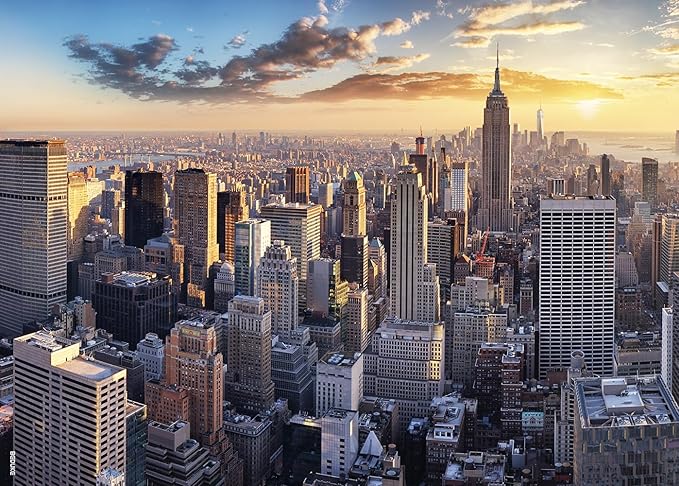
Empire State Building at its May 1, 1931 opening in Manhattan
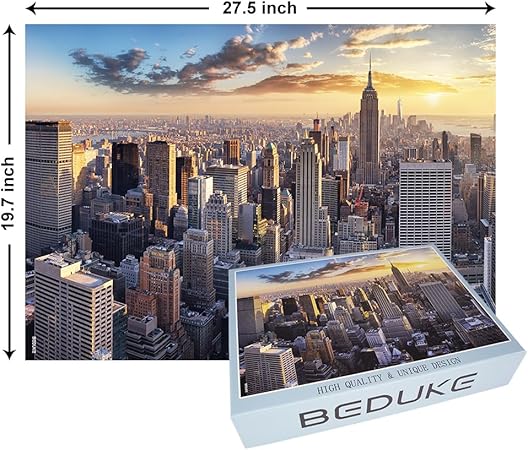
Video puzzle
On May 1, 1931, the Empire State Building formally opened on Fifth Avenue in Manhattan, adding a new peak to the New York skyline at a moment when the United States was deep in the Great Depression. The public ceremony marked the completion of a project that had moved with unusual speed: from announced plans in early 1930 to a finished 102-story tower just over a year later. By the day it opened, the building's 1,250-foot roof height had given it the tallest-building status of its time.
The tower rose on the former site of the Waldorf-Astoria Hotel, a location already associated with New York prestige before the new building even existed. On January 22, 1930, former New York governor Al Smith and his associates announced plans for the project. The choice to move forward was ambitious. The city had spent the late 1920s watching a competition among ever-taller office towers, and height had become a matter of engineering, real-estate strategy, and civic image all at once.
That competition formed the background to the Empire State Building from the beginning. New York developers and architects were no longer simply creating office space; they were producing landmarks meant to stand for modernity and commercial confidence. Yet by 1930 the national economy had changed sharply. The stock market crash of 1929 had already reshaped expectations, and the country was entering a period of contraction, business failures, and rising unemployment. To continue with a large speculative skyscraper under those conditions involved risk as well as prestige.
Construction began on March 17, 1930. The design came from William F. Lamb of Shreve, Lamb & Harmon, whose plans set the tower at 102 stories. The project demanded tight coordination on a dense Midtown site. Materials had to arrive in sequence, labor had to be organized efficiently, and the structure had to rise fast enough to meet both schedule and symbolic expectations. The compressed timetable was part practical challenge, part public statement: speed itself became evidence that the project was succeeding.
The achievement was widely noticed because skyscraper construction at that scale required careful planning as much as brute effort. Steel framing, elevators, exterior cladding, interior work, and mechanical systems all had to be integrated while the building continued to climb. The tower's rapid ascent helped make it a public spectacle before it was even finished. Newspapers followed its progress, and each increase in height reinforced the sense that the project was competing not only in the real-estate market but also in the realm of attention.
The race for prominence mattered. By the time the building opened, its roof height exceeded that of the Chrysler Building, allowing it to claim the title of tallest building in the world. That distinction gave the opening a significance beyond routine commercial use. The Empire State Building was not introduced merely as another address for offices. It entered public life as a structure that represented scale, technical coordination, and the willingness of investors and promoters to make a visible statement in uncertain times.
John J. Raskob was among the central figures behind the project, and Al Smith, after his term as governor and his presidential campaign, became closely identified with its promotion. Their involvement linked the tower to both business ambition and public reputation. A project of this size needed financing, confidence, and sustained organization. It also needed a story that the public could understand. The Empire State Building's story was simple enough to grasp at a glance: it was very high, it had been built very quickly, and it had arrived when many assumptions about growth and prosperity were under strain.
The opening ceremony on May 1 reflected that mixture of engineering accomplishment and public theater. President Herbert Hoover participated from Washington, D.C., pressing a button that symbolically turned on the building's lights in New York. The gesture joined distant political authority to local spectacle. It also showed how modern communications could be folded into ceremonial display. For a building intended to symbolize progress, a remotely signaled illumination was an apt form of introduction.
Yet the day of celebration did not erase the harder economic context. The Empire State Building opened during a period when demand for office space was weaker than the optimism of the late 1920s had suggested. Its fame was immediate, but commercial success was less certain. That contrast became one of the most revealing parts of its early history. A landmark could dominate the skyline and still face practical questions about occupancy, revenue, and timing. In that sense, the building embodied both confidence and contradiction.
This tension helps explain why the opening remains historically interesting. The Empire State Building was a triumph of planning and construction, but it was also a product of speculative development during a downturn. Its public meaning was larger than its rental market. People could look at it and see a statement about New York, about American engineering, or about the persistence of large ambitions despite worsening conditions. At the same time, owners and managers still had to confront the ordinary economic realities of running a giant office tower.
Why it still matters
The opening of the Empire State Building still matters because it serves as a reference point for how large urban projects are organized, timed, and presented to the public. Historians of architecture and construction return to it as an example of high-rise coordination under pressure. The short building schedule, the prominent site, and the technical demands of a 102-story tower make it a useful case study in how planning, logistics, and design intersect.
It also remains important as a symbol of the way cities use buildings to express ambition. The Empire State Building showed that a skyscraper could function as more than rentable floor area. From the moment it opened, it operated as an image: of New York, of modern engineering, and of national confidence. Later generations would treat skyscrapers not only as workplaces but also as instruments of tourism, branding, and prestige. In that respect, the building helped define a broader urban pattern.
At the same time, its early years remind observers not to confuse symbolic success with immediate commercial return. The gap between landmark status and strong occupancy during the Depression is part of what makes the building historically valuable. It demonstrates that spectacular construction can coexist with weak economic conditions, and that public meaning does not always match business performance.
The Empire State Building would eventually lose its tallest-building record, but that did little to reduce its place in public memory. Its opening on May 1, 1931, remains a clear moment when engineering speed, real-estate ambition, and civic ceremony were brought together in one of the world's most recognized urban landmarks. The building endures not simply because it was tall, but because its debut captured how a city wanted to be seen at a difficult moment in history.
Timeline
- Building plans announced
- Construction begins
- Empire State Building opens
- Opening ceremony
- Tallest-building record lost
What you uncovered
More Than a Skyline
You didn't just…complete a picture of a famous tower; you traced a moment when New York turned construction speed, height, and ceremony into a public statement during economic crisis.
The Empire State Building's opening mattered not only because it set a height record, but because it combined several kinds of power in one event: technical coordination, speculative investment, and carefully staged publicity. That combination helps explain why skyscrapers came to function as more than office buildings. They could also serve as civic symbols, marketing tools, and visible claims about confidence in a city's future, even when the underlying economics were uncertain.
At the opening ceremony, President Herbert Hoover symbolically switched on the building's lights from Washington, D.C., by pressing a button.
FAQ
What happened at the Empire State Building on May 1, 1931?
The Empire State Building was formally opened in a public ceremony on 1931-05-01 in New York City. The opening marked the building's official debut after a rapid construction period.
Where was the Empire State Building opened?
It was opened on Fifth Avenue in Manhattan, New York City, at 350 Fifth Avenue. The site is in Midtown Manhattan.
Who took part in the opening ceremony?
President Herbert Hoover took part remotely by pressing a button in Washington, D.C., that symbolically turned on the building's lights in New York. The project was also associated with figures such as John J. Raskob, Al Smith, and architect William F. Lamb.
Was the Empire State Building the tallest building in the world when it opened?
Yes. At its 1931 opening, it was recognized as the tallest building in the world, with a roof height of 1,250 feet, or 381 meters, exceeding the Chrysler Building.
How fast was the Empire State Building constructed?
Construction began on 1930-03-17 and the building opened on 1931-05-01. That meant the 102-story tower was completed in a little over a year.