

About this story
First issue of Slovenské národné noviny, published in Pressburg on 19 April 1845.
On 19 April 1845, the first issue of *Slovenské národné noviny* was published in Pressburg, then an important administrative and political center of the Kingdom of Hungary and today known as Bratislava. The event marked more than the arrival of another newspaper. It gave the Slovak national movement a regular printed outlet at a moment when questions of language, public discussion, and political communication were becoming increasingly urgent across central Europe.
The paper was closely associated with Ľudovít Štúr, who served as its leading editor at launch. By the mid-1840s, Štúr had already become one of the central figures in Slovak public life. His work was not limited to writing or scholarship. He was involved in a broader effort to define how Slovaks could communicate in print, organize culturally, and speak to a wider reading public within the legal and political structures of the Habsburg monarchy and the Kingdom of Hungary.
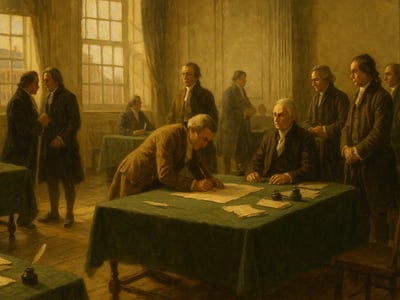
The first issue did not appear in isolation. It followed several linked developments that had gradually made such a publication possible. In July 1843, Štúr, Jozef Miloslav Hurban, and Michal Miloslav Hodža agreed at Hlboké on a standard form of literary Slovak. That agreement was a turning point in the history of the language. Standardization did not instantly create a mass reading public, but it provided a clearer basis for education, writing, and publication. A newspaper needs more than ideas; it needs a language that can be used consistently and understood by readers over time.
Another step came in 1844 with the establishment of Tatrín, a cultural association intended to support Slovak language and cultural work. Associations like this helped create networks of cooperation, discussion, and material support. They connected clergy, writers, teachers, and other educated figures who could contribute to the emerging infrastructure of print culture. In that sense, the launch of *Slovenské národné noviny* can be seen as part of a sequence: language work, institution-building, and then regular publication.
Pressburg was a significant place for this effort. As a major political and administrative center in the Kingdom of Hungary, it was also a city where printing, official oversight, and public debate intersected. Publishing there offered opportunities, but it also meant working within a system that closely watched political communication. A Slovak-oriented political newspaper could not simply be imagined and printed overnight. It had to secure legal publication, find the practical means to appear regularly, and survive financially enough to build a readership.
That practical challenge shaped the meaning of the paper from the beginning. Nineteenth-century newspapers depended on regular production, distribution, and reader loyalty. Any interruption could weaken their influence. A first issue was therefore both an achievement and a test. It showed that the project had moved from advocacy into sustained public form, but it also raised immediate questions: could the paper continue to appear, could it maintain support, and could it speak effectively to readers concerned with language and public affairs?
Štúr and his collaborators accepted those risks under conditions of political scrutiny. Their decision to launch a periodical tied to Slovak public advocacy was not merely literary. Newspapers in the 1840s were among the main ways of shaping discussion across distances. They carried information, argument, commentary, and a sense of connection among readers who might never meet. For a movement concerned with language and public recognition, a newspaper offered something especially important: rhythm. A book might make a statement once, but a newspaper could return week after week, building continuity.
That continuity mattered because the Slovak national movement of the 1840s was not only about abstract identity. It involved practical questions: what language should be used in writing, how should ideas circulate, who would read them, and how could a dispersed public be addressed as a public at all? In this setting, *Slovenské národné noviny* became part of a larger effort to create channels through which Slovak concerns could be discussed in print.
The paper also belonged to a wider European story. Across nineteenth-century Europe, newspapers became central tools for political and cultural organization. They linked provincial communities to urban centers, turned debates into recurring public conversations, and gave reform movements a regular voice. In multilingual states and regions, the language of publication itself carried importance. A newspaper could help normalize a written form, reinforce terminology, and give readers repeated exposure to a common public vocabulary.
For that reason, the launch of *Slovenské národné noviny* is best understood not simply as a publishing milestone but as part of an emerging communication system. The codification of literary Slovak in 1843, the founding of Tatrín in 1844, and the first issue in 1845 were connected developments. Together they formed an infrastructure for public expression. Each step depended on the others: standard language supported publication, organizations sustained cooperation, and newspapers brought ideas into regular circulation.
The timing also placed the newspaper just a few years before the revolutionary period of 1848, when newspapers would play an even greater role in political life across Europe. In that sense, the first issue appeared during a transitional moment. The institutions and habits of public communication were still being built, but their importance was already clear.
Why it still matters
The publication of the first issue remains important because it shows how newspapers could do more than report events. They could help establish a language in public use, connect readers across regions, and provide a recurring framework for debate. In the nineteenth century, print culture was not separate from politics or culture; it was one of the main ways both were organized.
This case also helps explain how national movements functioned in practice. They were not built only through speeches or symbolic moments. They depended on durable institutions: agreed written forms, associations to support cultural work, and periodicals that could sustain communication over time. *Slovenské národné noviny* offers a documented example of that process in the Slovak context.
Finally, the story highlights the importance of publishing centers such as Pressburg. Cities where administration, printing, and politics overlapped became crucial nodes in wider cultural networks. The first issue published there in 1845 was therefore both a local event and part of a broader European pattern in which print helped shape modern public life.
The survival of this moment in historical memory owes much to its clarity. A specific date, a named editor, and a known place allow historians to trace how a movement entered regular print. That is why the first issue of *Slovenské národné noviny* still stands as a useful point of reference in the history of Slovak language, journalism, and public communication.
Timeline
- Growth of Slovak-language print culture
- Agreement on literary Slovak
- Tatrín established
- First issue of Slovenské národné noviny published
- Newspapers in the revolutionary period
What you uncovered
Print as Infrastructure
You didn't just… complete an image of a newspaper launch; you reconstructed a moment when print became a practical tool for shaping Slovak public communication.
The paper mattered not only because it appeared, but because it linked several ongoing efforts into one visible system. Language codification, cultural association-building, and regular publishing worked together to turn ideas into a repeatable public presence. In that sense, a newspaper was more than a text: it was an institution that helped coordinate readers, writers, and advocates across a wider network.
Before the newspaper's launch, Štúr, Hurban, and Hodža agreed in 1843 on a standard form of literary Slovak at Hlboké.
FAQ
What happened on 19 April 1845?
On 19 April 1845, the first issue of Slovenské národné noviny was published in Pressburg. It marked the launch of a Slovak-oriented political newspaper.
Who was associated with the newspaper’s launch?
Ľudovít Štúr was the leading editor associated with the newspaper’s launch in 1845. Jozef Miloslav Hurban and Michal Miloslav Hodža were also part of the wider Slovak national circle connected to the period.
Why was Pressburg important for this publication?
Pressburg was an administrative and political center of the Kingdom of Hungary, and it also served as the newspaper’s publication center. That made it an important place for printing and public communication.
How did the newspaper relate to literary Slovak?
The newspaper appeared after Ľudovít Štúr, Jozef Miloslav Hurban, and Michal Miloslav Hodža agreed on a standard form of literary Slovak in July 1843. It gave that language work a regular printed outlet.