
About this story
Harper Lee's first novel was published in the United States on July 11, 1960.
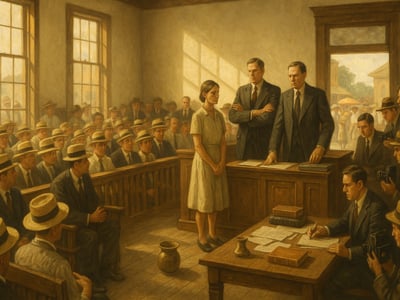
On July 11, 1960, J. B. Lippincott & Co. published *To Kill a Mockingbird* in the United States, introducing Harper Lee's first novel to a national audience. What appeared at first to be a book about childhood in a small Southern town was also a story about law, race, memory, and the moral pressures of public life. Set in the fictional town of Maycomb, Alabama, during the 1930s, the novel followed a lawyer, his children, and a criminal trial whose consequences reached far beyond the courtroom.
Its publication marked the end of a demanding editorial process. Harper Lee had arrived with material that did not fit neatly into a single category. The manuscript drew on a child's point of view, but it dealt with accusation, social hierarchy, and racial injustice in the Jim Crow South. That combination made the book distinctive, but it also created a practical challenge: how to shape it into a coherent novel for readers across the United States.
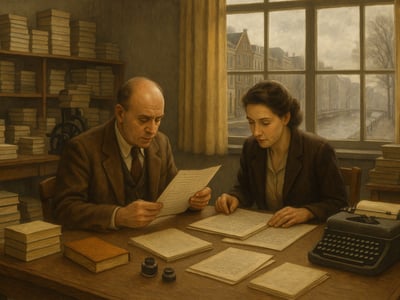
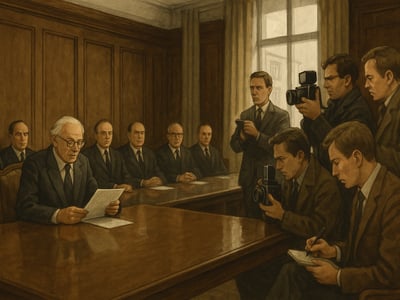
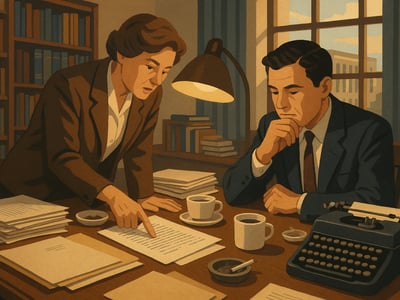
A key figure in that process was Tay Hohoff, Lee's editor at J. B. Lippincott. Hohoff worked with Lee through revisions before publication, helping transform early drafts into the version that reached bookstores in 1960. Editorial work of this kind is often invisible once a book becomes famous, yet it can determine structure, pacing, emphasis, and even whether a manuscript is published at all. In this case, the collaboration mattered. A first novel asking mainstream readers to confront segregation and courtroom inequality through a child's observations was not an obvious commercial formula.
That tension helps explain why the book's arrival was significant. Mid-20th-century American publishing could bring regional stories to large audiences, but publishers still had to weigh literary ambition against uncertainty about reception. *To Kill a Mockingbird* asked readers to spend time in a fictional Alabama community where ordinary manners and deep injustice existed side by side. The novel did not present the legal trial as an isolated incident. Instead, it placed it within the daily life of a town, seen through the eyes of children who were learning how adults exercise authority, loyalty, prejudice, and restraint.
The setting in Maycomb gave the book much of its force. By locating the story in Alabama during the 1930s, Lee linked personal memory and local custom with larger structures of racial inequality. The courtroom scenes became central, but the novel's power also came from quieter sequences: children moving through streets and porches, listening to adults, misunderstanding some things and grasping others with unusual clarity. That perspective let Lee approach difficult subjects indirectly without making them less serious.
For many readers, the character of the lawyer at the novel's center provided an ethical framework for the story. Yet the book's construction matters as much as its message. It was neither a legal case study nor a simple coming-of-age tale. It moved between domestic life, neighborhood observation, and public accusation. That blend made it accessible to broad readership while preserving some of the discomfort at its core. The manuscript could easily have been judged too unconventional, too difficult to classify, or too controversial to promote widely. Instead, it was revised, published, and quickly noticed.
Recognition followed soon after. In 1961, *To Kill a Mockingbird* received the Pulitzer Prize for Fiction, giving formal confirmation that the novel had become more than a promising debut. The award helped secure its reputation in literary culture and increased its visibility among libraries, teachers, and general readers. Then, in 1962, a film adaptation was released in the United States, extending the story's reach beyond the printed page. The adaptation became an important part of how later audiences encountered the novel, especially in classrooms and popular culture.
As the book circulated more widely, it entered another phase of its history: institutional use. Novels can become famous through reviews and prizes, but they become enduring through repeated adoption by schools, libraries, and reading lists. *To Kill a Mockingbird* proved especially durable in that respect. It was taught to students as a work of literature, as a historical window onto the Depression-era South, and as a starting point for conversations about law, conscience, and discrimination. For many readers, it became one of the first serious novels through which they encountered questions of testimony, unequal treatment, and public judgment.
That broad use also ensured that the novel would never remain fixed in a single interpretation. Readers have approached it as a moral novel, a regional novel, a school text, and a national classic. Others have emphasized its limits, arguing that its treatment of racism should be discussed critically rather than accepted as complete or final. Those disagreements are part of the book's history too. A text that enters classrooms for decades does not remain only a literary artifact; it becomes part of recurring arguments about who gets represented, how history is taught, and what kind of language and perspective belong in education.
Why it still matters
*To Kill a Mockingbird* still matters in part because it remains present in institutions that shape reading habits. Decisions by schools and libraries about assigning, retaining, or removing the novel continue to affect how students encounter literature about race and justice. The book is therefore not only remembered; it is repeatedly reintroduced, debated, and re-evaluated.
Its courtroom plot also continues to influence how many readers first imagine the relationship between accusation, testimony, and unequal justice under law. Even for people who read it long after 1960, the novel often serves as an entry point into broader historical discussions about the American South, segregation, and legal inequality. At the same time, criticism of the book has remained active, especially in educational settings where teachers and students ask whether it offers an essential foundation, an incomplete perspective, or both.
That continuing debate helps explain the durability of the novel's publication date. July 11, 1960, was not simply the release of a new title by a first-time novelist. It was the beginning of a long public life in which a work of fiction moved through publishing, prizes, film, classrooms, libraries, and challenges from school boards and parents. The book's place in literary history rests not only on sales or acclaim, but on the fact that readers have kept returning to it with different questions. Some have found in it a powerful introduction to injustice; others have insisted that it must be taught with careful historical and critical context. Both responses show why the novel has remained part of public conversation for more than half a century.
Timeline
- Publication of To Kill a Mockingbird in the United States
- Pulitzer Prize for Fiction
- U.S. film adaptation release
What you uncovered
From Novel to Institution
You didn't just complete a puzzle; you traced the moment a first novel began its path into classrooms, reading lists, and arguments about how literature presents justice and race.
A book's long life is not determined by publication alone. Editorial shaping, the moment it entered public discussion, and its later adoption in schools all helped turn this novel from a new release into an institutional text. That also helps explain why debates around it persist: once a book becomes part of how students are introduced to law, testimony, and racism, arguments about the book become arguments about education itself.
To Kill a Mockingbird received the Pulitzer Prize for Fiction in 1961.
FAQ
When was To Kill a Mockingbird first published?
J. B. Lippincott & Co. published To Kill a Mockingbird in the United States on 1960-07-11. It was Harper Lee's first published novel.
Who edited To Kill a Mockingbird before publication?
Harper Lee's editor at J. B. Lippincott was Tay Hohoff. She worked with Lee on the manuscript before the novel was published.
Did To Kill a Mockingbird win the Pulitzer Prize?
Yes. To Kill a Mockingbird received the Pulitzer Prize for Fiction in 1961.
Where is To Kill a Mockingbird set?
The novel is set in the fictional town of Maycomb, Alabama, in the 1930s. Its story centers on a lawyer, his children, and a criminal trial.