
About this story
Mustafa Kemal arrives at Samsun on 19 May 1919 during the postwar Ottoman crisis.
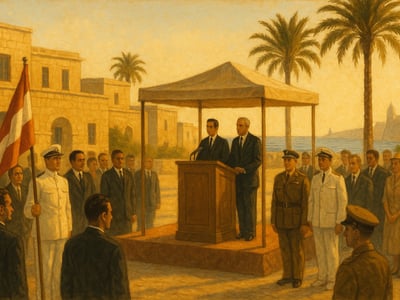
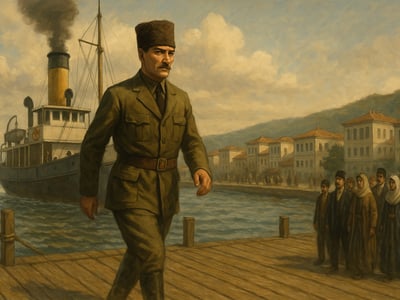
On May 19, 1919, Mustafa Kemal arrived at Samsun on the Black Sea coast after leaving Istanbul aboard the *Bandırma*. At the time, he was not yet acting as the head of a new state or an openly declared national leader. He came as Inspector of the Ninth Army Troops Inspectorate, an official posting approved by Sultan Mehmed VI on April 30, in the unstable aftermath of the Ottoman Empire's defeat in the First World War. Yet in Turkish historiography, this arrival has come to mark the opening of the organized movement that later developed into the Turkish War of Independence.
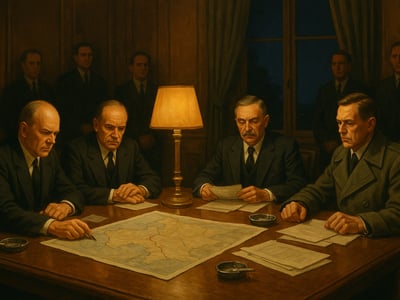
The setting mattered. The Ottoman Empire had signed the Mudros Armistice in 1918, and the months that followed were shaped by Allied oversight, military occupation, and uncertainty over the future of former Ottoman territories. In May 1919, this uncertainty became sharper with the Greek landing at İzmir, an event that intensified anxiety across Anatolia. The imperial government in Istanbul remained in place, but its authority was constrained, and local officials, military officers, and civilian groups were trying to understand how much room for action remained.
Samsun was a strategic port in northern Anatolia, and it was also a tense place to begin any mission. Mustafa Kemal's formal task involved inspecting military conditions and helping restore order in a region watched closely by both Ottoman authorities and foreign powers. That official mandate gave him legitimacy, access to provincial officials, and a reason to travel and communicate. At the same time, it sharply limited what he could openly do. Any sign that the mission was becoming political rather than administrative could have led to intervention from Istanbul, from Allied representatives, or from local actors wary of wider conflict.
This tension between formal duty and political possibility defined the significance of the Samsun landing. Mustafa Kemal did not step ashore into a vacuum, nor did resistance begin with him alone. Various local networks, notables, officers, and civic groups in Anatolia were already reacting to occupation pressures and the weakening of central authority. What changed over the weeks after May 19 was the effort to connect scattered anxieties and local initiatives into something more coordinated.
From Samsun, Mustafa Kemal moved inland, where the political possibilities were greater and direct scrutiny from the coast less immediate. In these early weeks, the central risk was clear: he was using an official mission to build contacts and encourage a broader response that went beyond the narrow language of his appointment. Such a course could easily have failed. The Ottoman government could have curtailed his authority. Allied pressure could have narrowed his movements. Local instability could have disrupted communications. And the regional groups that opposed occupation might have remained fragmented rather than cooperating.
Instead, the process began to take on a more explicit political form. A key moment came with the Amasya Circular on June 22, 1919. Its most remembered principle was that the nation's independence would be secured by the nation's own determination and decision. That statement did not create a national movement by itself, but it gave a sharper formula to what had been emerging since the days after Samsun: the idea that salvation would not come simply from the imperial center, diplomacy, or passive endurance, but from organized collective action in Anatolia.
The next stages pushed the movement beyond the limits of a single inspection mission. From July 23 to August 7, 1919, delegates met at the Erzurum Congress in eastern Anatolia under Mustafa Kemal's leadership. Although regional in scope, the congress helped establish a representative political language and a framework for coordinated resistance. It also showed that the effort was no longer merely administrative. By this point, the transition from imperial office to a new center of political initiative was becoming visible.
That shift broadened further at the Sivas Congress, held from September 4 to September 11, 1919. There, regional resistance organizations were consolidated into a wider national framework. The significance of Sivas was not only that more groups were brought together, but that the movement gained a structure able to outgrow the temporary authority of one official appointment. What had begun under the cover of inspection and order-making was becoming a durable political project.
In retrospect, this sequence gives the Samsun landing its weight. The date is remembered not because everything was decided on that morning, but because it opened a chain of developments that led from imperial crisis toward a new political center in Anatolia. The appointment approved by the sultan, the journey on the *Bandırma*, the landing at a watched port, the inland shift, the Amasya Circular, and the congresses at Erzurum and Sivas all belong to the same larger transformation. Each stage depended on the uncertain one before it.
Why it still matters
May 19 remains central to how the Turkish Republic tells the story of its own beginnings. In public memory, it marks the point at which a period of imperial collapse began to turn into a struggle for national sovereignty and state formation. That does not mean every historian, or every regional tradition, interprets the event in exactly the same way. But the date has become a durable anchor in national chronology because it links a documented arrival to a much larger historical process.
The episode also illustrates a broader historical pattern: moments of state breakdown often create space in which administrative roles acquire political importance far beyond their original purpose. Mustafa Kemal arrived in Samsun with a legally defined mandate, yet the weakening of central authority allowed that assignment to become the starting point for a rival center of initiative. In that sense, Samsun is not only a national symbol but also an example of how institutions can be repurposed during political transitions.
Its commemoration each year shows how a single date can connect archival fact, civic ritual, and national identity. The landing itself is a documented event. Its later meaning, however, was shaped through speeches, ceremonies, school narratives, and the republic's own account of its origins. That combination of chronology and memory is why May 19 continues to matter: it stands at the intersection of what happened in 1919 and how later generations understood the beginning of modern Turkey.
Seen from that perspective, the arrival at Samsun was both modest in its immediate appearance and far-reaching in its consequences. One officer came ashore under imperial orders in a troubled port city. Within months, the movement associated with that journey had advanced from scattered resistance to organized political coordination. The later republic would look back on May 19 as the opening of that passage.
Timeline
- Inspector appointment approved
- Arrival at Samsun
- Amasya Circular
- Erzurum Congress begins
- Sivas Congress begins
What you uncovered
From Mission to Movement
You didn't just… place a date on a timeline; you traced the moment when an official assignment began to take on a larger political meaning.
What made Samsun consequential was not only the arrival itself, but the way an imperial administrative role could be repurposed as central authority weakened. A mission framed as inspection and order-keeping gave Mustafa Kemal access, legitimacy, and room to connect scattered local initiatives. In that sense, the early national movement grew not outside the state at first, but partly through its remaining institutions as they were losing control.
Mustafa Kemal reached Samsun on 19 May 1919 after leaving Istanbul aboard the Bandırma.
FAQ
What happened in Samsun on 19 May 1919?
On 19 May 1919, Mustafa Kemal arrived in Samsun after departing Istanbul aboard the Bandırma. In Turkish historiography, this landing is widely treated as the opening point of the organized national movement that later developed into the Turkish War of Independence.
What was Mustafa Kemal's official role when he arrived?
He arrived as Inspector of the Ninth Army Troops Inspectorate, an appointment approved by Sultan Mehmed VI on 30 April 1919. The mission gave him an official mandate, even as he began moving beyond its narrow limits.
Why is the Samsun landing considered important?
It is seen as important because it marked a shift from postwar disorder and occupation pressures toward organized resistance in Anatolia. The event became a foundational moment in the historical narrative of modern Turkey.
What happened after the landing in Samsun?
The movement advanced through the Amasya Circular on 22 June 1919, which declared that independence would be secured by the nation's determination and decision. It then continued through the Erzurum Congress and the Sivas Congress, which helped turn regional resistance into a broader national framework.
Why is 19 May commemorated in modern Turkey?
The date is commemorated because it anchors the national memory of the start of the Turkish National Movement. Its annual observance reflects the event's central place in Turkish state identity and historical interpretation.