

About this story
Mars Odyssey's launch marks a key moment in Martian exploration.
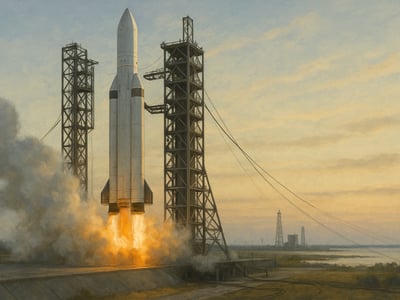
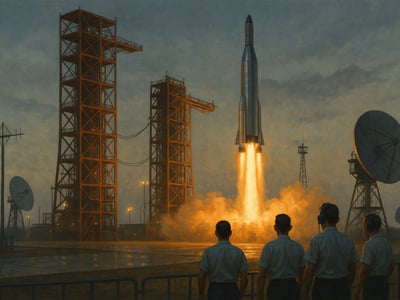
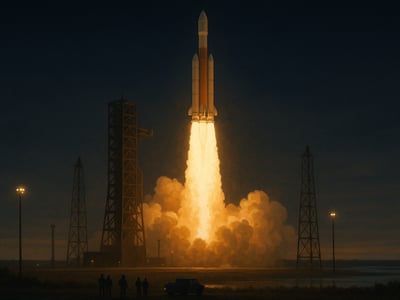
On April 7, 2001, NASA launched the Mars Odyssey spacecraft from Cape Canaveral, Florida, marking a significant milestone in the exploration of the Red Planet. The mission was designed to study the Martian environment and surface conditions, gathering crucial data about its atmosphere and geology. With an array of scientific instruments on board, Mars Odyssey aimed to map the composition of Mars’ surface and provide insights that would inform future exploration efforts.
The launch required meticulous planning by NASA engineers, who faced the challenge of ensuring the spacecraft’s successful entry into Martian orbit. The mission was fraught with risks, as any miscalculation or technical malfunction could potentially lead to the mission's failure. Nevertheless, the team’s expertise ensured that Odyssey reached Mars safely.
Upon entering orbit, Mars Odyssey began transmitting valuable data back to Earth. The spacecraft's instruments provided unprecedented detail on Mars’ climate and surface, allowing scientists to draw more accurate conclusions about its composition. This data enriched our understanding of Mars and served as a foundation for subsequent missions under NASA’s Mars Exploration Program.
The information provided by Mars Odyssey was instrumental in shaping the trajectory of future explorations, including the development of rovers and other spacecraft aimed at further unraveling Mars' mysteries.
Why it still matters
The successful operation of Mars Odyssey has had lasting impacts on planetary science and space exploration. The mission significantly enriched scientific knowledge by providing a wealth of data that continues to support research in understanding Mars and its potential for past life. Moreover, Odyssey laid critical groundwork for subsequent missions to Mars, including those that sent rovers like Curiosity and Perseverance to the Martian surface. These achievements underscore the mission's enduring legacy as a cornerstone in humankind’s quest to explore outer space.
Timeline
What you uncovered
A Mission That Extended Reach
You didn't just… complete a space-themed puzzle; you traced the start of a mission that helped make later work around Mars more informed and more systematic.
Mars Odyssey mattered not only for what it observed, but for how it fit into a longer chain of exploration. Missions like this show that progress in planetary science often comes from steady, durable data collection rather than a single dramatic breakthrough. Its value was in helping engineers and researchers refine how Mars could be studied over time, with each mission building on the last.
Mars Odyssey was launched from Cape Canaveral on April 7, 2001, and was designed to map the composition of the Martian surface.
FAQ
What happened on April 7, 2001?
On April 7, 2001, NASA launched the Mars Odyssey spacecraft to study Mars' surface and environment.
What was the main objective of the Mars Odyssey mission?
The Mars Odyssey mission aimed to map the composition of the Martian surface and gather data on its climate.
Where was Mars Odyssey launched from?
Mars Odyssey was launched from Cape Canaveral, Florida.
How did Mars Odyssey impact future Mars exploration?
The data sent back by Mars Odyssey informed future missions and deepened understanding of Mars, supporting the Mars Exploration Program.