

About this story
Miranda v. Arizona, decided by the U.S. Supreme Court on June 13, 1966.
On June 13, 1966, the Supreme Court of the United States issued one of its most widely recognized criminal procedure rulings: *Miranda v. Arizona*. In a 5–4 decision announced in Washington, D.C., the Court held that when a person is in custody and subject to interrogation, police must first inform that person of certain constitutional rights. The case would become closely associated with a short spoken warning, but the ruling itself grew out of a longer argument about confessions, constitutional safeguards, and the conditions under which statements are obtained.
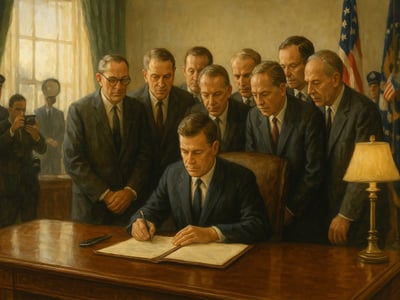
The case centered on Ernesto Miranda, who had been arrested in Phoenix, Arizona, in 1963. After police questioning, he signed a written confession. The legal issue before the Supreme Court was not simply whether Miranda had confessed, but whether a confession produced during custodial interrogation could be treated as fully voluntary when the suspect had not been clearly informed of the right to remain silent and the right to consult counsel.
That question had been developing for years in American courts. Judges had long considered whether confessions were voluntary, but the standards were often applied after the fact, examining the details of each interrogation. The justices in *Miranda* faced a broader problem: whether existing police practices gave enough protection to the Fifth Amendment privilege against self-incrimination, as well as the assistance of counsel, when a suspect was isolated and questioned by authorities.
The Court did not review Ernesto Miranda's case alone. It consolidated his appeal with three others: *Vignera v. New York*, *Westover v. United States*, and *California v. Stewart*. Taken together, the four cases presented a pattern. In each, the Court was asked to consider what should happen when suspects were questioned in custody without a clear, consistent procedure to ensure that they understood their rights.
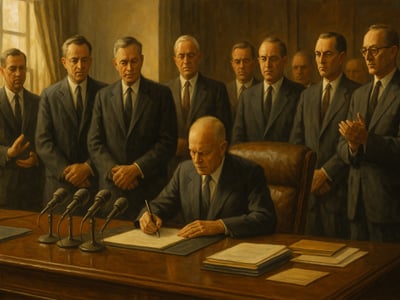
Chief Justice Earl Warren delivered the opinion of the Court. The majority concluded that custodial interrogation carries pressures that can undermine a person's ability to exercise constitutional protections unless specific warnings are given in advance. The ruling therefore required that, before questioning proceeds, suspects in custody must be told that they have the right to remain silent, that anything they say can be used against them, that they have the right to an attorney, and that if they cannot afford one, an attorney will be appointed for them.
The opinion did not forbid police questioning, nor did it make confessions unusable as evidence. Instead, it established a procedure meant to make any waiver of rights more clearly informed. If the warnings were not given, statements obtained during custodial interrogation would generally be excluded from the prosecution's case-in-chief. In practical terms, the decision translated constitutional doctrine into a standard process that police departments would have to adopt.
The narrow 5–4 vote reflected how contested the issue was. For the majority, the central concern was that constitutional rights should not depend on a suspect's legal knowledge in the stressful setting of police custody. For the dissenters, the new requirements risked placing too rigid a framework on investigations and departed from earlier methods of judging confessions by their overall voluntariness. The disagreement showed that the Court was not merely refining a technical rule; it was redefining how constitutional protections would operate in everyday policing.
The immediate response was practical as much as legal. Police departments, prosecutors, and courts had to adjust. Training materials and arrest procedures were revised so that officers could comply with the new standard. Over time, the warning associated with *Miranda* entered routine practice and became familiar far beyond courtrooms. Even people with little knowledge of constitutional law often came to recognize some version of the words spoken before questioning.
The decision also changed Ernesto Miranda's own case, though not in the simple way people sometimes assume. The Supreme Court's ruling did not permanently end the prosecution against him. In 1967, he was retried in Arizona without the confession at issue and was convicted again. That outcome underscored an important distinction: *Miranda* governed the admissibility of statements obtained in custody, not whether a defendant could be prosecuted at all if other evidence remained available.
Why it still matters
The importance of *Miranda v. Arizona* lies partly in its practical clarity. Constitutional protections can be abstract when stated only in judicial language, but this ruling required that they be communicated directly to individuals at a critical moment. In that sense, the case became a bridge between constitutional principle and daily police procedure.
It also remains a central reference point in debates about how courts should balance investigative authority with legal safeguards. The case did not eliminate interrogation, and later cases would refine how *Miranda* applies in different settings. Still, the 1966 decision established a basic expectation: before custodial questioning, the state must make certain rights known in a clear and standard form.
Beyond court doctrine, *Miranda* entered legal education, judicial training, and public culture. Students study it as a major Warren Court opinion. Police officers learn its requirements as part of standard procedure. The general public encounters it as part of the language of arrest and questioning. Few Supreme Court decisions have become so recognizable in both legal practice and everyday speech.
What happened on June 13, 1966, was therefore more than the resolution of one appeal from Phoenix. The Court used a specific case, joined with three others, to define a national rule about custodial interrogation. By doing so, it gave lasting procedural form to constitutional protections that might otherwise have remained unevenly understood at the moment they mattered most.
Timeline
- Ernesto Miranda arrest and interrogation
- Miranda v. Arizona decided
- Supreme Court majority opinion
- Ernesto Miranda retrial
What you uncovered
Rights Made Routine
You didn't just… complete a puzzle; you traced the moment when the Court turned abstract constitutional protections into words officers were required to say before custodial questioning.
Miranda matters not only because of what the Court said about rights, but because it converted a legal principle into a repeatable procedure. That shift made constitutional safeguards easier to apply in everyday police work and easier for courts to evaluate after the fact. It also shows how judicial decisions can shape institutions most powerfully when they are translated into routine practice.
Miranda v. Arizona was decided together with three other cases: Vignera v. New York, Westover v. United States, and California v. Stewart.
FAQ
What did the Supreme Court decide in Miranda v. Arizona?
On 1966-06-13, the Supreme Court of the United States decided Miranda v. Arizona by a 5-4 vote. The Court held that suspects must be informed of certain constitutional rights before custodial questioning.
Who was Ernesto Miranda and what happened in Phoenix?
Ernesto Miranda was arrested in Phoenix, Arizona, in 1963 and questioned by police. During that interrogation, he signed a written confession.
What case did Miranda v. Arizona include with it?
The case was consolidated with three other cases: Vignera v. New York, Westover v. United States, and California v. Stewart. The Court considered them together because they all involved custodial interrogation.
Did the decision permanently overturn Ernesto Miranda's conviction?
No. In 1967, Ernesto Miranda was retried in Arizona without the confession at issue and was convicted again.