
About this story
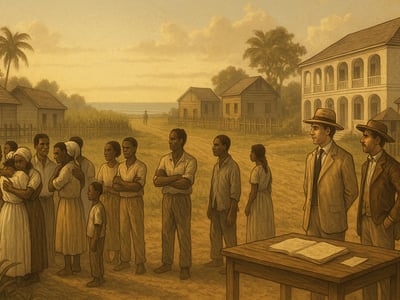
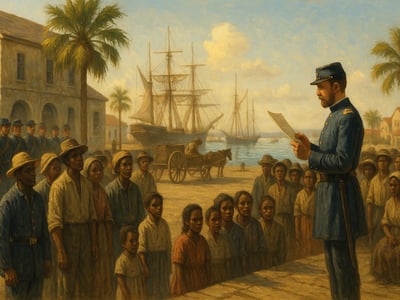
Galveston, Texas, where General Order No. 3 announced emancipation on June 19, 1865.
On June 19, 1865, Major General Gordon Granger arrived in Galveston, Texas, with Union forces, and General Order No. 3 was issued under federal authority. Its central declaration was direct: enslaved people in Texas were free. The moment is now remembered as Juneteenth, but at the time it was also a practical turning point in a place where freedom had been declared in national policy before, yet had not been fully enforced in daily life.
That distinction matters. President Abraham Lincoln's Emancipation Proclamation had taken effect on January 1, 1863. It declared enslaved people in areas still in rebellion to be free. But the proclamation was a wartime measure, and its power depended on Union military reach. Where federal forces could not impose authority, enslavers continued to control labor, movement, and family life. Texas, far from the war's main eastern campaigns, remained one of those places where the reality on the ground lagged behind the policy announced in Washington.
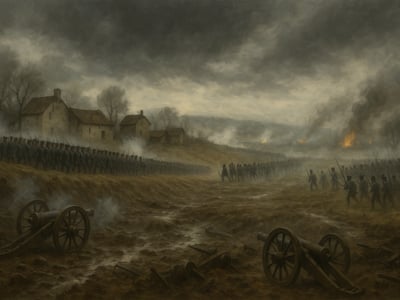
By the spring of 1865, the Confederacy was collapsing. On April 9, Robert E. Lee surrendered the Army of Northern Virginia to Ulysses S. Grant at Appomattox Court House, Virginia. Even then, the end of Confederate military resistance did not instantly produce the same conditions everywhere. In Texas, many enslaved people were still held in bondage in practice. Distance, weak communications, and the persistence of local power all shaped that delay. So did the simple fact that emancipation required more than words. It required someone to arrive with the authority to make those words count.
That is why Granger's arrival in Galveston became so important. Union occupation made federal power visible in the city and created the conditions in which orders could be publicly announced and backed by force. General Order No. 3 stated that "all slaves are free" and described a new relationship between former masters and freed people. Like many official documents of its era, it also framed freedom in terms of labor and social order, reflecting both the promise and the limits of the transition underway.
For the people hearing the order, the change was not abstract. Emancipation raised immediate questions about where to go, how to reunite families separated by sale and forced movement, how to secure work on fair terms, and how to stay safe in a hostile environment. Freedom announced by military order did not erase the power that enslavers had held locally, nor did it guarantee equal treatment. What it did provide was a public, documented assertion that the federal government recognized slavery in Texas as ending under its authority.
This helps explain why June 19 holds such a central place in public memory. It was not the first declaration connected to emancipation, and it was not the final legal step in ending slavery in the United States. The 13th Amendment, ratified later in 1865, formally abolished slavery nationwide except as punishment for crime. But June 19 marked a specific and verifiable moment when freedom was publicly announced and enforced in Texas, one of the places where the gap between policy and lived reality had remained especially stark.
The order also marked the start of a difficult transition rather than a settled conclusion. Formerly enslaved people had to make choices under pressure, often with limited resources and in the face of resistance. Some left plantations immediately in search of relatives, wages, education, or safer communities. Others were forced to navigate labor arrangements that preserved old inequalities in new forms. In that sense, the day was both an announcement and the beginning of another struggle: whether freedom would be respected, protected, and made real.
Early commemorations in Texas grew out of that experience. Communities gathered to mark the date with religious services, public readings, meals, music, and remembrance. Over time, Juneteenth became not just a record of one military order in one city, but a recurring observance tied to emancipation, community history, and the transmission of memory across generations.
Why it still matters
Juneteenth remains important because it shows that legal change and lived change are not always the same thing. A proclamation can exist on paper, but rights often depend on enforcement capacity, institutions, and the ability of governments to make their authority real in local settings. The events in Galveston illustrate that gap with unusual clarity.
The date also matters because it became a durable form of public remembrance. Juneteenth is now widely recognized as a commemoration of emancipation in the United States, and it is often used to discuss how societies remember slavery, freedom, and the long process of civil rights. Its meaning can vary across families, regions, and communities, but its historical foundation lies in the documented events of June 19, 1865.
Looking back at General Order No. 3 also encourages a precise understanding of the past. It reminds us not to compress emancipation into a single instant. The Emancipation Proclamation, Union victory, military occupation, General Order No. 3, and the 13th Amendment were connected but not identical steps. Together, they show how freedom was declared, enforced unevenly, and then more fully secured in law. That layered history is one reason the date continues to be studied and commemorated.
Timeline
- Emancipation Proclamation
- Lee surrenders at Appomattox Court House
- General Order No. 3 in Galveston
- Granger arrives in Galveston
What you uncovered
When Freedom Became Enforceable
You didn't just… complete a date puzzle; you traced the moment when a federal declaration of freedom became enforceable in Texas.
Juneteenth is often remembered as an announcement, but its deeper meaning lies in the relationship between law and power. The Emancipation Proclamation had already set policy, yet in Texas that policy depended on Union authority being present and visible enough to carry it out. That gap helps explain why historians treat June 19 as a key moment in the history of emancipation rather than a simple endpoint.
General Order No. 3 was issued in Galveston on June 19, 1865, and stated that all enslaved people were free under Union authority.
FAQ
What happened in Galveston on June 19, 1865?
Union Major General Gordon Granger arrived in Galveston, Texas, and General Order No. 3 was issued under Union authority. The order stated that enslaved people in Texas were free.
Why did Juneteenth come after the Emancipation Proclamation?
The Emancipation Proclamation was issued on 1863-01-01, but its practical effect depended on Union control in places still under Confederate authority. In Texas, emancipation was enforced only after Union forces arrived in Galveston on 1865-06-19.
Who was Gordon Granger in Juneteenth history?
Gordon Granger was a Union Major General who arrived in Galveston on 1865-06-19. His arrival marked the assertion of Union authority in the city and the issuing of General Order No. 3.
What did General Order No. 3 say?
General Order No. 3 stated that all slaves were free. It also described a new relationship between former masters and freed people under Union authority.