

About this story
Haymarket Square in Chicago during the labor meeting of May 4, 1886
On May 4, 1886, workers and supporters gathered at Haymarket Square in Chicago, Illinois, during a broader national campaign for the eight-hour workday. The meeting took place in a city already unsettled by strikes, lockouts, and confrontations between labor and police. What began as a protest rally connected to those disputes ended in violence after police moved to disperse the crowd, a bomb was thrown, and gunfire followed. By the end, seven police officers and at least several civilians were dead, and many more people were injured.
The immediate background lay in events of the previous day. On May 3, Chicago police fired on strikers outside McCormick Reaper Works, intensifying anger within the city's labor movement. That episode gave urgency to calls for a public meeting on the evening of May 4. The gathering at Haymarket was linked both to the demand for shorter working hours and to outrage over the McCormick shooting.
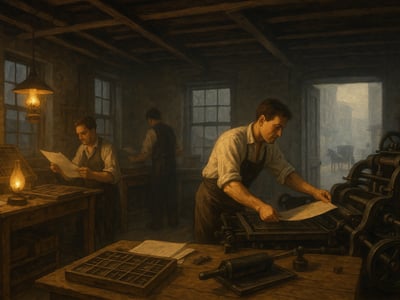
Chicago in the spring of 1886 was one center of a much wider labor struggle. Across the United States, workers were pressing employers to accept an eight-hour day. In Chicago, where industrial growth had drawn large numbers of wage earners and immigrants, that campaign blended with radical politics, union organizing, and deep distrust between workers, employers, and city authorities. Public meetings could draw large crowds, but they also took place under the shadow of surveillance and force.
At Haymarket Square, several well-known labor and anarchist speakers addressed those assembled. August Spies spoke, as did Albert Parsons and Samuel Fielden. Their remarks connected the gathering to the labor agitation of the moment and to the violence at McCormick. As the evening went on, however, the meeting did not resemble an immediate riot. Rain and the late hour reduced the crowd, and by the time Fielden was concluding his remarks, the number of people still present had dropped.
That apparent easing of tension mattered because it suggested that the rally might end without major incident. Instead, late in the meeting, police led by Inspector John Bonfield advanced into the square and ordered the remaining crowd to disperse. This was the point at which a volatile public assembly became a scene of sudden crisis.
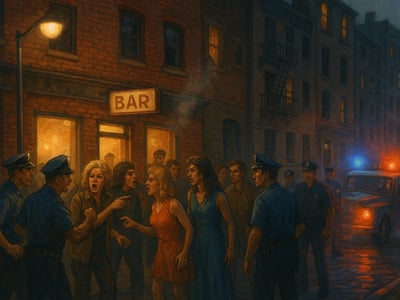
As the police line moved forward, an unidentified person threw a bomb toward the officers. The explosion shattered the tense but still organized encounter between speakers, workers, and police. Almost immediately, gunfire broke out amid confusion, smoke, and panic. The exact sequence of all the shots and the source of every wound were contested from the start, but the overall result was clear: the square became a place of chaos, with police, demonstrators, and bystanders caught in a deadly exchange.
The identity of the bomber was never definitively established. That unresolved fact became one of the most enduring features of the Haymarket affair. Yet even without certainty on that central question, the bombing transformed public reaction. What had been one episode in a larger strike movement was now treated as a major act of political violence.
In the days that followed, Chicago authorities launched a sweeping crackdown. Attention centered on anarchists and labor radicals, including men who had spoken at or were associated with the meeting. The legal response did not depend on proving that a particular defendant had thrown the bomb. Instead, prosecutors argued that inflammatory speech and political association had encouraged the act.
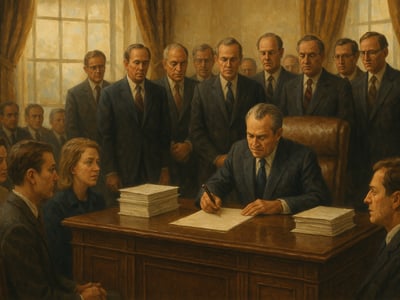
In August 1886, eight anarchists were convicted in Chicago in connection with the Haymarket bombing. The trial quickly became as historically significant as the explosion itself. Supporters of the verdict saw the case as a necessary response to extremist violence. Critics argued that the proceedings relied too heavily on political beliefs, indirect evidence, and guilt by association. Those disagreements have persisted ever since, and they helped shape the public memory of Haymarket.
The case continued to reverberate after the verdicts. On November 11, 1887, four of the convicted men were executed. Their deaths turned them, for many labor activists and radicals, into martyrs of a flawed prosecution. For others, the executions confirmed the state's determination to suppress revolutionary violence. In 1893, Governor John Peter Altgeld pardoned three surviving defendants, sharply criticizing the conduct of the trial. His decision did not resolve the controversy, but it ensured that legal fairness would remain central to how the affair was remembered.
Why it still matters
The Haymarket affair remains important because it sits at the intersection of labor history, public order, and the law. It is often remembered as a turning point in the history of the eight-hour-day movement, not because it settled that struggle, but because it showed how quickly labor conflict could be recast as criminal conspiracy and political threat.
It also continues to matter in discussions of evidence and due process. The unresolved identity of the bomber, the prosecution's emphasis on political ideology, and the later pardons all made the case a reference point in debates over how courts handle fear, association, and collective responsibility. Haymarket is therefore not only a story about a single violent night; it is also a story about what happens when legal systems respond to public panic.
Finally, the event shaped historical memory far beyond Chicago. Haymarket became part of the international symbolism of May Day and of labor commemoration more broadly. In that sense, the meeting at Haymarket Square outlived its immediate setting. It began as a local protest in a tense industrial city, but its aftermath gave it a place in a wider history of workers' rights, state power, and the contested meaning of public dissent.
Timeline
- Eight-hour day strike wave
- McCormick Reaper Works shooting
- Haymarket meeting in Chicago
- Haymarket trial and convictions
- Execution of four defendants
- John Peter Altgeld pardons
What you uncovered
From Rally to Symbol
You didn't just…complete a puzzle; you traced the moment a labor meeting became a lasting legal and political reference point.
Haymarket's later meaning was shaped not only by the bombing, but by what followed in court, in executions, and in the pardons that came years later. Those stages turned a single night in Chicago into an argument about how states respond to political violence and how far guilt can be extended through association. That is why Haymarket remained contested in memory even as it became part of labor commemoration.
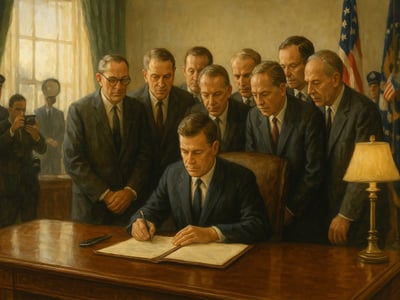
In 1893, Illinois governor John Peter Altgeld pardoned the three surviving Haymarket defendants, criticizing how the earlier trial had been conducted.
FAQ
What happened at Haymarket Square on May 4, 1886?
A labor meeting was held at Haymarket Square in Chicago on 1886-05-04 as part of the eight-hour workday campaign. Late in the gathering, police moved to disperse the crowd, a bomb was thrown, and gunfire followed.
Who spoke at the Haymarket meeting in Chicago?
August Spies, Albert Parsons, and Samuel Fielden addressed the crowd at Haymarket Square. The meeting was taking place in Chicago, Illinois, United States.
Who led the police action at Haymarket Square?
The police were led by Inspector John Bonfield. They moved in late on 1886-05-04 to disperse the gathering.
Was the person who threw the bomb ever identified?
No identifiable person is given in the factual record here; the bomber is described as unidentified. The available anchors do not name the person who threw the bomb.
What happened after the Haymarket bombing?
The violence killed seven police officers and at least several civilians, and many more people were injured. In August 1886, eight anarchists were convicted in Chicago in connection with the bombing, and four were executed on 1887-11-11.