
About this story
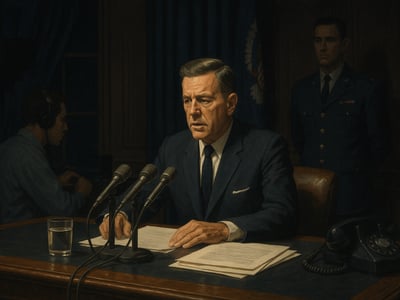
On 22 October 1962, President John F. Kennedy told a television audience from Washington that the United States had found Soviet missile sites under construction in Cuba. He announced a naval quarantine on offensive weapons and warned that a missile launched from Cuba would be treated as a Soviet attack. The speech made a secret crisis public.
Kennedy announces the U.S. quarantine of Cuba from the White House on 22 October 1962.
On October 22, 1962, U.S. President John F. Kennedy went on television from Washington, D.C., to tell the American public and the wider world that the United States had identified Soviet missile sites under construction in Cuba. In a speech carried live from the White House, he announced a naval “quarantine” on shipments of offensive military equipment to the island and said further military measures were being prepared. The address turned a secret intelligence discovery into a public international crisis.
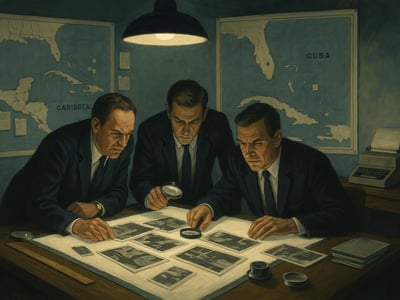
Photographs before the speech
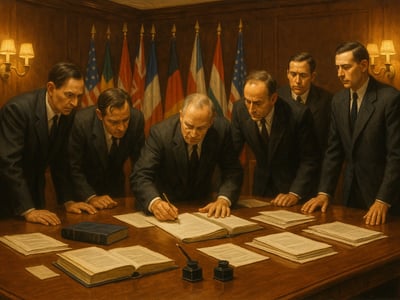
The announcement came after several days of intense discussion inside Kennedy’s administration. On October 14, a U-2 reconnaissance flight had photographed missile installations in western Cuba. Two days later, on October 16, Kennedy was informed of the findings and began meeting with a select group of senior advisers known as the Executive Committee of the National Security Council, or ExComm. Their task was immediate and difficult: decide how to respond to evidence that the Soviet Union was placing nuclear-capable missiles about 90 miles from Florida.
The problem was not only military but political and diplomatic. By the time Kennedy spoke publicly, the administration had already concluded that doing nothing would be unacceptable. Yet the available responses all carried grave risks. Some advisers favored air strikes against the missile sites, followed perhaps by an invasion of Cuba. Others argued for a more limited action that would signal resolve while leaving room for negotiation. A direct attack might destroy some installations, but it could also kill Soviet personnel, invite retaliation, and make rapid escalation much more likely.
Kennedy chose the narrower option. The United States would use naval forces to stop the delivery of further offensive weapons to Cuba rather than immediately bomb the sites already identified there. The administration deliberately used the word “quarantine” rather than “blockade,” a choice that reflected both legal and diplomatic concerns. Whatever the terminology, the policy meant that U.S. military power would now be placed directly in the path of Soviet shipping in the Caribbean.
Strike, or something narrower
In the speech itself, Kennedy laid out the administration’s case in measured but firm language. He said U.S. reconnaissance had revealed missile bases under construction and described the weapons as a threat to the Western Hemisphere. He announced that all ships bound for Cuba and carrying offensive military equipment would be turned back. He also warned that any nuclear missile launched from Cuba against any nation in the Western Hemisphere would be regarded as an attack by the Soviet Union on the United States, requiring a full retaliatory response.
This was a carefully calibrated public message. Kennedy needed to persuade several audiences at once: the American public, U.S. allies, governments in Latin America, and Soviet leader Nikita Khrushchev. The speech had to show that Washington was acting on the basis of evidence, not rumor, and that it was responding in a controlled way rather than rushing into war. At the same time, it had to make clear that the United States was prepared to act if the missiles remained or if additional offensive systems continued to arrive.
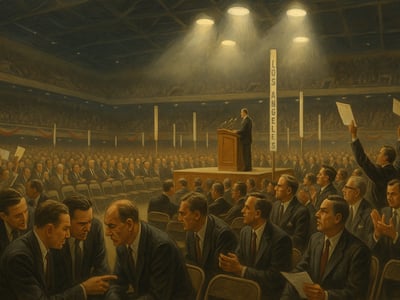
The word quarantine, said on television
The televised address changed the rhythm of the crisis. Before October 22, the most consequential decisions had taken place in secret meetings, with intelligence photographs and closed-door arguments shaping the debate. After the speech, the confrontation became openly international. Allies had to respond. The Organization of American States became part of the diplomatic picture. Moscow had to decide whether to challenge the quarantine line, deny the U.S. charges, or seek a way to manage the crisis without further escalation.
At sea, the stakes became immediate. The quarantine was set to take effect on October 24, and from that point the danger shifted from discovery to contact. If Soviet ships approached the line and U.S. naval forces tried to halt them, a crisis of intelligence and speech could become a crisis of direct armed confrontation. Every signal mattered: naval movements, public statements, military alerts, and the wording of messages exchanged between Washington and Moscow.
A line at sea, still ahead
Kennedy’s speech is often remembered because it compressed days of uncertainty into one decisive public moment. It did not resolve the crisis by itself. The missile sites remained in Cuba, and the most dangerous days were still ahead. But the address established the framework within which the rest of the confrontation unfolded. It defined the U.S. position, announced the first major coercive step, and communicated that the administration was trying to combine pressure with restraint.
That balance was central to the decision. A stronger immediate strike might have seemed more decisive, but it also carried a higher chance of uncontrolled escalation. A weaker response might have suggested acceptance of the missiles. The quarantine, as announced on October 22, was a middle course: forceful enough to demonstrate opposition, limited enough to preserve time for diplomacy.
Why it still matters
Kennedy’s October 22 address remains one of the most studied examples of crisis communication in the nuclear age. It shows how leaders may have to act under severe time pressure, using incomplete information while trying to avoid steps that could make a dangerous situation irreversible.
The episode also helped shape later practices in surveillance review, alliance consultation, and military signaling. The path from aerial reconnaissance to presidential announcement became a model for how intelligence could be translated into public policy, while the debates inside ExComm became a case study in how governments test options short of immediate war.
For historians, diplomats, and security analysts, the speech is not just a Cold War landmark. It is a reminder that wording, timing, and limited military measures can matter as much as raw force when nuclear-armed states confront one another. The Cuban missile crisis would continue through the final days of October 1962, but Kennedy’s televised announcement was the moment when the world was formally told how close that confrontation had come.
Timeline
- U-2 photographs missile sites in Cuba
- Kennedy is told of the photographs
- Kennedy announces the naval quarantine
- Naval quarantine takes effect
What you uncovered
The Meaning of Quarantine
You didn't just…complete a puzzle; you traced a moment when public wording became part of managing a nuclear crisis.
Kennedy's use of the word "quarantine" was not a minor rhetorical choice. It helped present the U.S. move as narrower and more defensible than a formal blockade, while aligning the announcement with regional diplomacy and a legal-political case the administration could explain publicly. The episode still matters because crisis management is not only about military force, but also about how states signal limits, justify action, and leave room for an opponent to respond without immediate escalation.
Before the public address, a U-2 flight on 1962-10-14 photographed Soviet missile installations in western Cuba.
FAQ
What happened on 22 October 1962?
On 22 October 1962, U.S. President John F. Kennedy delivered a televised address from the White House. He said U.S. reconnaissance had identified Soviet missile bases under construction in Cuba and announced a naval quarantine of the island.
What did Kennedy say about the missiles in Cuba?
Kennedy said U.S. reconnaissance had identified Soviet missile bases under construction in Cuba. He told the public that the United States had photographic evidence from U-2 reconnaissance.
Why did Kennedy use the word quarantine?
In his 22 October 1962 address, Kennedy announced a naval quarantine of Cuba. The brief does not provide a fuller explanation of the wording, only that this was the term he used in the public announcement.
What led up to Kennedy's announcement?
A U-2 reconnaissance flight on 14 October 1962 photographed Soviet missile installations in western Cuba. Kennedy was informed of the findings on 16 October and then began meetings with the Executive Committee of the National Security Council, known as ExComm.
When did the quarantine begin?
The quarantine announced by Kennedy was in place by 24 October 1962. The announcement itself had been made two days earlier, on 22 October.