About this story
On 24 October 1945, the Charter of the United Nations entered into force after the required ratifications, including those of the five future permanent members of the Security Council, were deposited in Washington, D.C. The signing in San Francisco on 26 June had not by itself created the organization. This was the legal start.
The United Nations was formally established on 24 October 1945 after charter ratifications were deposited.
On 24 October 1945, the Charter of the United Nations entered into force, and the United Nations formally came into existence. The moment was legal as much as ceremonial. Earlier that year, governments had agreed on the text in San Francisco, but the new organization could not actually begin its work until the ratification terms written into the charter had been met. Only when the required documents were deposited in Washington, D.C., did the postwar institution move from plan to reality.
A charter is not yet an organization
That distinction mattered. In the aftermath of World War II, many leaders wanted a stronger framework for international cooperation than the one that had existed between the wars. The League of Nations had provided an earlier model of organized diplomacy, but its weaknesses had become clear during the 1930s. As the war continued, the Allied powers discussed what a new international body might look like, how broadly it should represent states, and how much authority it should have in matters of peace and security.
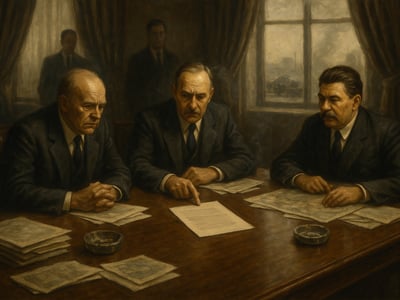
Those discussions took shape through wartime planning and negotiation. The Dumbarton Oaks proposals of 1944 outlined a possible structure for a future organization, including a General Assembly, a Security Council, and an international court. Questions about voting and the role of the major powers remained difficult, and some of them were addressed in further discussions at Yalta in early 1945. By the time delegates gathered in California in the spring, much of the institutional design had been sketched, but it still had to be debated, revised, and formally adopted.
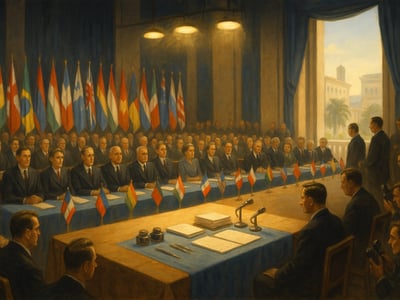
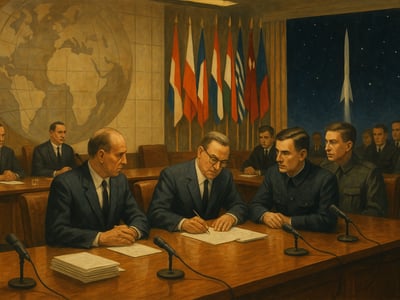
The United Nations Conference on International Organization met in San Francisco from 25 April to 26 June 1945. Delegates from 50 countries took part. The gathering was both practical and symbolic: practical because it had to produce a working charter, symbolic because it represented an effort to turn wartime alliance into a standing international system. The conference produced the Charter of the United Nations, which delegates signed on 26 June 1945.
From Dumbarton Oaks to San Francisco
Signing the charter, however, did not by itself establish the organization. Article 110 set out the legal threshold for the charter to take effect. Ratification was required not only from a majority of the signatory states, but specifically from the five countries that would become the permanent members of the Security Council: China, France, the Soviet Union, the United Kingdom, and the United States. This requirement reflected political reality. The proposed system of collective security depended on the participation of the largest military and diplomatic powers involved in the settlement of the war.
That arrangement revealed one of the central tensions built into the founding of the UN. The organization was presented as a forum for international cooperation among sovereign states, yet it was also designed around the consent and continued involvement of the major powers. Without them, the charter would remain only a document signed at a conference. With them, it could become an operating institution, though one shaped from the beginning by unequal influence.
Five ratifications, or no institution
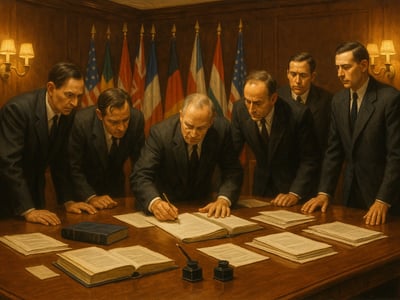
The final step came in Washington, D.C. On 24 October 1945, the required ratifications were deposited with the government of the United States, as the charter specified. At that point, the treaty entered into force. This is why 24 October, rather than the June signing in San Francisco, is recognized as the founding date of the United Nations.
The event did not instantly create the fully functioning organization people now associate with the name. Institutions still had to convene, officials had to be appointed, and working procedures had to be established. The first meetings of major UN bodies would follow in 1946. Even so, the legal act of entry into force was decisive. It created the framework within which those later meetings could happen.
The day the treaty began to bind
The old and new systems also briefly overlapped. Although the United Nations had been established in October 1945, the League of Nations was not formally dissolved until 20 April 1946. That overlap underscored the transitional nature of the period. The world was not simply replacing one organization with another overnight; it was moving, through law and diplomacy, from one model of international order to the next.
Several well-known figures were connected to this process, including U.S. President Harry S. Truman, U.S. Secretary of State Edward Stettinius Jr., British Prime Minister Winston Churchill, Soviet foreign minister Vyacheslav Molotov, and Chinese diplomat T. V. Soong. Yet the founding of the UN was not the act of a single leader. It depended on negotiation among governments, the drafting of treaty language, and the willingness of states to bind themselves to a shared institutional framework after a global war.
Why it still matters
The charter that entered into force on 24 October 1945 remains one of the central legal documents of modern international relations. It established an enduring structure for diplomacy among states and set out principles that still shape debate about sovereignty, collective security, and the use of force. Even when governments disagree sharply about how those principles should be interpreted, they often do so within a framework defined by the charter itself.
The institutions created under that framework also remain central to international public life. The General Assembly provides a forum in which states can present positions before the wider membership. The Security Council carries specific responsibilities relating to peace and security. The International Court of Justice stands as a judicial body within the UN system. These institutions have changed over time in practice and influence, but their existence traces back directly to the charter’s entry into force.
The founding of the United Nations also illustrates a broader historical point about the postwar world. International order was not created only through speeches or declarations of intent. It was built through formal agreements, ratification procedures, and institutions meant to persist beyond the immediate crisis that gave rise to them. On 24 October 1945, the key event was not merely the announcement of a new body. It was the moment a treaty crossed the legal threshold required to bring that body into being.
Timeline
- Dumbarton Oaks talks open
- Yalta Conference opens
- San Francisco conference opens
- UN Charter signed
- Charter enters into force
What you uncovered
When a Charter Becomes Real
You didn't just complete a puzzle—you traced the moment a wartime plan became a functioning international organization through formal ratification.
The United Nations did not come into being simply because its charter was signed or publicly announced. It began when Article 110's ratification requirements were actually met, showing how international institutions depend on legal consent as much as political vision. That distinction still matters because much of global governance rests on treaties, procedures, and the willingness of states to bind themselves to shared rules.
The League of Nations was not formally dissolved until 20 April 1946, several months after the UN Charter had already entered into force.
FAQ
Why is 24 October 1945 the UN’s founding date?
That is the day the Charter of the United Nations entered into force. The required ratifications had been deposited with the government of the United States in Washington, D.C., so the organization formally came into existence.
Who had to ratify the UN Charter before it could begin?
Article 110 required ratification by the Republic of China, France, the Soviet Union, the United Kingdom, the United States, and a majority of the other signatory states. Only after those ratifications were deposited could the Charter take effect.
Where was the UN Charter signed in 1945?
It was signed at the United Nations Conference on International Organization in San Francisco, California. The signing took place on 26 June 1945.
How did the United Nations begin differently from the League of Nations?
The United Nations began when its Charter entered into force through ratification, creating a new intergovernmental body after World War II. The League of Nations remained in existence until 20 April 1946, after the UN had already started.