
About this story
Compulsory labor decree for Jewish men in the Slovak Republic, 4 July 1941
On July 4, 1941, the government of the wartime Slovak Republic ordered Jewish men between the ages of 18 and 60 into compulsory labor service. The decree was one more step in a tightening system of anti-Jewish persecution within the Slovak state, where exclusion, registration, and legal restriction were being turned into direct state control over people’s movement and work. What appeared on paper as an administrative measure was, in practice, forced labor imposed on a defined population because it was Jewish.
The Slovak Republic had been created in 1939 under conditions shaped by Nazi Germany’s expansion in Central Europe. From its beginning, the regime developed anti-Jewish policies through laws, decrees, and bureaucratic procedures. Jewish communities faced dispossession, exclusion from economic life, and increasing legal discrimination. By mid-1941, the state had already established a framework in which officials could identify, classify, and restrict Jews through government authority.
The July 4 decree marked a further escalation. It did not target the population in general. It specifically applied to Jewish men in a defined age range: 18 to 60. In this respect, the measure was both selective and systematic. It used the machinery of the state to separate one group from the rest of society and subject it to compulsory labor. The decision reflected a broader pattern in which persecution advanced not only through violence, but also through forms, registries, orders, and enforcement carried out by offices and ministries.
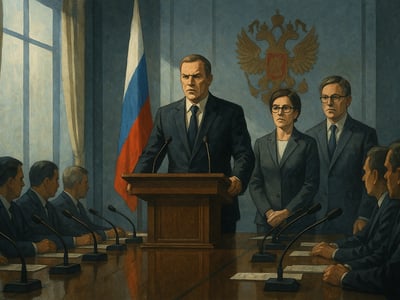
At the head of the Slovak state at the time was President Jozef Tiso. The government was led by Vojtech Tuka, and Alexander Mach served as interior minister. These were not marginal figures. They stood within the political leadership and state apparatus during the adoption and administration of anti-Jewish measures in 1941. Their offices mattered because persecution required more than ideology: it required ministries, police structures, local officials, and the ability to translate policy into routine administration.
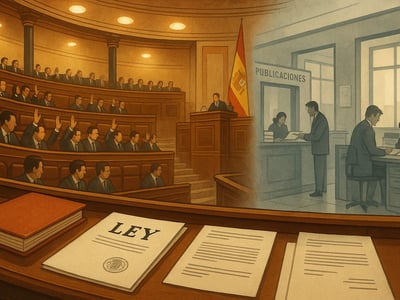
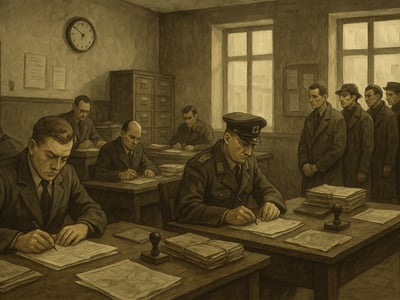
That administrative side is essential to understanding the decree. A labor conscription order had to be recorded, communicated, and enforced. Officials had to identify who was covered, assign men to work, and organize places where labor could be extracted under state supervision. This process did not happen all at once, and it could have faced delays or confusion. Yet the system was built quickly enough that by September 1941, about 5,500 Jews were assigned to manual labor in small labor centers within Slovakia.
Those centers were not incidental. They showed that the decree was not simply symbolic. It was implemented in concrete settings where people were compelled to perform labor because the state had designated them as Jews. The transition from legal discrimination to forced labor demonstrates how persecution deepened step by step. Each measure made the next one easier to administer. Once a group had been identified in law and subjected to special obligations, the state had a ready-made structure for tighter forms of control.
This sequence also helps place the July decree in the wider chronology of anti-Jewish policy in Slovakia. Later in 1941, the Jewish Code would consolidate and expand anti-Jewish legislation. In 1942, deportations from Slovakia would begin. The July labor conscription decree therefore belongs to an earlier phase in which the state was already building administrative practices that isolated Jews from the rest of the population and made further persecution easier to organize.
It is important to describe this process precisely. Forced labor was not a neutral labor measure, and it was not simply an emergency wartime policy applied equally across society. It was persecution directed at Jews as Jews. The decree illustrates how a government could move from exclusion to compulsion by using legal language and administrative routine. That progression mattered because it accustomed institutions to treating a targeted minority as a population to be managed, constrained, and used by the state.
The Slovak case also shows that anti-Jewish persecution in wartime Europe was not carried out only by external occupying authorities. Within an allied regime, domestic institutions played a direct role. Ministries, local administrations, and police structures were part of the mechanism. The persecution of Jews in Slovakia was therefore not only a story of foreign pressure, but also of decisions taken and implemented by the Slovak state itself.
Why it still matters
This event remains important because it reveals how persecution can advance through ordinary administrative tools before it reaches later, more widely recognized stages. A decree, a registry, and a labor assignment may seem less visible than mass deportation, yet they are part of the same historical process. They create categories, normalize unequal treatment, and give institutions practice in enforcing discrimination.
The July 4, 1941 decree also helps explain the role of state responsibility. The machinery that compelled Jewish men into labor was not abstract. It consisted of offices, signatures, chains of command, and officials who acted within a government system. Understanding that structure is essential for understanding how the Holocaust unfolded differently in different countries while still relying on local administrations and allied regimes.
Remembering measures like this one also guards against a misleading view of persecution as something that begins only with its most extreme outcomes. In Slovakia, as elsewhere, the path toward deportation and destruction was prepared through earlier stages of legal exclusion and forced labor. The history of July 1941 shows how bureaucratic decisions could reshape daily life, strip away rights, and help build the wider machinery of the Holocaust.
Timeline
- Slovak labor conscription decree
- Jewish labor centers in Slovakia
What you uncovered
When Paperwork Becomes Persecution
You didn't just… complete a puzzle; you traced the moment when state policy turned discrimination into compulsory labor for Jewish men in wartime Slovakia.
This decree mattered not only for what it ordered immediately, but for the administrative path it created. Once persecution was organized through registries, categories, and labor assignments, later measures could build on structures that already existed. It is one way to see how the Holocaust advanced through routine state procedures as well as open violence.
By September 1941, approximately 5,500 Jews were performing manual labor in small labor centers within Slovakia.
FAQ
What did the 4 July 1941 decree require?
On 4 July 1941, authorities in the Slovak Republic issued a decree requiring Jewish men aged 18 to 60 to enter labor service. It was a compulsory measure within the wartime Slovak state.
Who was in power in Slovakia when the decree was issued?
Jozef Tiso was president of the Slovak Republic when the decree was issued. Vojtech Tuka headed the government in July 1941, and Alexander Mach served as interior minister.
How many Jews were in labor centers by September 1941?
By September 1941, approximately 5,500 Jews were performing manual labor in small labor centers within Slovakia. The decree had been turned into an organized system of forced labor.
How did this labor policy fit into later persecution?
It was part of a wider system of anti-Jewish regulations in the Slovak Republic. The measure shows how persecution advanced through official decrees and state administration before later deportations in 1942.