
About this story
On 16 August 1960 Cyprus became an independent republic, ending British colonial administration and installing Archbishop Makarios III as president and Fazıl Küçük as vice president. Independence followed the Zurich–London settlement, a power-sharing constitution, and strategic exceptions that left Britain sovereign over the Akrotiri and Dhekelia base areas.
Cyprus becomes an independent republic on 16 August 1960
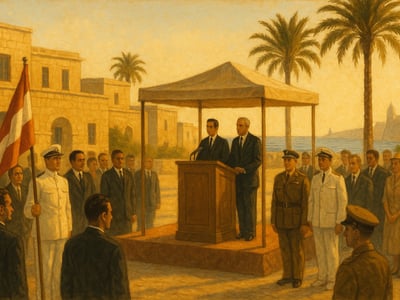
On 16 August 1960, Cyprus became an independent state, ending British colonial administration on the island and bringing the Republic of Cyprus formally into existence. The date marked a major constitutional and diplomatic turning point in the eastern Mediterranean. Archbishop Makarios III took office as the first president, while Fazıl Küçük became the first vice president, symbolizing from the outset that the new state had been designed around a carefully balanced relationship between the island’s Greek Cypriot and Turkish Cypriot communities.
Contested island under British rule
Independence did not arrive as a simple declaration or a clean break made by one side alone. It emerged from a negotiated settlement shaped by several governments and political leaders with different aims. Britain had administered Cyprus since 1878, and by the 1950s the island had become the scene of anti-colonial conflict, including the EOKA campaign and the wider crisis often called the Cyprus Emergency. British rule had become increasingly difficult to sustain, yet the future of Cyprus remained deeply contested. Some favored union with Greece, others feared such an outcome, and Turkey, Greece, Britain, and Cypriot representatives all had stakes in the island’s future.
That made independence both possible and complicated. No single outcome could satisfy every demand. A settlement had to do more than end colonial rule; it also had to create a state that the main interested parties would accept, or at least tolerate. The challenge was not only legal but political. If the transfer of power came without a framework for coexistence, the new country could begin its life in immediate crisis.
Zurich–London settlement before independence day
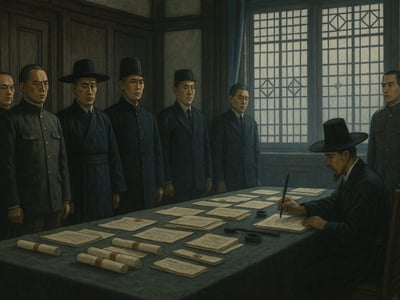
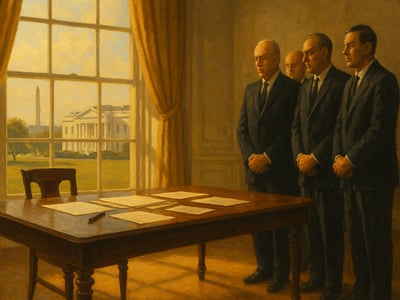
A decisive step came on 19 February 1959, when agreements concluded in London, following earlier negotiations in Zurich, set the framework for Cypriot independence. These arrangements linked sovereignty to a detailed constitutional order and to a wider treaty system involving the United Kingdom, Greece, and Turkey. The new republic would not be built on an undefined promise of self-rule to be worked out later. Instead, much of its structure was fixed before independence day arrived.
For Cypriot leaders, this required a difficult choice. Accepting the settlement meant accepting limits as well as gains. The constitution created a power-sharing system meant to distribute authority between the two main communities. The offices of president and vice president were assigned from the start to a Greek Cypriot and a Turkish Cypriot respectively. This was intended to reduce the fear that independence would simply hand complete control to one side while leaving the other exposed. At the same time, such arrangements were intricate and demanding, asking political actors to make a constrained system work from the first day.
Power-sharing from the first offices
Makarios III and Fazıl Küçük therefore entered office under conditions unlike those of many new states. They were not simply leaders of a newly sovereign country; they were also the first operators of a constitutional design meant to preserve balance. Their acceptance of that design carried political risk. Any compromise could draw criticism from supporters who wanted a different outcome, whether fuller national self-determination, stronger communal guarantees, or a more decisive break with outside influence.
The British withdrawal itself also came with important qualifications. Under the 1960 independence settlement, the United Kingdom retained sovereignty over Akrotiri and Dhekelia as Sovereign Base Areas. This meant that Cyprus became independent, but not in the sense of every inch of the island passing into the control of the new republic. Strategic concerns remained built into the final arrangement. The island’s location in the eastern Mediterranean had long given it importance beyond its size, and that strategic dimension did not disappear with independence.
Independence with strategic exceptions
The result was a form of decolonization that was both real and heavily structured. Cyprus entered statehood with its sovereignty recognized, its offices filled, and its constitutional order defined. But it also began with external treaties, carefully allocated institutions, and strategic exceptions that shaped the meaning of independence itself. In that sense, 16 August 1960 was not only an ending. It was also the moment when an unusually detailed political system had to move from paper into practice.
That transition from design to governance mattered immediately. Constitutions can promise balance, but they cannot by themselves produce trust. Treaties can settle formal questions, but they cannot remove every fear or rivalry that helped make the treaties necessary in the first place. The republic therefore started life with demanding expectations built into its foundations. Its leaders had to show that the new order could function in everyday government, not only in diplomatic documents.
Why it still matters
Cyprus’s independence remains historically important because it shows that decolonization was not always a straightforward story of empire ending and a nation simply taking full control. In this case, independence was achieved through negotiated agreements among local and external actors, with sovereignty, security, and constitutional structure all tied together. That makes Cyprus a useful example for understanding how post-imperial transitions could be carefully engineered rather than cleanly separated.
The event also helps explain why constitutional design became so central to the island’s later history. The 1960 settlement was an attempt to stabilize a divided society through institutional balance and international guarantees. For historians and political observers, it remains a case study in both the promise and the fragility of power-sharing arrangements created at the moment of state formation.
It also matters because the settlement left behind questions that were not temporary details but core features of the new republic. The retention of Akrotiri and Dhekelia under British sovereignty demonstrated that formal independence could coexist with continuing strategic footholds for a former colonial power. That feature of the agreement still makes the event relevant in broader discussions about military presence, treaty-based sovereignty, and the lasting effects of empire.
Seen from a distance, 16 August 1960 was the day Cyprus became independent. Seen more closely, it was the day a new state began under a framework designed to hold together competing interests, fears, and ambitions. That combination of freedom, compromise, and constraint is what gives the moment its lasting significance.
Timeline
- British administration of Cyprus begins
- EOKA campaign / Cyprus Emergency era begins
- London agreements conclude independence framework
- Republic of Cyprus established; Makarios III president, Fazıl Küçük vice president
What you uncovered
A State Designed in Advance
You didn't just… complete a date puzzle; you reconstructed the moment Cyprus moved from colonial rule into a state whose rules were largely set before it began.
Cyprus's independence was not framed as a simple handover followed by open-ended nation-building. It arrived as a negotiated operating system, with constitutional roles, security arrangements, and limits on sovereignty built into the settlement from the first day. That made independence possible across competing interests, but it also meant the new republic began life inside a structure that was meant to manage division rather than dissolve it.
Under the 1960 independence settlement, the United Kingdom retained Akrotiri and Dhekelia as Sovereign Base Areas under British sovereignty.
FAQ
When did Cyprus become independent from Britain?
Cyprus became independent on 16 August 1960. On that date, the Republic of Cyprus formally came into existence as British rule on the island ended.
Who became the first leaders of independent Cyprus?
Archbishop Makarios III became the first President of the Republic of Cyprus on 16 August 1960. Fazıl Küçük became the first Vice President on the same day.
How was Cyprus independence agreed in 1959?
On 19 February 1959, agreements concluded in London between the United Kingdom, Greece, Turkey, and Cypriot representatives set the framework for Cypriot independence. Those agreements shaped the new constitutional settlement.
Did Britain leave Cyprus completely in 1960?
No. The 1960 independence settlement left Akrotiri and Dhekelia under British sovereignty as Sovereign Base Areas.
Why is Cyprus independence historically important?
It is an example of decolonization achieved through negotiated treaties rather than a simple unilateral break. It also shows how sovereignty and security arrangements were built into the new state from the start.