
About this story
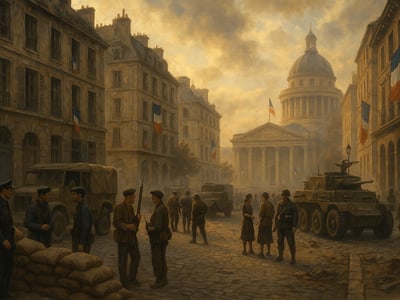
On 25 August 1944 German forces in Paris surrendered at the Préfecture de Police, ending more than four years of occupation. The Paris police uprising of 19 August, resistance inside the city, and the arrival of Philippe Leclerc’s French 2nd Armored Division on 24 August all converged before Dietrich von Choltitz signed. The next day Charles de Gaulle appeared on the Champs-Élysées as French authority returned to the capital.
Liberation of Paris after the German surrender, 25 August 1944.
On August 25, 1944, German forces in Paris surrendered as Allied troops and French forces consolidated control of the French capital. The signing at the Préfecture de Police marked the end of more than four years of German occupation in the city. For many people in Paris, the day was not a sudden miracle but the culmination of several tense days in which local resistance, civil authorities, and advancing armies all converged in a city still under arms.
Four years of occupation meet a closing campaign
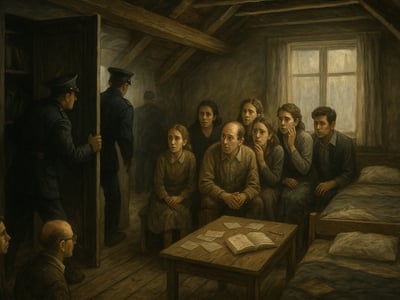
Paris had been under German occupation since June 1940, after France's defeat in the opening phase of the war in Western Europe. During those years, the city remained a political, administrative, and symbolic center, even as authority rested with occupying forces and with French institutions operating under constrained and compromised conditions. By the summer of 1944, however, the military balance had changed sharply. After the Allied landings in Normandy and the subsequent campaign across northern France, German control was weakening. The question was no longer whether the occupation would end, but how and when Paris would change hands.
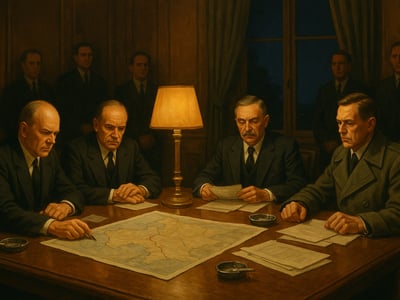
That question carried real risks. A major city could become the scene of prolonged street fighting. Transport, communications, and public services might collapse. Civilian casualties could rise quickly. There was also concern over what German commanders might do if ordered to hold or damage the city while retreating forces elsewhere were falling back. Paris was therefore not only a military objective but also a place where political authority, public order, and the physical fabric of the city all seemed to hang in the balance.
Uprising inside the Préfecture
The decisive phase began inside Paris itself. On August 19, 1944, the Paris police began an uprising and seized the Préfecture de Police. This was both a practical and symbolic act. The police headquarters was an important institutional site in the center of the city, and its seizure showed that German control was being openly challenged from within. Resistance forces, including the French Forces of the Interior, increased their activity, and barricades appeared in parts of Paris. Fighting continued, and the situation remained uncertain. Local resistance could disrupt German control, but it could not on its own guarantee a stable transfer of power across a large capital still containing armed occupiers.
As events in the city intensified, the approach of Allied and Free French forces took on greater urgency. Major General Philippe Leclerc's French 2nd Armored Division moved toward Paris as part of the broader Allied advance. On August 24, advance elements entered the city, including the column led by Captain Raymond Dronne. Their arrival had immediate military value, but it also carried political meaning. The entry of French troops into Paris under French command reinforced the claim that the liberation of the capital would not be seen simply as an external occupation replaced by another foreign military presence. It connected the military operation to the reassertion of French national authority.
Leclerc’s division and the 25 August surrender
Still, the situation on the ground remained tense. German units held positions in the city, and armed encounters continued. The danger of heavier urban combat had not disappeared. Allied commanders had to balance momentum with caution, while those already inside Paris faced the uncertainty of a city in transition, where neighborhoods, official buildings, and key routes could all become contested points.
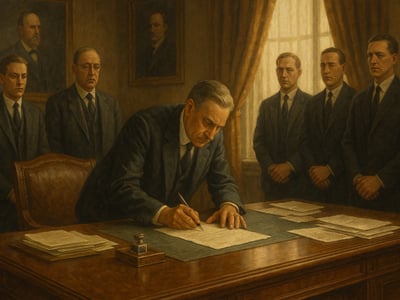
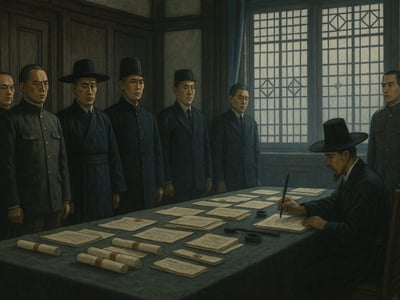
The turning point came on August 25. General Dietrich von Choltitz, the German military commander in Paris, signed the surrender at the Préfecture de Police. Leclerc accepted the capitulation of the German forces in Paris that same day. Other Allied forces, including elements of the U.S. 4th Infantry Division, also entered the capital as control was secured. The formal surrender did not erase the confusion of the preceding days, but it established a clear end to German military authority in the city.
Authority returns to a still-fragile capital
The locations associated with these events help explain their meaning. The Préfecture de Police was not just the site of a signature; it was a focal point where civil authority, resistance action, and military transition met. The Hôtel de Ville served as another symbolic center for Parisian public life. Gare Montparnasse became associated with command activity during the liberation. Together these places show that the liberation of Paris unfolded through institutions as well as through movement on the battlefield.
The following day, August 26, Charles de Gaulle marched down the Champs-Élysées and attended a service at Notre-Dame. That public reentry into Paris was one of the most visible images of the liberation. Yet it followed the more fragile sequence that had made such a procession possible: the police uprising, the resistance inside the city, the arrival of Leclerc's division, the surrender signed by von Choltitz, and the rapid restoration of authority in a capital that still carried the marks of occupation and conflict.
Why it still matters
The liberation of Paris remains significant because it shows that the transfer of control in a major city is rarely the result of a single action. In August 1944, local resistance, civil institutions, Free French leadership, and Allied military operations all played roles that overlapped rather than neatly replacing one another. That makes Paris an important case in the history of urban liberation.
It also matters because the event sits at the intersection of military history and state restoration. The end of German control in Paris was not only about battlefield movement; it was also about who would exercise authority once the occupation collapsed. The reappearance of French institutions and the public role of figures such as Leclerc and de Gaulle made the liberation central to the story of how national government authority was reestablished in France.
Finally, the surrender in Paris remains one of the best-documented episodes of the war in Western Europe. Military archives, memoirs, official records, and commemorations continue to revisit these August days because they reveal how symbolic capitals are fought over, governed, and reclaimed. Paris in 1944 is remembered not simply because a city was entered, but because a long occupation ended through a combination of internal revolt and external advance.
Timeline
- German occupation of Paris begins
- Paris uprising begins at the Préfecture de Police
- French 2nd Armored Division advance elements enter Paris
- German surrender in Paris signed
- De Gaulle marches down the Champs-Élysées
What you uncovered
More Than a Military Entry
You didn't just… complete a scene from the end of the occupation; you traced a moment when fighting in the city, Allied movement, and French authority converged.
The liberation of Paris is often remembered as a single dramatic arrival, but it was also a transfer of control shaped by several forces at once. An internal uprising, the advance of French and American units, and the question of who would visibly restore authority all mattered to what happened in the city. That combination helps explain why Paris remains important not only as a military episode, but also as a case study in how occupation ends and government is reestablished.
On 1944-08-24, advance elements of the French 2nd Armored Division entered Paris, including the column led by Captain Raymond Dronne.
FAQ
What happened in Paris on 25 August 1944?
German forces in Paris surrendered on 25 August 1944 after fighting linked to the Allied advance into the city. The surrender ended more than four years of German occupation in Paris.
Who entered Paris as the city was liberated?
Major General Philippe Leclerc's French 2nd Armored Division entered Paris, along with elements of the U.S. 4th Infantry Division. On 25 August 1944, Leclerc accepted the surrender of German forces in the city.
Where did Dietrich von Choltitz sign the surrender?
Dietrich von Choltitz signed the German surrender in Paris at the Préfecture de Police. The signing took place on 25 August 1944.
What role did the Paris police play before the liberation?
On 19 August 1944, the Paris police began an uprising and seized the Préfecture de Police. This took place before the final surrender on 25 August.