
About this story
On 26 August 1920 U.S. Secretary of State Bainbridge Colby certified the Nineteenth Amendment in Washington, D.C., confirming that the right to vote could not be denied on account of sex. Congress had approved the amendment on 4 June 1919; Tennessee’s ratification on 18 August supplied the 36th state. The legal victory followed decades of organizing by figures such as Carrie Chapman Catt and Alice Paul, while practical ballot access for many women remained unfinished.
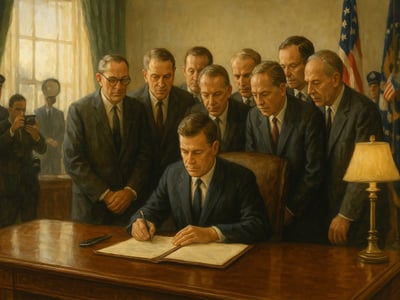
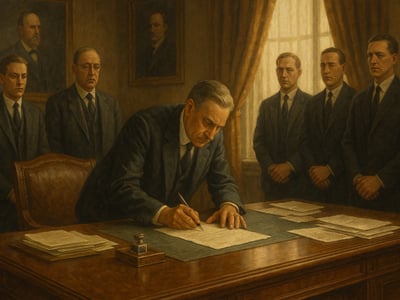
Bainbridge Colby certifies the Nineteenth Amendment in Washington, D.C., on August 26, 1920.
Video puzzle
On August 26, 1920, in Washington, D.C., U.S. Secretary of State Bainbridge Colby signed the proclamation certifying the ratification of the Nineteenth Amendment. With that act, a constitutional change that had moved through Congress, state legislatures, and a tense final ratification battle became official: the right of citizens of the United States to vote could not be denied or abridged on account of sex.
From state-by-state gains to a federal amendment
The certification marked the end of one legal process, but it represented the culmination of a much longer political campaign. For decades, women’s suffrage advocates had argued, organized, lobbied, petitioned, and campaigned for a constitutional guarantee. By 1920, some women in the United States already voted in certain states and territories, especially in the West, where state-level reforms had been adopted earlier. But those gains were uneven. Without a federal constitutional amendment, voting rights still depended heavily on state law.
The path to national change required several separate steps. First, Congress had to approve the amendment. That happened on June 4, 1919, when the proposed Nineteenth Amendment cleared the federal legislative process and was sent to the states. Under the U.S. Constitution, an amendment did not take effect simply because Congress passed it. It also needed ratification by three-fourths of the states. In 1920, with 48 states in the union, that meant 36 ratifications were required.
Tennessee’s 36th ratification
That threshold turned the final stage into a state-by-state contest. Suffrage supporters and opponents focused their efforts on legislatures around the country, knowing that each vote mattered. National organizations worked through local networks, while public debate unfolded in speeches, newspapers, meetings, and legislative chambers. Leaders such as Carrie Chapman Catt, associated with the National American Woman Suffrage Association, and Alice Paul, a leading figure in the National Woman’s Party, represented different styles of advocacy, but both were connected to the broader pressure that kept the amendment moving forward.
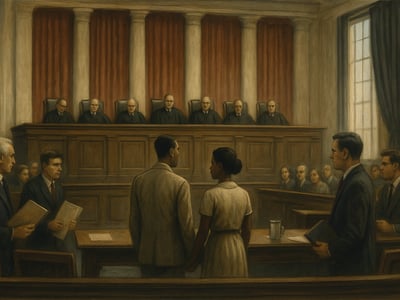
By the summer of 1920, the amendment stood close to adoption but had not yet crossed the constitutional line. Attention narrowed to Tennessee, where lawmakers met in Nashville for what became one of the decisive battles of the campaign. On August 18, 1920, Tennessee voted to ratify the amendment, becoming the 36th state needed.
Colby’s certification in Washington
The Tennessee proceedings became especially well remembered because of legislator Harry T. Burn. During the House proceedings, Burn changed his position, and his vote helped determine the outcome. In a process that can seem abstract when described only as constitutional procedure, this moment showed how national change could rest on individual decisions made in a crowded statehouse under intense political pressure. Supporters knew they were close to victory; opponents knew a delay or defeat in a key state could slow the amendment again, perhaps for months or longer.
Even after Tennessee acted, the process still required formal recognition at the federal level. Ratification by the necessary number of states established the amendment constitutionally, but certification mattered because it confirmed the result in official national form. That final step fell to the State Department. On August 26, Colby signed the proclamation that recognized the amendment as part of the Constitution.
A constitutional victory with unfinished access
The text he certified was short and direct. It stated that the right of citizens of the United States to vote shall not be denied or abridged on account of sex. Like many constitutional provisions, its language was concise, but the political struggle behind it had been anything but simple. The amendment reflected decades of organizing that stretched back at least to the nineteenth century, including conventions, reform campaigns, and efforts to connect voting rights to broader questions of citizenship and representation.
The date of certification is therefore significant not only because it completed a legal formula, but because it transformed a reform movement’s goal into constitutional law. The sequence mattered: congressional approval in 1919, state ratification campaigns across the country, Tennessee’s decisive vote on August 18, 1920, and federal certification eight days later. Each step had to happen. If one had failed, the amendment would not have entered the Constitution on that date.
Why it still matters
The certification of the Nineteenth Amendment remains important partly because it shows, very clearly, how constitutional change works in the United States. A proposal does not become law through a single dramatic decision. It moves through institutions: Congress approves it, states ratify it, and federal officials certify the outcome. The amendment is often remembered as a landmark in women’s political rights, but it is also a case study in procedure, coalition-building, and the relationship between state and federal power.
It also remains central to the history of organized suffrage activism. The amendment did not appear suddenly in 1920. It emerged from sustained lobbying, public persuasion, internal movement strategy, and state-level campaigning. That makes it an important example of how reform movements operate over long periods, sometimes advancing unevenly before reaching a constitutional breakthrough.
At the same time, the event should not be treated as the end of all struggles over voting rights. The amendment barred denial of the vote on account of sex, but formal constitutional protection did not automatically guarantee equal practical access to the ballot for all women in every place. Black women in particular, especially in the Jim Crow South, continued to face barriers such as discriminatory laws and administrative obstruction. Native American women, Asian American women, and others also encountered limits tied to citizenship status, exclusionary policies, and local practices. The history of August 26, 1920, is therefore both a story of constitutional achievement and a reminder that legal recognition and lived access do not always arrive at the same time.
That dual reality helps explain why the certification still draws attention. It stands as a major democratic milestone, but it also invites a more careful reading of how rights are written, recognized, and enforced. The proclamation Bainbridge Colby signed in Washington confirmed a change in the Constitution. The wider history that followed shows how much work can remain even after a victory has been formally declared.
Timeline
- Seneca Falls Convention opens
- Congress approves the Nineteenth Amendment
- Tennessee becomes the 36th state to ratify
- Bainbridge Colby certifies the Nineteenth Amendment
What you uncovered
How Procedure Shaped Change
You didn't just… complete a puzzle; you traced the final procedural steps that turned a long suffrage campaign into a certified constitutional amendment.
The certification of the Nineteenth Amendment is a reminder that major constitutional change does not happen at a single dramatic moment. It moved through Congress, depended on enough states agreeing, and only became official after federal certification. That narrow path helps explain how national rights can rest on local votes, legislative procedure, and administrative acts rather than on principle alone. It also helps show why formal legal change and actual access to the ballot do not always advance at the same pace.
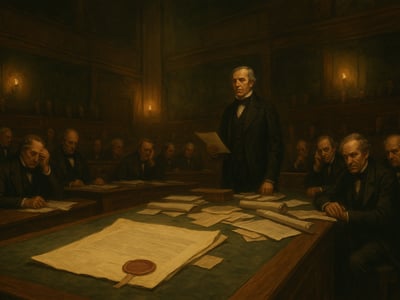
Congress approved the Nineteenth Amendment on June 4, 1919, before sending it to the states for ratification.
FAQ
What happened on August 26, 1920?
On August 26, 1920, U.S. Secretary of State Bainbridge Colby certified the ratification of the Nineteenth Amendment in Washington, D.C. This formally confirmed that the amendment had been adopted after the required state ratifications were secured.
Why was Tennessee important for the 19th Amendment?
Tennessee became the 36th state to ratify the amendment on August 18, 1920, which met the constitutional threshold then required. Its ratification was the final needed state approval before federal certification.
Who was Harry T. Burn in the suffrage vote?
Harry T. Burn was a Tennessee legislator whose change of vote during the House proceedings on August 18, 1920 helped secure ratification. That vote helped make Tennessee the deciding state.
What did Bainbridge Colby do on August 26, 1920?
As U.S. Secretary of State, Bainbridge Colby signed the proclamation certifying the Nineteenth Amendment in Washington, D.C. His action recognized that the amendment had met the ratification requirement and was part of the U.S. Constitution.
Did the 19th Amendment give every woman an immediate right to vote?
No. The amendment barred denial of the vote on account of sex, but it did not remove all barriers to voting or ensure equal access in practice for every woman in every place.