

About this story
On 31 August 1939 SS operatives staged an attack at the Gleiwitz radio station in Upper Silesia and presented it as Polish aggression. The incident was part of a wider set of manufactured border episodes used to frame Germany as responding, not attacking. The next day Germany invaded Poland and the European war that became World War II began.
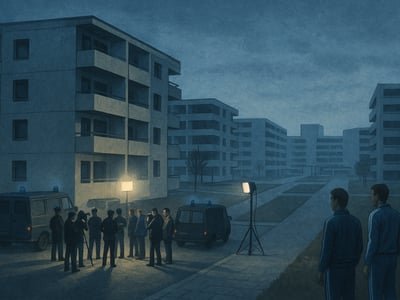
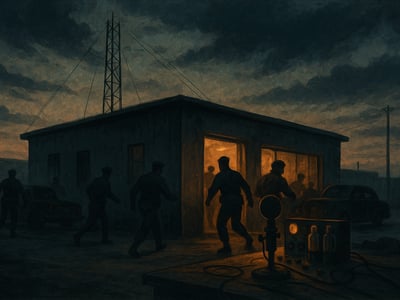
Gleiwitz radio station after the staged SS incident of 31 August 1939
On August 31, 1939, SS operatives carried out a staged attack at the radio station in Gleiwitz, in Upper Silesia, then part of Germany. Presented as if it were a Polish assault, the incident was designed to support Nazi claims that Germany was responding to aggression from across the border. Within a day, Germany invaded Poland, and Europe entered the war that became World War II.
A staged incident on the eve of invasion
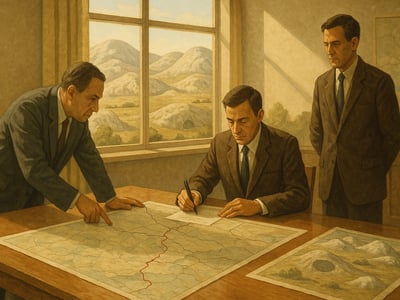
The Gleiwitz incident did not appear in isolation. In the final days of August 1939, Nazi authorities were preparing a broader set of manufactured frontier episodes meant to strengthen anti-Polish propaganda and give a public appearance of justification for military action already being planned. The political goal was not simply to create confusion at a local level. It was to build a narrative: Germany, according to official claims, had been provoked and was acting defensively.
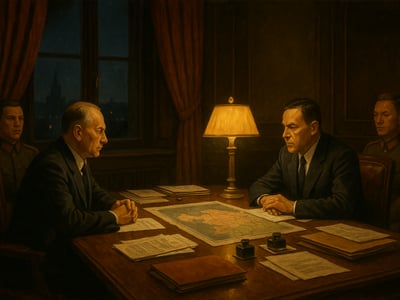
The effort moved through the security apparatus of the regime. Reinhard Heydrich directed SS preparations for staged border incidents in late August 1939 as part of the broader operation later referred to as Operation Himmler. Orders passed through Nazi police and intelligence channels, and selected targets were prepared for controlled provocations. The point was not to hold territory or fight an actual battle. It was to create evidence, headlines, and a sequence of events that could be cited immediately.
Gleiwitz was one such target. On the evening of August 31, SS operatives seized Sender Gleiwitz, the local radio station. Alfred Naujocks later described his role in the action in postwar testimony at Nuremberg, making his account one of the best-known sources for how the operation was carried out. According to that testimony and later historical reconstruction, the team entered the station, briefly took control, and transmitted a short message in Polish intended to make the event appear to be the work of Polish attackers.
Operation Himmler and the need for a pretext
The choice of a radio station was significant. Radio had become one of the central means by which states reached large audiences quickly. A seizure of a transmitter, however brief, carried symbolic force beyond the immediate location. It suggested not just a border disturbance but an attack on the means of public communication itself. Even if only a small number of people heard the broadcast directly, the claim could be repeated and amplified through official channels.
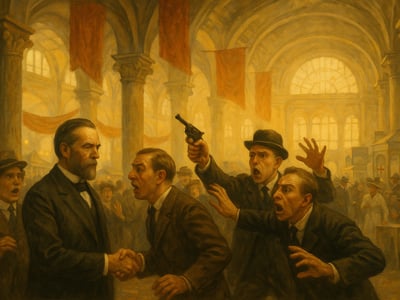
A key element of the deception was physical evidence. Franciszek Honiok, a Silesian man arrested by German authorities, was killed and left at the site. His body was meant to serve as proof that the supposed attackers had been present. The use of a murdered civilian as planted evidence showed the degree to which the operation was planned not as an improvised stunt but as a coordinated act involving violence, propaganda, and bureaucratic control.
The radio station, the broadcast, and planted evidence
This mattered because Nazi authorities did not merely want to wage war; they wanted a narrative that could accompany the opening move. Hitler referred on September 1, 1939, to alleged Polish border provocations in his Reichstag speech announcing military action against Poland. By then, the military decision had already been made, but the regime still sought language that would frame the invasion as a response rather than an act of aggression.
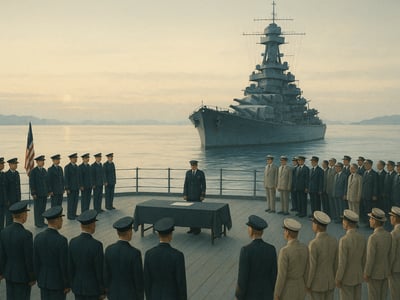
The Gleiwitz attack thus belonged to a narrow but important interval: the final hours before open war began. Germany invaded Poland on September 1, one day after the incident. The invasion quickly overshadowed the event itself, yet the radio station episode remains important because it shows how the regime connected covert action to public explanation. A small, carefully staged operation was fitted into a much larger military timetable.
From Gleiwitz to the invasion of Poland
The wider diplomatic setting helps explain why timing mattered so much. In August 1939, Europe was already in crisis, and the Molotov-Ribbentrop Pact had altered expectations about what might happen next. German leaders were preparing for war while also shaping the message that would accompany it. In that context, the staged border incidents were not random fabrications. They were part of a sequence in which military planning, propaganda, and state security were coordinated closely.
Historians treat the Gleiwitz incident with care because some of its operational details depend heavily on postwar testimony, especially that of Naujocks. At the same time, the broad outline is well supported by multiple lines of evidence: testimony at Nuremberg, documentation of staged frontier operations, records of Hitler's public references to alleged provocations, and the known timing of the invasion itself. The event is therefore understood less as an isolated anecdote than as one piece of a larger pattern of state-organized deception.
Why it still matters
The Gleiwitz incident remains a useful case study in how governments can manufacture a limited, plausible incident to support a much larger act of force. It shows that disinformation is not only about persuasion after the fact; it can be built into military preparation before an attack begins. In this case, security services, propaganda mechanisms, and executive authority worked in concert.
It also matters because it reveals the role of scale in political deception. The operation at Gleiwitz was small in itself: a brief seizure of a station, a short broadcast, planted evidence, and rapid official use of the story. Yet small actions can serve large purposes when they are timed well and attached to state power. The significance of the incident lies not in the size of the event but in the function it served on the eve of war.
Finally, Gleiwitz remains historically important because of how it became known. Postwar tribunals and archival work helped reconstruct actions that had been designed to appear spontaneous or unattributable. That process demonstrates how historians and legal investigators piece together covert state behavior from testimony, documents, and context. The event survives in the historical record not because it was successful as truth, but because later evidence exposed it as fabrication.
Seen in that light, the attack on the Gleiwitz radio station was more than a border provocation. It was a constructed pretext, placed at a decisive moment, and used to help justify one of the most consequential invasions of the twentieth century.
Timeline
- Molotov–Ribbentrop Pact signed
- Staged attack at Gleiwitz radio station
- Hitler cites border provocations in the Reichstag
- Germany invades Poland
What you uncovered
Manufacturing a Pretext
You didn't just… piece together a radio station incident; you reconstructed how a fabricated event was used to support the first public narrative of a wider war.
States planning major violence often prefer a pretext that feels limited, immediate, and believable rather than an openly invented grand claim. In Gleiwitz, the point was not military necessity at the site itself, but the coordination of propaganda, security services, and political timing into a story that could be cited at once. That pattern still matters because it shows how bureaucratic systems can manufacture the appearance of reaction before the reality of aggression is fully visible.
Germany invaded Poland on 1 September 1939, one day after the staged Gleiwitz incident.
FAQ
What happened at the Gleiwitz radio station on 31 August 1939?
On 31 August 1939, SS operatives seized the Sender Gleiwitz radio station and staged it to look like a Polish attack. A short Polish-language broadcast was transmitted as part of the deception.
Who organized the Gleiwitz incident?
Reinhard Heydrich directed SS preparations for staged frontier incidents in late August 1939. Alfred Naujocks later described his role in postwar testimony at Nuremberg.
How was the Gleiwitz attack used before the invasion of Poland?
Nazi authorities used the staged incident as part of a public justification for military action against Poland. Adolf Hitler referred to alleged Polish border provocations in his Reichstag speech on 1 September 1939.
What evidence links the Gleiwitz incident to the historical record?
Historians use postwar testimony, including Alfred Naujocks' account, along with trial records and documentary collections. Franciszek Honiok was killed and left at Gleiwitz as physical evidence for the fabricated attack.
Was the Gleiwitz incident part of a larger operation?
Yes. It was part of a series of staged frontier incidents organized by Nazi authorities in late August 1939, later associated with Operation Himmler.