
About this story
On 28 August 1833 the Slavery Abolition Act received Royal Assent at Westminster, creating a legal framework to end slavery in most British colonies from 1 August 1834. The statute followed the 1807 slave-trade ban and pressure from campaigners including Thomas Fowell Buxton, as well as resistance in colonies such as Jamaica. It also authorized £20 million in compensation to slave owners and an apprenticeship system that delayed full freedom until 1838.
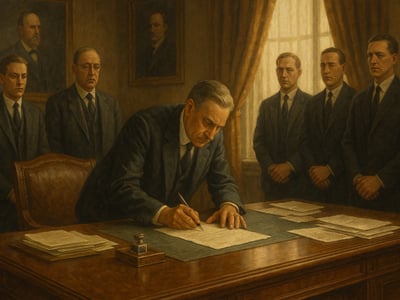
The Slavery Abolition Act 1833 received Royal Assent at Westminster on 28 August 1833.
On 28 August 1833, the Slavery Abolition Act received Royal Assent at Westminster, becoming law in the United Kingdom. The measure is often remembered as a decisive step in the history of abolition, but on that date it did not instantly end slavery across the British Empire. Instead, it created a legal framework for emancipation in most British colonies, with freedom scheduled to take effect from 1 August 1834 and with major conditions attached to that transition.
After the slave trade ban, slavery still stood
The act emerged from a long political struggle. Britain had already abolished the transatlantic slave trade in 1807, but slavery itself continued in many colonies. Through the 1820s and early 1830s, anti-slavery petitioning, religious activism, and parliamentary campaigning kept the issue before the public and the government. Pressure also came from the colonies themselves, where resistance by enslaved people and instability in plantation societies made the system harder to defend and harder to manage.
By 1833, the question before Parliament was no longer simply whether slavery was morally contested. It was how to turn years of abolitionist pressure into an enforceable imperial law that could apply across different colonies, legal systems, and economic interests. That problem shaped the form the final act took.
One of the central parliamentary figures in this phase was Thomas Fowell Buxton, who had taken up leadership of the Commons campaign after William Wilberforce’s retirement. Wilberforce had become the best-known public face of British abolition over earlier decades, and his death on 26 July 1833, shortly after learning that emancipation legislation was expected to pass, gave the moment additional historical weight. But the bill that moved through Parliament was not the work of one individual. It depended on ministers, legislators in both Houses, and a government under Earl Grey willing to commit itself to a measure with far-reaching consequences.
Parliament, pressure, and a bargained statute
The path to passage required compromise. Abolitionists wanted legal emancipation; colonial lobbyists and property interests pressed for protection of plantation economies and compensation for losses. The resulting statute reflected both pressures. It provided for the emancipation of enslaved people in most British colonies, including territories in the Caribbean as well as places such as the Cape Colony and Mauritius. At the same time, it authorized a vast compensation scheme: £20 million was to be paid to slave owners. It also established an apprenticeship system under which many formerly enslaved people would continue to work for former owners for a transitional period rather than enter immediately into unrestricted freedom.
Those terms reveal the central tension of the act. In law, slavery was being abolished. In practice, the transition was managed in ways that preserved coercion and delay. Freedom was recognized, but not granted in a single, equal, and immediate form across the empire on the day the act became law.
Compensation, apprenticeship, and delayed freedom
This gap between legal change and lived experience is essential to understanding 28 August 1833. Royal Assent mattered because it confirmed that Parliament’s decision had become statute. It turned a campaign into a binding legal measure of imperial scope. Yet the act was also an administrative instrument. It had to be implemented across colonies with different plantation systems, officials, and local conditions. That meant that the end of slavery would be shaped not only by the words of the statute but by the mechanisms built into it.
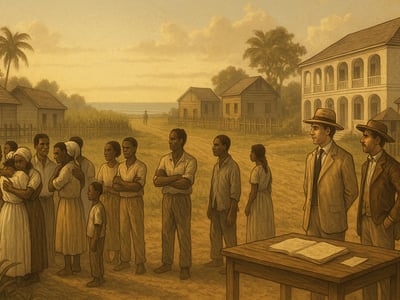
For enslaved people in colonies such as Jamaica, Barbados, and British Guiana, the significance of the law was therefore real but incomplete. The act marked the approaching end of legal enslavement under British rule in most imperial territories, but it did not erase the power of plantation owners overnight. Apprenticeship meant that many people who were legally emancipated in 1834 still faced compulsory labor arrangements. The transition preserved much of the authority structure of the old system, even as it declared that slavery itself should cease.
Royal Assent as turning point and unfinished transition
The role of compensation has also remained one of the most discussed features of the 1833 settlement. The state committed a huge sum to compensate slave owners, not the enslaved. That decision shows how deeply slavery was embedded in law, finance, and property relations. Emancipation was not simply announced as a moral principle; it was organized through legislation that also protected the claims of those who had profited from slave labor.
Seen from Westminster, Royal Assent was the culmination of a parliamentary process in the House of Commons and the House of Lords. Seen across the empire, it was the beginning of a contested new phase. The act set 1 August 1834 as the date when emancipation would come into effect in most colonies. Even then, the apprenticeship system meant that full freedom was deferred for many until later, with apprenticeship ending in 1838.
Why it still matters
The Slavery Abolition Act remains important because it shows how abolition became law within a large imperial state. It demonstrates that moral and political campaigns did not simply produce a declaration of principle; they had to be translated into statutes, budgets, administrative rules, and colonial enforcement.
It also remains a central document for understanding the limits of legal reform. The act abolished slavery in most British colonies, yet it did so through a transition that included compensation for slave owners and continued labor control over many emancipated people. For historians, this makes the act a key reference point for studying the relationship between freedom, coercion, finance, and state power.
Research into compensation records, apprenticeship, and local implementation has kept the act at the center of scholarship on the British Empire and the wider Atlantic world. It is not only a landmark in abolitionist history. It is also evidence of how empires dismantled systems of bondage unevenly, through measures that combined emancipation with preservation of existing power.
That is why 28 August 1833 is remembered as both a turning point and a reminder of unfinished transition. The law struck at slavery’s legal basis in most of the British imperial system, but the terms of emancipation ensured that the meaning of freedom would continue to be contested long after Royal Assent was given.
Timeline
- Abolition of the Slave Trade Act receives Royal Assent
- Baptist War begins in Jamaica
- Slavery Abolition Act receives Royal Assent
- Emancipation takes effect in most British colonies
- Apprenticeship ends in most colonies
What you uncovered
Freedom and Its Terms
You didn't just…complete a historical puzzle; you traced the moment when abolition became imperial law, while its actual terms still limited freedom for many people.
This act matters not only because it declared an end to slavery in most British colonies, but because it shows how major legal change is shaped by administration, finance, and political compromise. Emancipation was structured through delayed implementation, compensation to slave owners, and apprenticeship for many formerly enslaved people, revealing that abolition in law and freedom in practice did not arrive in the same form or at the same time. That gap remains important to historians studying how states manage moral turning points through institutions that can also preserve older inequalities.
The act authorized £20 million in compensation to slave owners, a sum that became one of the largest state expenditures in Britain at the time.
FAQ
What happened on 28 August 1833?
On 28 August 1833, King William IV granted Royal Assent to the Slavery Abolition Act 1833 at Westminster. The act became law in the United Kingdom on that date.
What did the Slavery Abolition Act 1833 do?
The act created the legal framework for abolishing slavery in most British colonies. It did not end slavery everywhere at once, but it set emancipation to begin on 1 August 1834 in most British colonies.
Did the act end slavery immediately across the British Empire?
No. Emancipation was scheduled for 1 August 1834 in most British colonies, not on the day the act received Royal Assent. The law also included an apprenticeship system for many formerly enslaved people.
Why were slave owners compensated under the act?
The statute authorized £20 million in compensation to slave owners as part of the political settlement that allowed the legislation to pass. The brief identifies this as part of the compromise around abolition and transition.
Which places were affected by the Slavery Abolition Act 1833?
The law applied across most British colonies, including territories in the Caribbean, the Cape, and Mauritius. Named places in the brief include Jamaica, Barbados, British Guiana, Cape Colony, and Mauritius.