
About this story
On 10 October 1967 the Outer Space Treaty entered into force. It had opened for signature on 27 January 1967 in Washington, London, and Moscow. The text built on the 1963 UN Declaration of Legal Principles and on the General Assembly’s approval of the treaty in 1966, after Sputnik 1 reached orbit on 4 October 1957. It bars national appropriation of outer space, including the Moon, forbids nuclear weapons and other weapons of mass destruction in orbit, and makes states responsible for national activities, including those of non-governmental actors.
Outer Space Treaty enters into force on 10 October 1967 under the UN treaty system.
On October 10, 1967, the Outer Space Treaty entered into force through the United Nations treaty system. That date did not mark the first discussion of rules for space, or even the treaty’s signing. It marked the moment when a negotiated set of principles became legally operative for the states that had ratified it. In the middle of the Cold War, as space activity was moving rapidly from symbolic firsts to long-term strategic planning, that shift from agreement on paper to binding obligation carried unusual weight.
Sputnik made the questions urgent
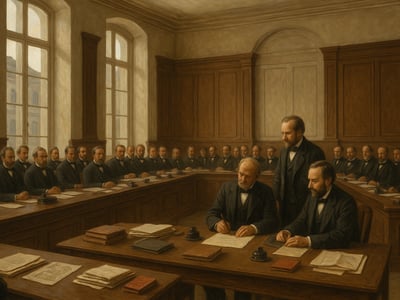
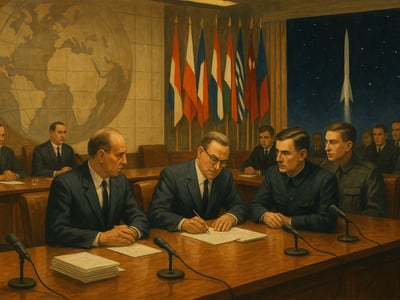
The treaty’s full name was the Treaty on Principles Governing the Activities of States in the Exploration and Use of Outer Space. It had been opened for signature earlier that year, on January 27, 1967, in Washington, London, and Moscow. Those three capitals reflected the diplomatic structure of the agreement and the central role of the United States, the United Kingdom, and the Soviet Union in its deposit and ratification process. But signature alone was not enough. Governments still had to complete the formal steps required under their own systems before the treaty could take legal effect.
That procedural point mattered. In international law, treaties often pass through several stages: negotiation, approval, signature, ratification, and only then entry into force. Until the required ratifications were secured, the Outer Space Treaty remained an important declaration of intent rather than an active legal framework. If governments had delayed, the early space age might have developed for longer without a shared treaty basis on sovereignty claims, state responsibility, and military restraint.
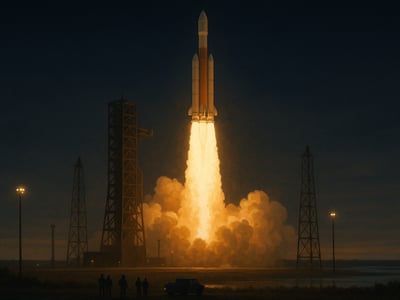
The pressure to establish that basis had been building for years. The launch of Sputnik in 1957 had demonstrated that space was no longer a theoretical domain. It was becoming a real arena of national competition, technological ambition, and military concern. By the early 1960s, states and diplomats were trying to answer questions that had few precedents. Could a country claim part of the Moon? Would orbit become another location for nuclear deployment? If a government allowed non-state actors to operate in space, who would be responsible if something went wrong?
From a declaration to a treaty text
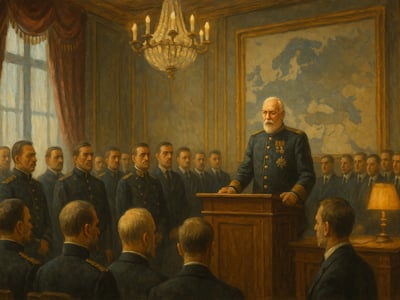
A 1963 Declaration of Legal Principles Governing the Activities of States in the Exploration and Use of Outer Space had already outlined broad ideas, and in 1966 the UN General Assembly approved the treaty text. The 1967 treaty took those principles and placed them in a more formal legal structure. Once the required ratifications were in place, its provisions became operative for the states parties.
Among its most cited rules was Article II, which states that outer space, including the Moon and other celestial bodies, is not subject to national appropriation by claim of sovereignty, by use or occupation, or by any other means. That clause did not settle every future argument about resources or operations, but it established a clear baseline: states could not treat outer space as territory to be annexed in the familiar way of land on Earth.
Signature was not yet law
Another major provision was Article IV. It prohibits placing nuclear weapons or other weapons of mass destruction in orbit, installing them on celestial bodies, or stationing them in outer space in any other manner. The treaty did not remove all military implications from space activity, and later debate would continue over what “peaceful purposes” meant in practice. Still, it placed an important legal boundary around the most destructive category of weapons at a time when superpower rivalry could easily have pushed in the opposite direction.
The treaty also established a principle of state responsibility that has remained central ever since. National governments were not only answerable for their own activities in space. They also bore responsibility for national activities carried out by non-governmental entities, which meant private or commercial actors could not exist in a legal vacuum. States were expected to authorize and supervise such activities. In 1967, this provision looked ahead to a future that was only beginning to be imagined. Today it seems strikingly prescient.
Rules that became operative
When the treaty entered into force on October 10, 1967, it therefore did more than complete a diplomatic process. It created a working framework for conduct in space among the states parties. The achievement was not that it solved every legal or strategic problem. It did not. Its importance lay in setting limits early, while the basic patterns of space activity were still being formed.
That timing helps explain why the treaty endured. It arrived at a moment when space law could still influence the structure of the domain rather than merely react to established facts. By making non-appropriation, state responsibility, and weapons-related restrictions legally operative, it helped define outer space as a place governed by negotiated rules rather than by unilateral claims alone.
Why it still matters
The Outer Space Treaty remains the starting point for many of the hardest legal questions about space. As new missions return to the Moon, build larger orbital systems, and plan for more regular commercial activity, governments still look back to its language to determine what is allowed and what is not.
Its non-appropriation principle continues to shape debates over whether states or private actors can claim territory or extract resources in ways that amount to ownership. Its state-responsibility rule is even more relevant in an era when commercial launches, satellite constellations, and private spacecraft are routine parts of space activity. Even when a company operates the hardware, governments remain deeply involved through licensing, oversight, and international responsibility.
Its security provisions also retain significance. Article IV’s prohibition on nuclear weapons and other weapons of mass destruction in orbit remains one of the clearest legal restraints in space security. Modern debates often go beyond the exact categories named in the 1967 text, but the treaty still anchors discussions about escalation and the dangers of turning space into a more heavily armed environment.
The treaty’s lasting influence comes partly from its restraint. It did not try to answer every future question in technical detail. Instead, it established broad principles at a foundational moment. On October 10, 1967, those principles ceased to be only diplomatic language and became active rules. That transition is why the date still matters in the history of space exploration and international law.
Timeline
- Sputnik 1 reaches orbit
- UN adopts the Declaration of Legal Principles on outer space
- UN General Assembly approves the treaty text
- Outer Space Treaty opens for signature
- Outer Space Treaty enters into force
What you uncovered
When Rules Became Real
You didn't just complete a puzzle—you traced the point when an agreement about outer space stopped being a statement of intent and became a binding framework for the states that accepted it.
The importance of 10 October 1967 lies in timing as much as text. The treaty had already been negotiated and signed, but entry into force was the moment its Cold War compromises became active legal constraints rather than shared aspirations. That distinction still matters whenever governments debate sovereignty, commercial activity, or security in space, because space law often turns on when broad principles become enforceable obligations.
Article II of the treaty states that outer space, including the Moon and other celestial bodies, is not subject to national appropriation by claim of sovereignty, use, occupation, or any other means.
FAQ
What happened on 10 October 1967 in space law?
On 10 October 1967, the Outer Space Treaty entered into force through the United Nations treaty system. From that date, its rules became legally operative for the states parties.
Which countries were key to the treaty taking effect?
The treaty entered into force after the required ratifications by the United States, the United Kingdom, the Soviet Union, and other signatory states. Those ratifications were needed before the agreement could become binding.
What does the Outer Space Treaty say about owning the Moon?
Article II says that outer space, including the Moon and other celestial bodies, is not subject to national appropriation by claim of sovereignty, use, occupation, or other means. In other words, states cannot claim them as national territory under the treaty.
Does the Outer Space Treaty ban nuclear weapons in space?
Yes. Article IV prohibits placing nuclear weapons or other weapons of mass destruction in orbit, on celestial bodies, or stationing them in outer space.