
About this story
On 3 November 1918, Austria-Hungary and the Allies signed the Armistice of Villa Giusti near Padua, closing the Italian Front on paper. The ceasefire took effect only on 4 November at 15:00. It followed the Battle of Vittorio Veneto, while the Habsburg state was already coming apart.
Villa Giusti near Padua, site of the 3 November 1918 armistice signing.
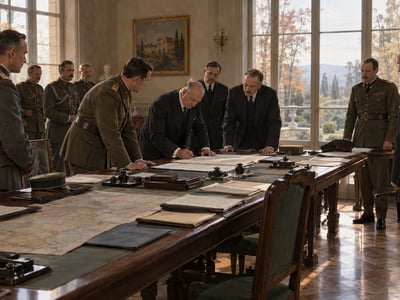
On 3 November 1918, representatives of Austria-Hungary and the Allied powers signed the Armistice of Villa Giusti at Villa Giusti near Padua, Italy, bringing the fighting on the Italian Front to its formal close, though not its immediate end. The agreement did not take effect until 4 November at 15:00, a delay that mattered greatly in the final hours of a war already moving faster than many of the governments directing it. By the time the document was signed, the Austro-Hungarian army was faltering in the field and the Habsburg state itself was coming apart.
A front already giving way
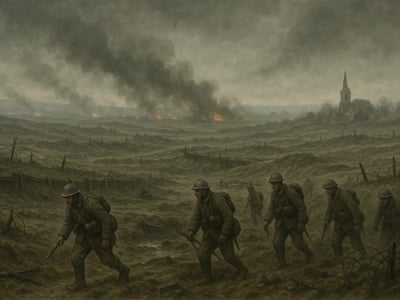
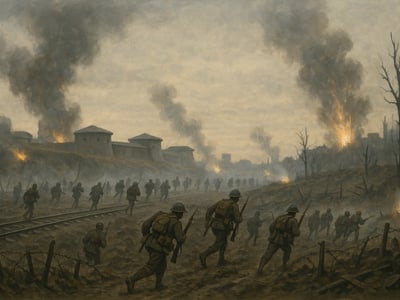
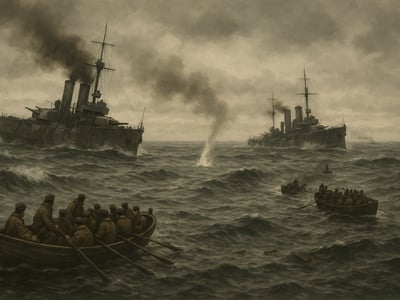
The armistice belonged to the last phase of the First World War in Europe, when military collapse, political disintegration, and urgent diplomacy were unfolding at once. On the Italian Front, the immediate background was the Battle of Vittorio Veneto, which began on 24 October 1918. Under the command of Armando Diaz, Italian forces pressed an offensive at a moment when Austria-Hungary was no longer able to sustain a coherent defense. The battle did not create the empire's internal crisis, but it exposed and accelerated it.
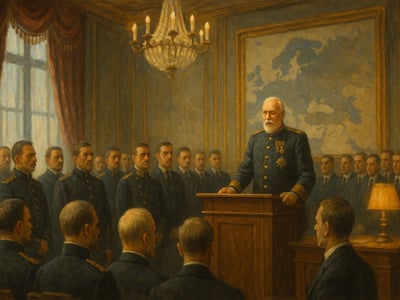
By late October, Austria-Hungary faced more than a military setback. The empire was a multinational state whose political center was losing control while different national councils and emerging governments were asserting authority across its territories. In such conditions, even a straightforward military decision became difficult. Orders still had to be given, envoys still had to travel, and commanders still had to decide what could realistically be enforced. An armistice required signatures, but it also required enough functioning authority for armies to stop fighting in an organized way.
Signatures during a collapse
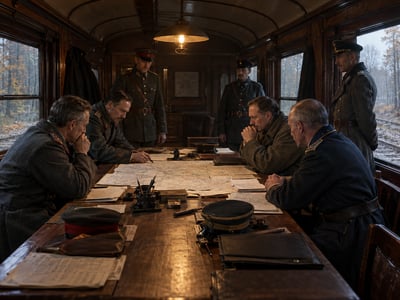
That is what makes Villa Giusti significant. The negotiations took place not in a moment of stable surrender, but during an unraveling. Italian General Pietro Badoglio took part in the negotiations and signed for the Allied side. For Austria-Hungary, the document was signed by General Viktor Weber Edler von Webenau. Their signatures represented two very different positions. The Allied side was imposing terms from a position of military advantage. The Austro-Hungarian side was trying to end operations while its ability to command events was diminishing by the hour.
The terms were severe but unsurprising in the context of the front's collapse. Austria-Hungary had to accept the end of hostilities under conditions set by its opponents. Yet one detail has drawn lasting attention: the gap between signing and enforcement. The armistice was signed on 3 November, but it came into force only on 4 November at 15:00. That interval meant the war did not simply stop when the ink dried. Troops were still moving, commanders were still reacting to changing information, and fighting could still continue before the agreed hour.
The gap between signing and 15:00
This distinction between signature and implementation sometimes gets blurred in simple retellings of the war's end. But in practice it shaped real outcomes. A ceasefire on paper and a ceasefire in the field were not the same thing, especially on a front stretched across difficult terrain and managed by armies under pressure. Communications in 1918 were not instantaneous in the modern sense, and on the Austro-Hungarian side, chain of command problems were becoming acute. A delay of less than a day might appear minor in retrospect, yet in wartime it could affect retreats, captures, casualties, and the memory of who stopped fighting when.
The armistice also has to be understood as part of a larger sequence rather than as an isolated event. It ended fighting on the Italian Front before the better-known Armistice of 11 November ended fighting between Germany and the Western Allies. For contemporaries in Italy and Austria-Hungary, 3 and 4 November were therefore not a prelude to the end of the war elsewhere; they were the decisive local endpoint of a separate and brutal front. The mountain warfare, repeated offensives, and immense strain of the Italian campaign had lasted for years. Villa Giusti marked the conclusion of that conflict.
One ending before 11 November
At the same time, the agreement reflected the broader collapse of Austria-Hungary as a state. Military defeat on the front and political fragmentation behind it were reinforcing one another. As the empire lost the capacity to continue fighting, it also lost the coherence needed to survive in its previous form. The armistice did not by itself dissolve Austria-Hungary, but it stands very close to that dissolution and helps explain its final days. It is one of those wartime documents that records not only the end of military operations, but the failure of an imperial system to keep its armies and territories together.
Why it still matters
The Armistice of Villa Giusti remains important because it shows how wars often end in stages rather than in a single clean moment. There was a date of signature, 3 November 1918, and a later hour of implementation, 4 November at 15:00. That distinction is not a technical footnote. It reveals a recurring problem in the history of conflict: decisions may be made before they can be enforced, and the time in between can shape events on the ground.
It also helps explain the final collapse of Austria-Hungary. The armistice was not merely a military pause. It was evidence that the empire could no longer sustain coordinated war-making on a major front. The weakening of field operations and the weakening of the state were connected. Looking at Villa Giusti makes it easier to see how battlefield defeat and political dissolution can converge, each accelerating the other.
Finally, the agreement matters because it restores the Italian Front to the wider story of 1918. Public memory of the First World War often centers on the Western Front and the 11 November armistice, but the war in Europe ended through several linked processes. Villa Giusti was one of them: a negotiated end reached amid retreat, uncertainty, and the collapse of an empire. Its history is a reminder that the closing days of war are rarely orderly, even when the end is clearly approaching.
In that sense, Villa Giusti was both a legal act and a historical threshold. It recorded the end of one front, but it also captured the instability of the world around it. Between the signing on 3 November and the effective hour on 4 November lies a compressed picture of how the First World War ended in central and southern Europe: not all at once, but through documents, delays, military realities, and the disintegration of old political structures.
Timeline
- Battle of Vittorio Veneto begins
- Armistice of Villa Giusti signed
- Armistice takes effect at 15:00
What you uncovered
Between Signature and Silence
You didn't just… complete a date puzzle; you traced a moment when an agreement had been signed but war had not yet fully stopped.
The Armistice of Villa Giusti is a reminder that wars do not end at a single instant just because a document exists. The interval between signature and enforcement shows how negotiation procedure, military retreat, and collapsing state authority could overlap in ways that still affected lives on the ground. It also helps explain why historical memory can attach to different dates: one marks the agreement, while the other marks when its terms actually took force.
The armistice took effect on 4 November 1918 at 15:00, not at the moment it was signed on 3 November.
FAQ
What happened on 3 November 1918 at Villa Giusti?
On 3 November 1918, the Armistice of Villa Giusti was signed at Villa Giusti near Padua between Austria-Hungary and Allied representatives. It was the agreement that ended fighting on the Italian Front of the First World War.
Who signed the Armistice of Villa Giusti?
Italian General Pietro Badoglio signed for the Allied side, and Austro-Hungarian General Viktor Weber Edler von Webenau signed on behalf of Austria-Hungary. The signing took place at Villa Giusti near Padua, Italy.
When did the armistice take effect in 1918?
The terms took effect on 4 November 1918 at 15:00. That was when fighting on the Italian Front ended.
Why was the Armistice of Villa Giusti signed?
It was signed as Austria-Hungary's military position and state structure were breaking down in the final days of the war. The Battle of Vittorio Veneto, which began on 24 October 1918, formed part of the immediate military context.