
About this story
On 20 November 1945, the International Military Tribunal opened in Courtroom 600 at Nuremberg. Geoffrey Lawrence presided as the indictment was read. The London Agreement of 8 August 1945 had defined crimes against peace, war crimes, and crimes against humanity. Judges and prosecutors came from the United States, the United Kingdom, the Soviet Union, and France. Judgment and sentences followed on 1 October 1946.
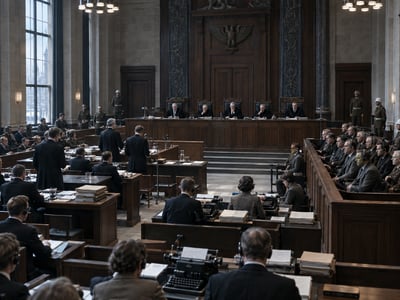
The main trial of Nazi officials opened in Nuremberg’s Courtroom 600 on 20 November 1945.
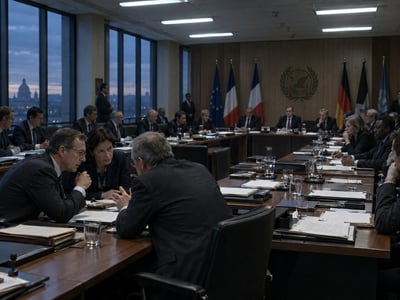
On 20 November 1945, the International Military Tribunal opened the trial of leading Nazi officials in Courtroom 600 at the Palace of Justice in Nuremberg, Germany. Geoffrey Lawrence, the tribunal’s president, presided as the indictment was read into the record. The proceedings brought judges and prosecutors from the United States, United Kingdom, Soviet Union, and France into a shared courtroom to examine responsibility for aggressive war, wartime atrocities, and persecution.
An indictment read in Courtroom 600
The war in Europe had ended only months earlier. Evidence of Nazi crimes, including the systematic murder of Europe’s Jews in the Holocaust, was extensive. Yet the tribunal’s task was not simply to describe what had happened. It had to consider defined charges against particular defendants, examine the evidence supporting those charges, and reach judgments through a procedure in which the accused could present a defense.
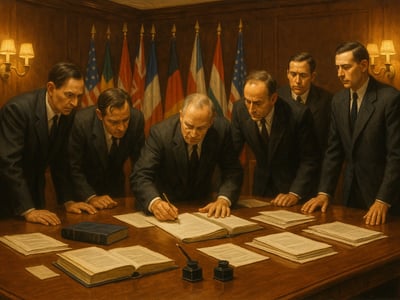
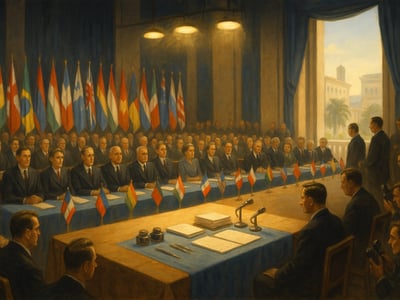
The legal framework had been established in London. On 8 August 1945, the four participating powers signed the London Agreement. Its annexed charter created the International Military Tribunal, set out its jurisdiction, and specified the crimes it could hear. These included crimes against peace, war crimes, and crimes against humanity. The indictment organized the prosecution’s case into four counts, including a common plan or conspiracy.
These categories addressed related but distinct conduct. Crimes against peace concerned the planning, preparation, initiation, or waging of aggressive war. War crimes concerned violations of the laws or customs of war. Crimes against humanity addressed acts including murder, extermination, deportation, and persecution within the terms of the charter. The categories provided a legal structure for evidence drawn from many places and years.
A charter signed in London
Before the trial opened in Nuremberg, the tribunal had held a preliminary session in Berlin. On 18 October 1945, an indictment against 24 named individuals and six organizations was presented there. Naming an organization raised questions different from those involved in charging a person: the tribunal would have to consider its character and activities under the charter, rather than treat every association with it as an identical case.
Among the individual defendants was Hermann Göring, the former head of the Luftwaffe. His prominence, like that of other senior officials, made the proceedings widely recognizable. But rank could not substitute for examination of the charges. The prosecution had to connect defendants with decisions, actions, and policies relevant to the alleged crimes. The defense could challenge those connections and the legal arguments built upon them.
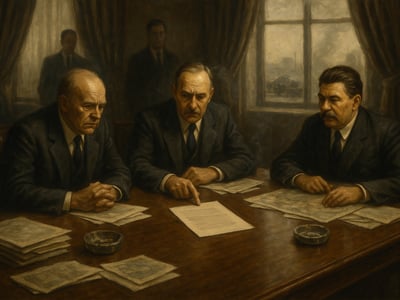
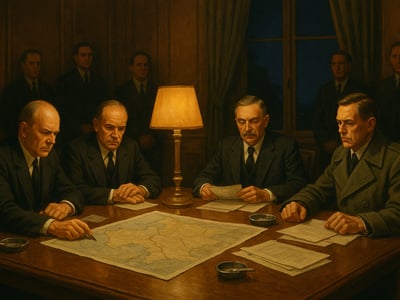
Documents across four languages
The opening day was therefore a procedural beginning, not a verdict. Reading the indictment formally placed the accusations before the court. On 21 November, Robert H. Jackson, chief prosecutor for the United States, delivered his opening statement. It outlined the American prosecution’s case and the significance it attached to answering state-directed violence through judicial proceedings.
What followed depended heavily on records. Orders, correspondence, official reports, and other captured documents helped establish how policies had been developed and carried out. Witness testimony supplied further evidence. Documents required context and attribution; testimony required examination. Neither the scale of the crimes nor the public standing of the defendants removed the need to assess what particular pieces of evidence demonstrated.
Judgment a year after the opening
The courtroom also operated across four working languages: English, French, Russian, and German. Interpretation and translated documents were essential to the participation of judges, prosecutors, defendants, and defense counsel. The practical work of making an argument understandable across languages was part of the legal process, not an incidental service alongside it.
The tribunal delivered its judgment on 30 September and 1 October 1946, with sentences pronounced on 1 October. Those decisions followed months of evidence and argument. They must be distinguished both from the opening session and from the subsequent Nuremberg proceedings, which were separate trials conducted by United States military tribunals.
Why it still matters
Nuremberg became an enduring reference point for international criminal law because it addressed how people acting through state institutions could bear criminal responsibility. Government office did not, under the charter, provide immunity. At the same time, the proceedings required attention to evidence and to the conduct of each accused person, rather than an undifferentiated judgment on a population.
Its legacy also includes continuing legal debate. Scholars have examined the tribunal’s jurisdiction, the retrospective application of aspects of its law, and the selective reach of a court established by the victorious powers. Those questions concern the tribunal’s legal foundations and limits; they do not negate the documented atrocities examined in its courtroom. Understanding both the achievement and the objections is part of understanding the institution itself.
The charter and judgment informed later efforts to articulate principles of international criminal responsibility. In 1950, the United Nations International Law Commission formulated the Nuremberg Principles. The trial record also remains a substantial historical source, preserving documents, testimony, arguments, and decisions in a form that can be studied and scrutinized.
The significance of Courtroom 600 lies not only in the judgments eventually announced there. It also lies in the process begun that November: stating charges, presenting evidence, hearing challenges, and explaining conclusions. The opening session marked the start of an attempt to make judicial findings about crimes committed through the machinery of a state.
Timeline
- London Agreement signed
- Indictment presented in Berlin
- Nuremberg trial opens
- Judgment and sentences
- Nuremberg Principles formulated
What you uncovered
Between Accusation and Judgment
You didn't just… complete a puzzle; you revisited a courtroom where responsibility for state-directed crimes had to be examined through evidence and legal procedure.
A state's role in organizing crimes does not, by itself, establish the guilt of every individual within its institutions. The charter defined the tribunal's authority, the indictment set out accusations, and the judgment assessed responsibility on the evidence. Keeping these stages distinct shows why international accountability requires more than identifying an official's position: it requires establishing individual criminal responsibility.
The indictment against 24 named individuals and six organizations was presented to the tribunal in Berlin on 18 October 1945, before the trial opened in Nuremberg.
FAQ
What happened on 20 November 1945 in Nuremberg?
On 20 November 1945, the International Military Tribunal opened its trial session in Courtroom 600 at the Palace of Justice in Nuremberg, Germany. Geoffrey Lawrence presided, and the indictment was read into the record.
Who took part in the International Military Tribunal?
Judges and prosecutors from the United States, United Kingdom, Soviet Union, and France participated in the tribunal. Geoffrey Lawrence served as president of the tribunal, and Robert H. Jackson was the chief United States prosecutor.
What charges did the tribunal consider?
The tribunal addressed conspiracy, crimes against peace, war crimes, and crimes against humanity. These charges were set out in the tribunal's charter and applied in the indictment.
How did the Nuremberg main trial begin?
The trial began with the opening session on 20 November 1945 in Nuremberg. Robert H. Jackson delivered the United States prosecution's opening statement the next day, on 21 November 1945.