
About this story
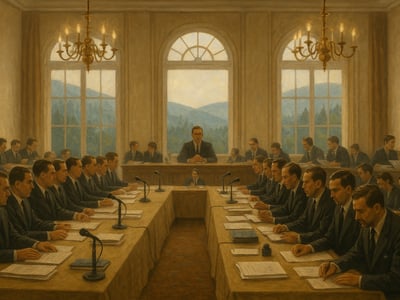
Bretton Woods delegates adopt the IMF Articles of Agreement in 1944.
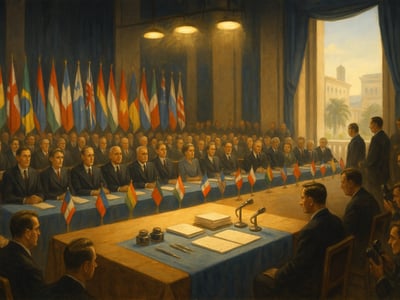
On July 22, 1944, delegates at the United Nations Monetary and Financial Conference in Bretton Woods, New Hampshire, closed their meetings by adopting the Articles of Agreement for the International Monetary Fund. The decision came at the end of three weeks of negotiations at the Mount Washington Hotel, where representatives of 44 Allied nations had been trying to turn wartime cooperation into a practical set of rules for the postwar world economy. At the same conference, they also completed related agreements for the International Bank for Reconstruction and Development, the institution later associated with the World Bank.
The setting was shaped by recent memory. The interwar years had been marked by currency instability, economic crisis, and the breakdown of earlier monetary arrangements. Governments remembered how difficult it had been to manage exchange rates, trade imbalances, and financial shocks when each state acted largely on its own. By 1944, with the Second World War still underway, many policymakers were already thinking about what kind of international order would follow the fighting. They did not want peace to arrive without a framework for monetary cooperation.
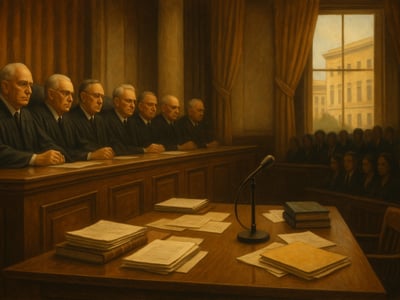
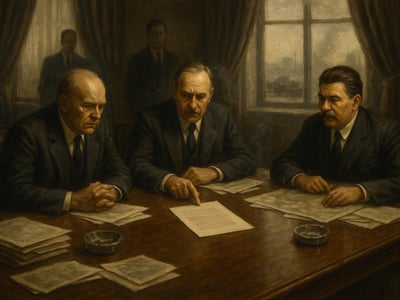
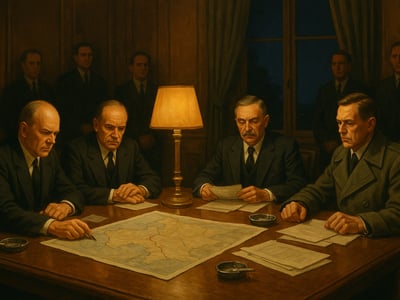
The conference opened on July 1, 1944, at Bretton Woods, a resort location chosen partly because it could host a large international gathering in relative security. Henry Morgenthau Jr., the U.S. Treasury Secretary, presided over the proceedings. But the public sessions were only one part of the story. Much of the real work took place in committees, drafting sessions, and private negotiations, where delegates tried to settle technical questions that carried major political consequences.
At the center of those questions was the design of the IMF itself. If the new institution was meant to support exchange stability and offer temporary assistance to countries facing balance-of-payments problems, then governments first had to decide how such a body would be funded and governed. That meant bargaining over quotas, contributions, voting power, and the conditions under which members could draw on shared resources. These were not minor administrative details. They would determine whose influence would be greatest and how much room individual states would retain within a cooperative system.
Two planners are especially associated with these debates: John Maynard Keynes of the United Kingdom and Harry Dexter White of the United States. Both had been central to pre-conference planning, and both represented countries with large roles in the wartime alliance. Keynes brought the perspective of a Britain weakened by war but still determined to shape the financial settlement. White spoke from the position of the United States, whose economic strength gave it unusual leverage in designing new institutions. Their proposals differed in important ways, including the scale of financial resources and the balance between national freedom and institutional discipline.
Those differences mattered because the conference was not simply an exercise in economic theory. Delegates had to decide how much authority to place in a multilateral institution and how to distribute the burdens of stability. Smaller and medium-sized countries also had their own concerns. They wanted access to support in times of strain, but they also had to weigh how much influence they would actually have inside a system where voting power was tied to financial participation. The conference therefore involved repeated efforts to convert broad agreement on the need for cooperation into language that many governments could accept.
As the weeks passed, time pressure added to the difficulty. A conference of 44 nations could not negotiate indefinitely, and failure carried risks. If the delegates left without a completed text, the wartime alliance would have demonstrated unity in military terms but not in the economic planning needed for peace. That could have weakened confidence in postwar reconstruction and invited a return to the fragmented financial practices many participants wanted to avoid.
The adoption of the IMF Articles on July 22 did not mean every dispute had vanished. It meant that enough governments were willing to accept a common framework. The Articles established the formal text of a new institution for postwar monetary cooperation. Alongside the agreements on the International Bank for Reconstruction and Development, the conference created a paired approach: one institution focused on monetary stability and temporary financial support, the other on reconstruction and development lending.
Even so, the conference did not instantly bring these institutions into full legal operation. The Bretton Woods agreements still required ratification after the delegates went home. That later stage mattered, because international conferences often produce texts that become effective only when governments formally approve them. In this case, Bretton Woods provided the agreed design; implementation depended on states accepting that design through their own political and legal processes. IMF operations began later, in 1945.
What made the closing act of the conference significant was not only that a document had been signed or adopted, but that a group of allied governments had managed to write down operating rules for a shared monetary order before the war had even ended. The delegates were not solving every future crisis in advance. They were trying to reduce the chances that postwar instability would be met with improvisation alone.
Why it still matters
The Bretton Woods agreement remains important because it helped define how multilateral monetary institutions would be organized, funded, and governed. The IMF was not just an abstract expression of cooperation. Its Articles of Agreement laid out concrete rules about membership, financial commitments, voting, and access to support. Those design choices became a model for how states could build institutions to manage international economic problems collectively.
It also mattered because it linked domestic economic policy to international rules in a durable way. Governments would continue to make their own decisions, but Bretton Woods assumed that national monetary choices could affect other countries and therefore required some common framework. That basic pattern has endured even as the global economy has changed and the original Bretton Woods exchange-rate system has long since ended.
The conference is still studied as an example of institution-building after a period of severe disruption. It shows that international order is not created only through broad declarations. It is also built through technical negotiations over rules, representation, and obligations. The closing session on July 22, 1944, captured that reality: before postwar cooperation could function, it first had to be written into agreed text.
Timeline
- Bretton Woods Conference opens
- Bretton Woods Conference concludes
- IMF operations begin
What you uncovered
Rules for a Postwar Economy
You didn't just… place pieces together; you traced the moment when negotiators turned alliance bargaining into the written rules of postwar monetary cooperation.
Bretton Woods mattered not only because institutions were proposed there, but because governments agreed to put power, funding, and obligations into formal text. That shift from shared wartime purpose to enforceable operating rules is part of what made the new system durable. It also set a lasting pattern: national economic choices could no longer be treated as purely domestic when exchange stability and financial support depended on multilateral arrangements.
Representatives of 44 Allied nations attended the Bretton Woods conference, which opened at the Mount Washington Hotel on 1944-07-01.
FAQ
What happened at Bretton Woods on July 22, 1944?
On 1944-07-22, delegates at the United Nations Monetary and Financial Conference in Bretton Woods, New Hampshire, concluded the conference by adopting the Articles of Agreement for the International Monetary Fund. They also completed related agreements on the International Bank for Reconstruction and Development.
Who attended the Bretton Woods Conference?
Representatives of 44 Allied nations attended the conference at the Mount Washington Hotel in Bretton Woods, New Hampshire. Henry Morgenthau Jr., the U.S. Treasury Secretary, presided over the meetings.
How did the IMF emerge from Bretton Woods?
The IMF emerged when delegates adopted its Articles of Agreement on 1944-07-22. That adoption established the formal text of one of the main institutions designed for postwar monetary cooperation.
Did Bretton Woods create the IMF and World Bank immediately?
The conference completed agreements on the International Bank for Reconstruction and Development and adopted the IMF Articles of Agreement in July 1944. Later ratification was required before the institution formally entered into force.