
About this story
On 10 August 1793 the Musée Central des Arts opened in the Louvre in Paris, turning a former royal palace into a public museum during the French Revolution. The opening fell on the anniversary of the 10 August 1792 insurrection and built on earlier plans to display collections in the Grande Galerie.
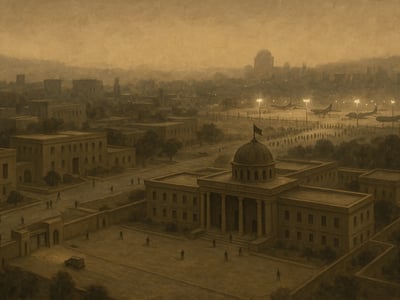
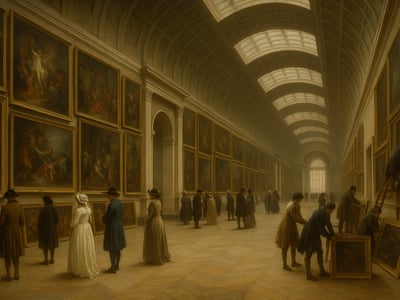
The Louvre in Paris, opened as the Musée Central des Arts in 1793.
On August 10, 1793, the Musée Central des Arts opened to the public in the Louvre in Paris, marking a major institutional change in the history of art collections in France. The opening took place during the French Revolution, in a building that had long been associated with royal power. What visitors entered that day was not simply a new gallery space, but a former palace being redefined under public administration. Paintings and other works that had been linked to the monarchy and to state holdings were now presented as part of a collection intended for public access.
Revolutionary anniversary and a civic opening
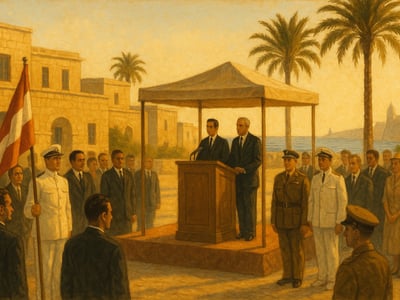
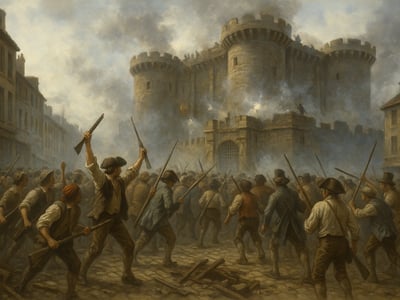
That transformation had both political and practical dimensions. The date itself was significant: the opening coincided with the first anniversary of the insurrection of August 10, 1792, the uprising that ended the monarchy's authority in Paris. By choosing that anniversary, revolutionary authorities gave the museum a clear symbolic role. The new institution suggested that objects once tied to dynastic prestige could be recast as national property. Art, in this framing, was no longer to be confined to courtly or privileged settings, but placed within a civic space open to a wider public.
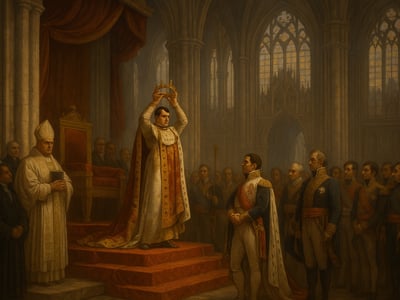
Yet the idea of using the Louvre as a museum did not begin with the Revolution. Under the monarchy, officials had already advanced plans to devote parts of the building, especially the Grande Galerie, to the display of art and related collections. This matters because the opening in 1793 was not created from nothing in the midst of upheaval. Revolutionary government changed the political meaning of the project, but it also relied on earlier administrative thinking about space, display, and the housing of collections. The museum's birth joined revolutionary claims with preexisting institutional preparation.
Earlier royal plans for a museum
After the fall of the monarchy, a basic question had to be answered: what should happen to collections that had been assembled under royal authority? One option, in effect, was to leave them as remnants of privilege. Another was to reorganize them under the state and make them available to the public. Choosing the second path required more than declarations. Galleries had to be made ready, works had to be selected and arranged, and an institution had to be made functional inside a former palace while the wider structures of revolutionary government remained unsettled.
That was the concrete difficulty facing the organizers. A museum opening could serve as a powerful statement, but if the rooms were not prepared, the collections not organized, or the administration not stable enough to receive visitors, the symbolic gesture might fail in practice. The Louvre in 1793 was therefore both a cultural project and an exercise in governance. It demanded that authorities turn abstract claims about the nation and its property into visible, navigable, managed space.
From royal collections to public property
The holdings shown at the opening drew in part from the French royal collections and from other state-held possessions. In this sense, the museum did not represent a break with the existence of great collections; rather, it represented a change in control, setting, and audience. Works that had previously belonged within structures of monarchy were now displayed within an institution defined by public administration. The shift altered the meaning of access. Seeing art in the Louvre was becoming less a matter of court proximity and more a matter of entering a public museum.
This early museum was also part of a larger revolutionary effort to reorder institutions. The Revolution did not concern itself only with constitutions, assemblies, and property law. It also reshaped the custody of objects, the status of collections, and the relationship between the state and cultural life. In the Louvre, those changes became especially visible because the building itself carried strong historical associations. A royal palace was being repurposed for public visitation. Architecture, collections, and politics were all speaking at once.
Building a working public institution
Even so, the museum should not be imagined as a finished modern institution appearing all at once in August 1793. Its early administration was still developing, and the practical business of collection management and display would continue to evolve. But the opening mattered because it established a durable principle: an important art collection could be organized as a public institution under state care. Visitors did not just hear that change had occurred; they could walk into it.
Why it still matters
The Louvre's public opening remains important because it offers a clear example of how a state can transform dynastic collections into a civic institution. Across Europe and beyond, ruling houses, churches, and states accumulated objects over centuries. The question of what happens to those collections when political systems change has often been decisive for cultural policy. The Louvre became one of the best-known cases in which property once tied to monarchy was redefined as part of a public cultural inheritance.
It also helped make museum access, collection management, and display matters of administration rather than private privilege alone. That seems familiar now, but it had to be built through decisions about ownership, staffing, arrangement, and public entry. In that sense, the opening of the Musée Central des Arts belongs not only to French revolutionary history but also to the broader history of the modern museum.
Today the Louvre is one of the world's most visited museums, but its institutional significance does not rest only on its scale or fame. The opening of 1793 remains a reference point because it joined political change to a concrete public institution. It showed how cultural authority could be relocated from the court to the state, and from restricted access toward a public museum model that would influence later practice far beyond Paris.
Timeline
- Plans for museum use of the Louvre Grande Galerie
- Assembly decision on public use of the Louvre
- Musée Central des Arts opens in the Louvre
What you uncovered
From Palace to Public Institution
You didn't just complete a picture; you traced the moment a former royal palace was recast as a public cultural institution.
The 1793 opening is often remembered as a revolutionary gesture, but it also depended on administrative ideas that had been taking shape before the monarchy fell. That matters because public museums are not created by symbolism alone: they require cataloging, display decisions, and stable oversight. The Louvre became influential not only because art was opened to the public, but because access itself was organized as a matter of state administration.
The public opening on 10 August 1793 coincided with the first anniversary of the 10 August 1792 insurrection that ended the monarchy’s authority in Paris.
FAQ
When did the Louvre first open to the public as a museum?
The Musée Central des Arts opened to the public on 10 August 1793 in the Louvre in Paris.
What was the Musée Central des Arts in 1793?
It was the public museum established in the former royal Louvre Palace during the French Revolution. It displayed art in a space that had been repurposed for state administration.
Why was the Louvre opened on 10 August 1793?
The opening coincided with the first anniversary of the 10 August 1792 insurrection that ended the monarchy's authority in Paris. It also reflected the revolutionary decision to make art accessible under public control.
How did the French Revolution change the Louvre?
The Louvre was transformed from a royal palace into a public museum space under state administration. Former royal collections were reorganized for public display.