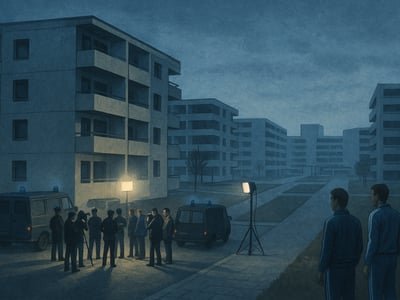

About this story
On 5 September 1972 eight members of Black September entered the Olympic Village in Munich, killed wrestling coach Moshe Weinberg and weightlifter Yossef Romano, and took nine other Israeli team members hostage. The Games had been designed as an open contrast to 1936 Berlin, with light Village security. A later rescue attempt at Fürstenfeldbruck failed; all nine remaining hostages were killed.
31 Connollystraße in Munich, where the Israeli team was attacked on 5 September 1972.
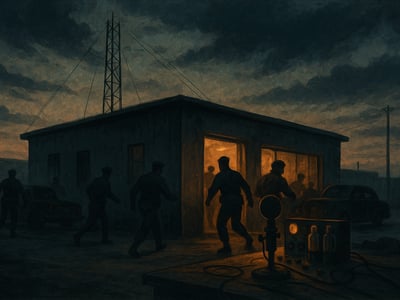
On September 5, 1972, the Summer Olympics in Munich were interrupted by a hostage crisis that quickly became one of the defining events in the history of international sport. In the early hours of the morning, eight members of the Palestinian group Black September entered the Olympic Village in West Germany and forced their way into the Israeli team’s quarters at 31 Connollystraße. Within the initial assault, wrestling coach Moshe Weinberg and weightlifter Yossef Romano were killed, and nine other Israeli team members were taken hostage.
An open Games and a vulnerable Village
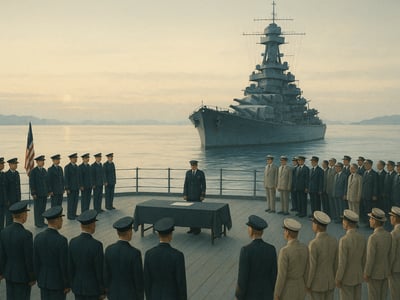
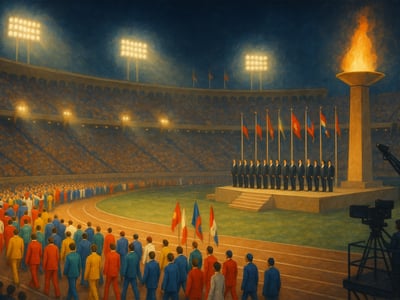
The attack unfolded inside an Olympic Games that had been designed to project openness rather than force. Munich’s organizers wanted the 1972 event to differ sharply from the heavily militarized image associated with the 1936 Berlin Olympics. Security in the Village was intentionally light, with an atmosphere meant to feel welcoming for athletes and visitors from around the world. That decision reflected political and cultural aims, but it also left the site vulnerable to an armed intrusion.
The Olympic Village was hosting competitors and officials from more than 120 countries when the crisis began. What had been planned as a routine day of competition instead became an international emergency watched in real time by audiences far beyond the stadiums. The location of the attack mattered as much as its violence: this was not a remote incident, but one taking place at the center of a global public event built around peaceful competition.
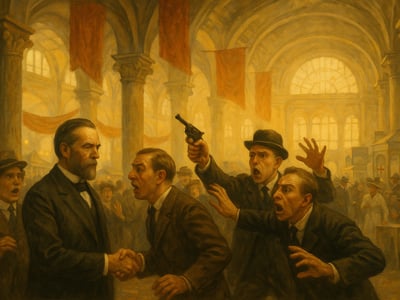
Accounts from the scene established that the attackers gained access to the Israeli quarters in the pre-dawn hours. Yossef Gutfreund, one of the Israeli team members present, was among those who tried to resist as the intruders entered. In the chaotic struggle that followed, Moshe Weinberg was shot and killed. Yossef Romano was also killed during the initial takeover. By the time authorities understood the scale of the incident, nine Israelis remained inside as hostages.
The assault at 31 Connollystraße
West German officials now faced a problem for which the Olympic site had not been prepared. Munich police chief Manfred Schreiber became part of the response as the authorities tried to establish control over a situation unfolding under intense public scrutiny. Negotiations began while police, organizers, and political authorities weighed how to proceed. The hostages were inside a residential building in a crowded international compound, and any rescue attempt carried obvious risks.
The crisis was also shaped by the presence of television cameras and constant press attention. Because the Olympics were already one of the most heavily covered events in the world, the hostage situation was visible almost immediately to a global audience. That visibility created additional pressure on the authorities. Decisions were no longer confined to private command rooms; they were being made in an environment where information, rumor, and imagery could spread quickly.
Negotiations under live cameras
At the same time, Olympic officials had to confront a question with no easy answer: how should an international sporting festival function while armed men held athletes hostage nearby? Willi Daume, a leading figure in West German sport administration, was among those involved in the broader Olympic response. The Games had been intended as a symbol of postwar democratic normality in West Germany. Instead, they became the setting for a crisis that exposed the limits of the country’s preparations for political violence.
The event on September 5 did not end with the initial seizure of hostages in the Village. Later that day, the crisis moved toward an attempted rescue at Fürstenfeldbruck air base, where all nine hostages were killed along with a West German police officer; five of the eight attackers also died. But those later events should be distinguished from what began that morning in the Olympic Village itself: the forced entry into 31 Connollystraße, the killing of Weinberg and Romano, and the taking of nine hostages that turned the Games into a scene of international crisis.
Fürstenfeldbruck and a turning point in event security
That distinction matters because the first phase already revealed several failures at once. A residential area inside the Olympic complex could be penetrated by armed attackers. Local police lacked the specialized structure and preparation that later became standard in dealing with terrorism and hostage incidents. Organizers and officials had to improvise under conditions where time, public attention, and the safety of the hostages were all pressing against one another.
The names associated with the day—Moshe Weinberg, Yossef Romano, Yossef Gutfreund, Manfred Schreiber, Luttif Afif, and others—belong to a story that was at once personal and institutional. Individuals made immediate choices under threat, while governments and organizers were forced into decisions that would be examined for decades. The attack was not only a tragedy for the Israeli delegation and the victims’ families. It was also a turning point in how states, police forces, and international sports bodies understood the security demands of major public events.
Why it still matters
The Munich hostage crisis remains a reference point because it changed practical thinking as much as public memory. Security at later Olympic Games and other large international events was shaped by the recognition that openness alone could not protect participants. Screening, controlled access, specialized planning, and stronger coordination between local police and national authorities became far more central after Munich.
In West Germany, the events contributed to the development of more specialized counterterrorism capabilities. The crisis exposed the limits of conventional policing when faced with armed political violence and a hostage situation under worldwide observation. That lesson did not remain confined to Germany. Other countries, event organizers, and sports institutions also studied Munich as an example of what could happen when symbolic public spaces became targets.
The attack also showed how live broadcasting could affect the management of violence. The world was not learning about the crisis days later through official summaries; it was watching as it happened. Since then, authorities dealing with hostage situations and mass public events have had to think not only about physical security, but also about information flow, visibility, and the effects of continuous media coverage.
For those reasons, September 5, 1972, is remembered not simply as a day when violence entered the Olympic Village in Munich. It is remembered as the moment when a global sporting event, designed to represent openness and peace, collided with a form of political violence that exposed new vulnerabilities in an interconnected world.
Timeline
- Munich Summer Olympics open
- Black September attacks the Israeli team quarters
- Failed rescue at Fürstenfeldbruck; remaining hostages killed
What you uncovered
When Openness Failed
You didn't just… complete a puzzle; you traced the moment when an international celebration was forced into a security crisis it was not built to handle.
The Munich hostage crisis revealed what can happen when a public event is designed to appear welcoming but lacks the capacity to respond to organized violence. It also showed that policing, negotiation, and media coverage do not operate separately in such moments: each can shape the others in real time. That combination made Munich a lasting reference point for how major events are planned and protected.
The attack began at 31 Connollystraße in the Olympic Village, where the Israeli team was housed during the 1972 Summer Olympics.
FAQ
What happened at the Munich Olympics on 5 September 1972?
On 5 September 1972, eight members of Black September entered the Olympic Village in Munich and forced their way into the Israeli team's quarters at 31 Connollystraße. The attack turned into a hostage crisis during the 1972 Summer Olympics.
Who were the victims and hostages in the Munich attack?
During the initial assault, wrestling coach Moshe Weinberg and weightlifter Yossef Romano were killed. Nine Israeli team members were then held hostage inside the building.
Who carried out the Munich Olympic hostage crisis?
The assault was carried out by eight members of Black September. They entered the Olympic Village and took control of the Israeli team's quarters.
How did the Munich attack fit into the Olympic Games?
The 1972 Summer Olympics in Munich had opened on 26 August 1972, so the hostage crisis took place during an active international sporting event. The crisis happened in the Olympic Village, which was hosting athletes from more than 120 countries.