
About this story
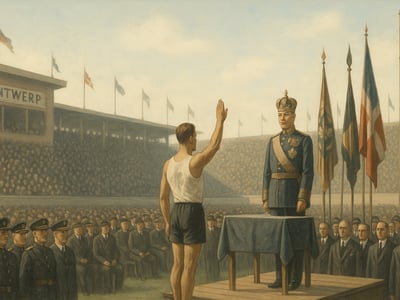
On 14 August 1920 the Summer Olympics resumed in Antwerp, Belgium, when King Albert I opened the Games of the VII Olympiad after the wartime cancellation of Berlin 1916. The ceremony, including Victor Boin’s Olympic oath, helped restart the Games as a public international institution in a postwar setting.
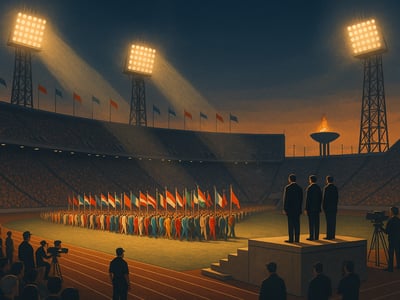
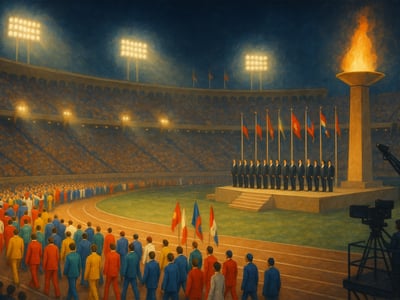
Opening ceremony of the 1920 Antwerp Olympics at the Olympic Stadium in Belgium
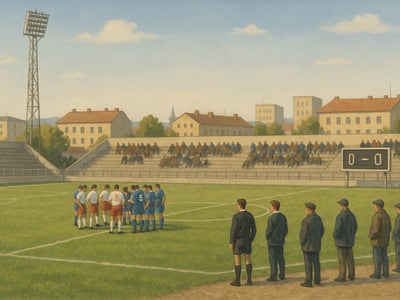
On 14 August 1920, the Summer Olympics resumed in Antwerp, Belgium, when the Games of the VII Olympiad were opened at the city’s Olympic Stadium by King Albert I. The ceremony marked more than the start of an athletic festival. It was the public return of the Olympic movement after the First World War, which had forced the cancellation of the 1916 Games that had been awarded to Berlin. In Antwerp, organizers and participants were trying to show that an international sporting institution, interrupted by war, could function again.
Olympics after wartime rupture
That task carried symbolic weight from the beginning. Antwerp had been selected by the International Olympic Committee on 5 April 1919, not long after the war ended. Belgium had suffered heavily during the conflict, and choosing a Belgian host city gave the Games an unmistakable postwar setting. The decision linked the Olympics to recovery, remembrance, and international reassembly. At the same time, it also meant staging a major event in a country still dealing with the material and financial effects of recent fighting.
The Olympics had always depended on more than competition alone. Since the revival of the Games in the late 19th century, Pierre de Coubertin and other Olympic leaders had treated ceremony as part of the institution’s identity. An opening ceremony had to do practical work, bringing officials, athletes, and spectators into a common schedule, but it also had to present an idea: that the Games represented orderly international encounter. In 1920, after years in which much of Europe had been organized around military conflict, that idea could not simply be assumed. It had to be performed convincingly.
The shadow of the canceled 1916 Olympics made this especially clear. Those Games had been planned for Berlin, but the war made them impossible. By the time athletes assembled in Antwerp four years later, the Olympic calendar itself had been broken. The Antwerp opening ceremony therefore stood between two conditions: the prewar world in which the Olympics had been expanding, and a postwar world in which many institutions were trying to restore continuity while adapting to political change.
Antwerp as a postwar host
For organizers, success depended on credibility. The host city needed to receive delegations, stage events, and present a coherent opening despite limited resources and the recent disruption of war. For athletes and officials, attendance was also a choice with meaning. Their presence signaled that international competition still had value as a public form. Spectators, too, were being asked to accept the ceremony as something more than display—as evidence that peacetime exchange could resume under recognizable rules.
At the stadium, King Albert I formally opened the Games. His role reflected the close connection between the ceremony and the status of Belgium in the immediate postwar period. The event was national in setting but international in aspiration. This balance was important to the Olympics as they reappeared: they depended on host nations for organization and symbolism, yet they also claimed to stand above any single country’s purposes.
Ceremony, oath, and institutional restart
Another moment from the ceremony would prove especially durable. The Belgian athlete Victor Boin delivered the Olympic oath. In later Olympic history, the oath would become a standard element of opening ceremonies, helping define the formal language of the Games. In Antwerp, it helped articulate what the event wanted to project: not only competition, but a commitment to rules, fairness, and shared participation. Rituals like this gave abstract ideals a visible shape.
That did not mean the Antwerp Games were free of political realities. The postwar Olympics were not universally inclusive, and the wider context of peace settlements and wartime memory shaped who was present and how the event was understood. The opening ceremony worked because it acknowledged, rather than erased, the fact that these Games were being held in a Europe recently divided by conflict. Its claim was not that the past had disappeared, but that organized international sport could resume within that altered landscape.
Continuity under political limits
This is part of why Antwerp mattered beyond its own fortnight of competition. The opening ceremony offered a model of how the Olympics could present continuity even after interruption. It tied the return of athletic contests to public ritual, state presence, and shared symbols. The Games did not simply reopen by announcing dates and venues; they reopened by persuading participants and audiences that the institution still carried legitimacy.
In that sense, Antwerp was a test. If the ceremony had looked improvised, poorly attended, or uncertain in purpose, the Olympic revival might have seemed fragile. Instead, the opening projected enough order and significance to help the movement continue. The Olympics that later became familiar around the world were built not only through records and medals, but through occasions like this one, when the institution had to reintroduce itself.
Why it still matters
The 1920 opening in Antwerp remains important because it shows how international institutions attempt to restore normal operations after a major rupture. The Olympics had lost a scheduled edition to war, and their return required more than administrative decisions. It required a public event capable of making continuity believable.
Antwerp also helped shape the ceremonial structure that many viewers now take for granted. The Olympic oath delivered by Victor Boin became part of a recurring format, and the broader use of formal ritual at the opening reinforced the idea that the Games begin with shared symbols as well as sport. Modern Olympic ceremonies are larger and more complex, but they still perform some of the same work seen in 1920: they establish legitimacy, frame multinational competition, and present the host city to a global audience.
The Antwerp Games also offer a useful historical reminder that sport is never entirely separate from its moment. Their opening ceremony expressed hopes for resumed international exchange, but it did so within a specific postwar context marked by memory, exclusion, and reconstruction. Looking back at Antwerp helps explain why the Olympics have so often been used to signal not just athletic ambition, but institutional resilience.
When the Games opened in Antwerp on that August day in 1920, the ceremony did not erase the damage of the recent war. What it did was announce that one international tradition intended to continue. That modest but visible act of restart became one of the defining meanings of the occasion.
Timeline
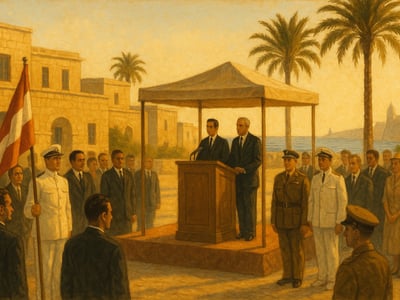
- Berlin Summer Olympics canceled
- Antwerp selected as 1920 Olympic host
- Antwerp Games open; Victor Boin delivers the Olympic oath
What you uncovered
Ceremony After Rupture
You didn't just… complete a puzzle; you traced a moment when the Olympics were presented as a workable international ritual again after the break of World War I.
Antwerp mattered not only because competition resumed, but because ceremony helped make that resumption believable. In a city still marked by war, the opening ritual gave the Games a sense of continuity, order, and institutional memory. That helps explain why Olympic ceremonies became more than pageantry: they offered a public framework for restarting multinational exchange under shared rules. At the same time, that framework reflected a specific postwar setting rather than a fully neutral or inclusive world stage.
Antwerp was chosen as the host city for the 1920 Summer Olympics by the International Olympic Committee on 5 April 1919.
FAQ
When did the 1920 Summer Olympics open in Antwerp?
The Games of the VII Olympiad opened on 14 August 1920. The opening ceremony took place at the Olympic Stadium in Antwerp, Belgium.
Who officially opened the Antwerp Olympic Games?
King Albert I of Belgium officially opened the Games. He presided over the opening ceremony at the Olympic Stadium in Antwerp.
What role did Victor Boin play at the 1920 Olympics?
Belgian athlete Victor Boin delivered the Olympic oath during the opening ceremony on 14 August 1920. It was part of the Antwerp Games’ opening program.
Why were the 1920 Olympics important after World War I?
They marked the resumption of the Summer Olympics after the 1916 Games were canceled because of World War I. The Antwerp ceremony helped present the Olympics as a revived international institution after the war.