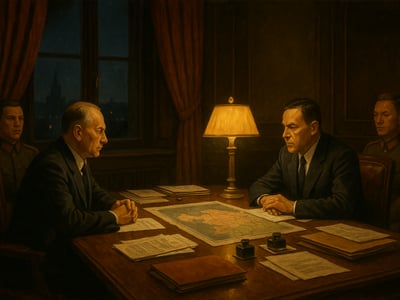

About this story
On 8 October 1970 the Swedish Academy awarded the Nobel Prize in Literature to Aleksandr Solzhenitsyn for the ethical force of his writing in the traditions of Russian literature. His novella One Day in the Life of Ivan Denisovich had appeared in Novy Mir in 1962. On 4 November 1969 the Union of Soviet Writers expelled him. He did not travel to Stockholm for the 10 December 1970 ceremony, for fear he would not be allowed back.
Aleksandr Solzhenitsyn after the 1970 Nobel Prize in Literature announcement
On 8 October 1970, the Swedish Academy announced in Stockholm that the Nobel Prize in Literature for that year would go to Aleksandr Solzhenitsyn. The choice recognized a Soviet writer whose work had already reached readers well beyond the Soviet Union, even as his position at home had become increasingly precarious. In a Cold War setting where literature could carry political weight as well as artistic reputation, the announcement immediately meant more than a routine literary honor.
A camp day enters legal print
The Academy's published citation described Solzhenitsyn as a writer honored “for the ethical force with which he has pursued the indispensable traditions of Russian literature.” That phrasing placed him within a long literary lineage, but it also pointed to the moral seriousness with which his work was widely read. By 1970, Solzhenitsyn was known internationally not only as a novelist and chronicler of Soviet life, but as an author whose authority had been shaped by imprisonment, forced labor, and the experience of state control.
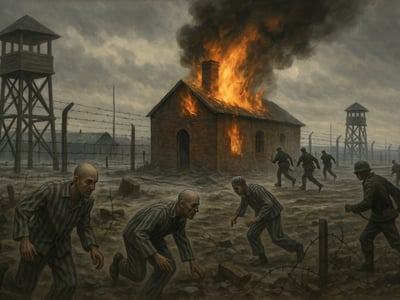
A key turning point in his public career had come eight years earlier. In 1962, his novella *One Day in the Life of Ivan Denisovich* appeared in the Soviet journal *Novy Mir*. The publication was remarkable because it brought a labor camp experience into legal Soviet print culture. For many readers, the work's plain style and narrow focus on a single prison-camp day gave it unusual force. Rather than treating repression as an abstraction, it showed routine survival: work, hunger, cold, calculation, and the small negotiations that structured daily life.
That early opening did not last. As Soviet cultural policy hardened again, Solzhenitsyn's relationship with official institutions deteriorated. Publication became more difficult. Manuscripts circulated through unofficial channels or appeared abroad. By 1969, the conflict had sharpened to a formal institutional break: the Union of Soviet Writers expelled him from its membership. That act did not erase his readership, but it made clear that his standing inside the official Soviet literary system had become contentious.
Expelled from the writers’ union
This background shaped how the Nobel announcement was understood. The Swedish Academy was not merely recognizing a respected novelist in secure professional standing. It was honoring a writer whose work had already become entangled with censorship, publication barriers, and official reprisal. The decision therefore carried two meanings at once. It confirmed Solzhenitsyn's literary importance in an international forum, and it highlighted the contrast between that international prestige and his constrained situation within the Soviet Union.
Such contrasts were especially visible during the Cold War, when books, journals, translations, and prizes could all become part of a broader contest over cultural authority. Yet the significance of the 1970 award should not be reduced to diplomacy alone. Solzhenitsyn had been read seriously because his prose, themes, and narrative method commanded attention in their own right. Readers and critics responded not just to the political circumstances around him, but to the way his writing connected individual experience to larger systems of power, memory, and moral choice.
A prize announced in Stockholm
Anders Österling, a prominent member of the Swedish Academy, was among the figures associated with presenting and explaining the Academy's literary judgment. The Academy's role mattered because the Nobel Prize in Literature was, and remains, one of the few cultural honors capable of instantly changing the visibility of an author across many countries. In Solzhenitsyn's case, that visibility expanded at a moment when his ability to publish and move freely was already restricted.
The months after the announcement showed how incomplete such recognition could be when an author's freedom of movement was uncertain. Solzhenitsyn did not travel to Stockholm for the December 1970 Nobel ceremony. The central concern was that if he left the Soviet Union, authorities might not allow him to return. That decision gave the award an unusual shape. The winner had been named, celebrated, and cited, but he was absent from the ceremonial center of the event. The gap between honor and attendance became part of the story itself.
The ceremony he did not attend
That absence also underscored a practical truth about literary fame in the twentieth century: global recognition did not cancel national constraints. A writer could be translated, praised, and institutionally honored abroad while remaining vulnerable to pressure at home. Solzhenitsyn's case made that split visible to a wide public. He was not unknown before the Nobel Prize, but the 1970 announcement fixed his position more sharply in international consciousness.
The later course of his Nobel recognition confirmed that the story had not ended in October or December 1970. Only after leaving the Soviet Union would he eventually be able to deliver his Nobel lecture and receive the medal and diploma in person. That delay did not lessen the importance of the original announcement; instead, it emphasized how closely literary recognition and political circumstance could intersect.
Why it still matters
The 1970 Nobel announcement remains a useful reference point because it shows how literary institutions can shape global attention during periods of ideological conflict. A prize does not create a writer's work, but it can change who is reading it, where it is discussed, and what larger questions become attached to it. In Solzhenitsyn's case, the Nobel Prize amplified an already significant body of writing and made the conditions surrounding that writing harder to ignore.
The event also illustrates how censorship, publication systems, and translation affect the circulation of literature. *One Day in the Life of Ivan Denisovich* first entered Soviet print culture through an official journal, but later barriers pushed Solzhenitsyn's work into more contested channels. International recognition depended not only on authorship, but on editors, translators, publishers, and institutions able to move texts across borders.
More broadly, the announcement is still remembered because it brought into focus a persistent question: what happens when a writer is celebrated internationally while facing restrictions at home? That question did not begin with Solzhenitsyn, and it did not end with him. But on 8 October 1970, it became unusually visible. The Nobel Prize marked not only an individual literary career, but also the complicated path by which writing travels from a censored environment into world recognition.
Timeline
- Union of Soviet Writers expels Solzhenitsyn
- Swedish Academy announces the Nobel Prize in Literature
- Solzhenitsyn does not attend the Stockholm ceremony
What you uncovered
Recognition Across a Divide
You didn't just complete a puzzle; you traced the moment when an international prize sharpened the contrast between Solzhenitsyn's acclaim abroad and his constrained position at home.
What made the 1970 announcement significant was not only that a writer was honored, but that the honor exposed how differently the same work could be treated in different systems. Abroad, literary recognition helped turn Solzhenitsyn into a global reference point; at home, censorship and institutional pressure limited how that recognition could function. The event shows that literature circulates through publishers, translators, academies, and states, not through writing alone.
Solzhenitsyn did not travel to Stockholm for the December 1970 Nobel ceremony because he feared Soviet authorities might not allow him to return.
FAQ
When was Aleksandr Solzhenitsyn awarded the 1970 Nobel Prize in Literature?
On 8 October 1970, the Swedish Academy announced that Aleksandr Solzhenitsyn had been awarded the 1970 Nobel Prize in Literature. The announcement was made in Stockholm.
Who received the 1970 Nobel Prize in Literature?
The 1970 Nobel Prize in Literature went to Soviet writer Aleksandr Solzhenitsyn. The Swedish Academy made the announcement publicly in Stockholm.
Why was Solzhenitsyn considered controversial in the Soviet Union?
By 1970, his work faced censorship, publication barriers, and official institutional pressure in the Soviet Union. He had also been expelled from the Union of Soviet Writers in 1969.
Why did Solzhenitsyn not go to the 1970 Nobel ceremony?
He did not travel to Stockholm for the December 1970 Nobel ceremony because he was concerned that Soviet authorities might not let him return. His situation in the Soviet Union was already politically sensitive.
What early work helped establish Solzhenitsyn's reputation?
One Day in the Life of Ivan Denisovich was first published in the Soviet journal Novy Mir in 1962. It was one of the works that helped bring him international attention.