
About this story
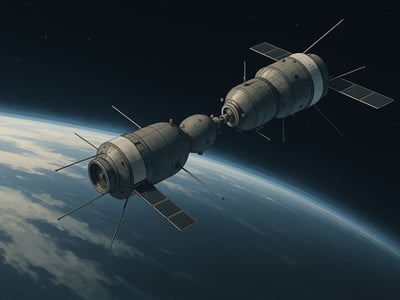
On 30 October 1967, the uncrewed Soviet spacecraft Kosmos 186 and Kosmos 188 completed an automatic docking in Earth orbit. No pilot was aboard to judge the final approach. The test followed the fatal Soyuz 1 accident earlier that year, on 24 April. It showed that two craft could meet and join without a crew, a step later station flights would depend on.
Kosmos 186 and Kosmos 188 completed automatic docking in Earth orbit in 1967.
On October 30, 1967, two Soviet spacecraft named Kosmos 186 and Kosmos 188 completed an automatic docking in Earth orbit, marking a significant step in the practical mechanics of spaceflight. The event did not have the immediate drama of a crewed landing or a first human in space. Instead, it solved a quieter but essential problem: how to get two separate spacecraft, launched at different times, to find each other above Earth, align their motion precisely, approach safely, and connect without a pilot making corrections by hand.
Finding another craft in orbit
That challenge was central to the next phase of orbital exploration. Early space missions had shown that reaching orbit was possible and that spacecraft could survive there for limited periods. But more ambitious missions required more than launch and return. If spacecraft were to exchange crews, deliver supplies, build stations, or support long stays in orbit, they would need a dependable way to meet and join in space.
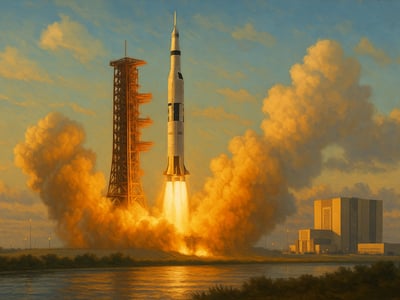
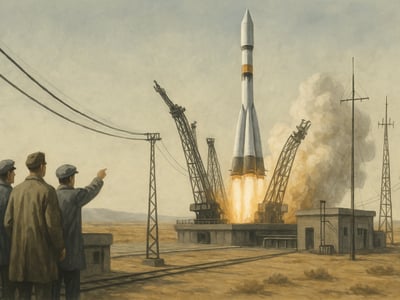
The Soviet test was carried out under the Kosmos designation, a label often used for missions that supported development work or did not receive a public program name. The two vehicles involved were uncrewed spacecraft in a test configuration connected to Soyuz development. They were launched separately from Baikonur Cosmodrome, with Kosmos 186 going first to establish the target for the rendezvous. Kosmos 188 followed and began the sequence needed to close the distance.
This was not a simple matter of pointing one craft toward another. In orbit, spacecraft are both moving at high speed around Earth. To meet, they must occupy not just the same place, but the same place at the same time while matching velocity closely enough to avoid collision. Orbital mechanics can make that counterintuitive. Speeding up or slowing down changes the shape and height of an orbit, which then changes when and where a spacecraft arrives. A successful rendezvous depends on carefully timed maneuvers, accurate tracking, and reliable onboard systems.
A docking with nobody aboard
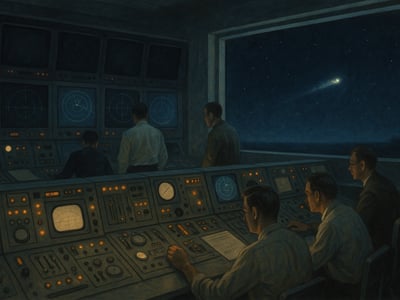
In this case, the added difficulty was automation. No crew was aboard either spacecraft to judge distance through a window, interpret unexpected motion, or intervene during final approach. Soviet mission planners were therefore testing more than the concept of docking itself. They were testing whether a sequence of sensing, control, and orbital maneuvering could be trusted to work in flight under real conditions.
The timing gave the test added importance. The Soyuz program had faced pressure and scrutiny in 1967 after the fatal Soyuz 1 accident earlier that year. That tragedy highlighted the risks of moving too quickly with complex spacecraft systems. An uncrewed demonstration of automated rendezvous and docking offered a way to verify critical procedures before relying on them in later missions. If the test had failed—if the craft had misjudged their approach, been unable to synchronize their orbits, or failed to make a secure connection—it would have raised doubts about whether orbital operations involving multiple spacecraft could be performed routinely.
Instead, Kosmos 186 and Kosmos 188 completed the task. On October 30, the two spacecraft carried out the automated rendezvous and docking sequence in orbit without crew intervention. The accomplishment demonstrated that a docking procedure could be executed by spacecraft guidance and control systems rather than by a human pilot alone. That mattered because the final approach phase is the moment when errors become especially costly. A missed alignment can waste fuel and force abandonment of the attempt; a bad closing speed can damage a vehicle.
What rendezvous made possible next
The success did not instantly make orbital operations routine. Space docking remained technically demanding, and later programs continued to refine guidance systems, procedures, and safety margins. Yet the mission provided something that engineers and planners needed: evidence from an actual flight that the problem could be solved. In the logic of space systems, that kind of proof is powerful. It turns an idea on paper into an operational capability.
The distinction between rendezvous and docking is useful here. Rendezvous means bringing two spacecraft together in orbit so that they meet under controlled conditions. Docking is the next step: the physical joining of the vehicles. The 1967 mission achieved both in automated form. That combination is why it is often cited as an important milestone. Meeting in orbit was already difficult; connecting there automatically was a higher bar.
The practical implications extended beyond a single test. Once docking became dependable, spacecraft no longer had to do everything in one launch. Crews could transfer between vehicles. Supplies could be sent to stations already in orbit. Complex missions could be broken into stages. For a space program interested in long-duration flight and orbital infrastructure, that was a major operational advantage.
Why it still matters
The automatic docking of Kosmos 186 and Kosmos 188 still matters because it helped establish a capability that later became ordinary in principle, even if never easy in practice. Space stations depend on visiting spacecraft arriving on schedule, aligning correctly, and joining safely. Crew transport systems need to approach occupied vehicles with great precision. Cargo missions rely on docking to deliver fuel, equipment, food, and scientific materials.
The 1967 Soviet test showed that these tasks could be handled through an automated sequence in orbit. That was historically important at the time because space programs were moving toward more complex operations involving multiple spacecraft. It remains important because modern orbital logistics still rest on the same basic requirement: separate vehicles must be able to rendezvous and connect reliably.
Later Soviet and Russian station programs, including Salyut and Mir, depended heavily on docking procedures for both crew transfer and resupply. More broadly, orbital mission planning across many programs came to assume that rendezvous and docking were workable tools rather than exceptional experiments. In that sense, the achievement of Kosmos 186 and Kosmos 188 belongs to a category of milestones that can seem technical but quietly reshape what becomes possible afterward.
The mission is also a reminder that not every turning point in space history comes from a human on board. Some of the most consequential advances are procedural and mechanical: guidance systems that hold a course, sensors that judge distance, control systems that fire at the right moment, and mission plans precise enough to let two machines meet hundreds of kilometers above Earth. On October 30, 1967, one such advance moved from theory into demonstrated practice.
Timeline
- Soyuz 1 accident
- Kosmos 186 and Kosmos 188 dock automatically
- Salyut 1 reaches orbit
What you uncovered
The Logic of Meeting in Orbit
You didn't just… complete a space puzzle; you traced the moment when docking began to shift from a risky experiment into a workable orbital procedure.
What made this test important was not only that two spacecraft connected, but that they did so as part of a controlled sequence that could be repeated and built upon. In spaceflight, routine capability matters as much as dramatic firsts: once rendezvous and docking could be handled reliably, planners could begin to think in terms of stations, resupply, and crew transfer rather than isolated missions. A short uncrewed test thus helped turn orbital flight into a system of linked operations.
Kosmos 186 and Kosmos 188 were launched separately from Baikonur Cosmodrome before docking automatically in Earth orbit on 30 October 1967.
FAQ
What happened on 30 October 1967 in orbit?
Kosmos 186 and Kosmos 188 completed an automatic docking in Earth orbit on 1967-10-30. It was a Soviet uncrewed test of rendezvous and docking procedures.
What were Kosmos 186 and Kosmos 188?
They were Soviet uncrewed spacecraft flown in a test configuration under the Kosmos designation. The two spacecraft were launched separately from Baikonur Cosmodrome for the paired docking test.
Why was this docking test important?
It showed that two spacecraft could find each other in orbit, match their motion, and connect automatically without crew intervention. That made it a practical milestone for later spacecraft operations.
How did this test relate to later space missions?
Automatic rendezvous and docking became important for later Soviet station operations, crew transfer planning, and routine orbital logistics. The 1967 test helped demonstrate that such procedures could work in flight.