
About this story
On 22 November 1995, Toy Story opened in U.S. theaters. It was Pixar’s first feature, distributed by Walt Disney Pictures and directed by John Lasseter. A May 1991 agreement committed Pixar and Disney to three computer-animated features. Woody and Buzz Lightyear, voiced by Tom Hanks and Tim Allen, carried an 81-minute film. The El Capitan premiere was on 19 November; a Special Achievement Award followed on 25 March 1996.
Pixar’s Toy Story opened in U.S. theaters on November 22, 1995, distributed by Walt Disney Pictures.
On November 22, 1995, Toy Story opened in U.S. theaters, bringing Pixar’s first feature film to audiences through distribution by Walt Disney Pictures. Directed by John Lasseter, the 81-minute film imagined a world in which toys lead lives hidden from their human owners. Its production posed two connected challenges: making an entire feature through computer animation and making viewers care about the characters on screen.
A feature, not a short test
Pixar’s official film records describe Toy Story as the first entirely computer-animated feature film. The boundaries of that distinction matter. Computer animation already had a history, and computer-generated imagery had appeared in earlier cinema. Toy Story’s milestone was not the invention of those techniques, but their use to animate a complete feature-length film.
The project grew from an agreement Pixar and Disney reached in May 1991 to produce three computer-animated features, with Disney handling distribution. That arrangement linked a developing production approach with an established route into theaters. Creating the images was only part of the undertaking; the finished film also needed a way to reach a broad audience.
Pixar brought experience in computer-animated short films to the task. A feature, however, demanded more than extending the running time of a short demonstration. It required a sustained story, consistent characters, and a production process that could deliver every scene as part of a coherent whole. Artistic decisions and technical work had to support one another throughout the film.
A 1991 agreement with Disney
Lasseter directed within a wider collaborative effort. Pixar co-founder Ed Catmull was a leader in the company’s computer-animation technology, while Pixar owner Steve Jobs served as executive producer. Their roles belonged to different parts of the same undertaking: the film depended on creative direction, technical development, and the resources to carry production through to release. No single contribution could stand in for the work of the full team.
At the center of the story were Woody, voiced by Tom Hanks, and Buzz Lightyear, voiced by Tim Allen. Their performances helped give the computer-animated figures recognizable personalities. Woody’s anxiety about his place among the toys and Buzz’s understanding of his own identity gave audiences something to follow beyond the novelty of the images. The technology supplied a means of presenting the characters, not a substitute for their relationships.
Woody, Buzz, and a full pipeline
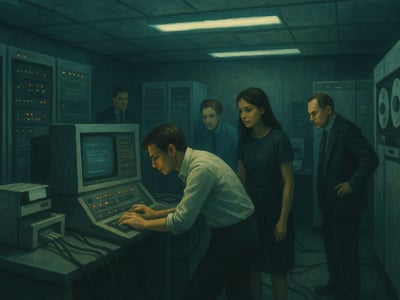
Behind those performances lay a sequence of interdependent production tasks. Computer models defined the characters and objects. Animation shaped movement and performance, while lighting helped establish how each scene looked. Rendering turned the scene’s digital information into finished images. Across an entire film, these stages had to remain coordinated rather than succeed only in isolated examples.
That coordination carried practical stakes. A striking image or a successful short sequence did not by itself establish that the team could finish a theatrical feature. The production needed enough completed footage, consistent visual results, and a story that held together over 81 minutes. Technical ambition had to become dependable filmmaking practice.
Premiere, release, and a special award
There was also a risk that audiences would respond chiefly to the method rather than the movie. An entirely computer-animated feature could attract attention as something new without sustaining interest in its characters. The creative task was therefore inseparable from the technical one: viewers needed reasons to care about what happened to Woody, Buzz, and the other toys.
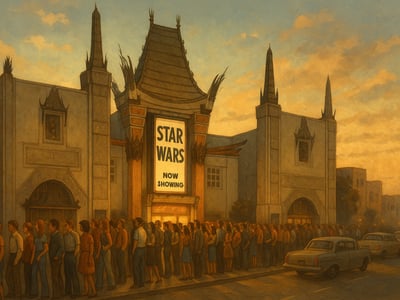
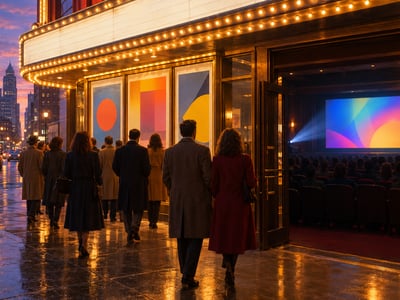
Toy Story premiered at the El Capitan Theatre in Hollywood on November 19, 1995. Its U.S. theatrical opening followed three days later. These were separate events, and the November 22 date marks the American release rather than the advance premiere or a simultaneous worldwide opening.
Why it still matters
Toy Story remains a useful example of the distance between demonstrating a technology and building a finished work around it. Digital creative tools can produce impressive individual results, but longer projects require coordination, continuity, and repeated delivery. The film’s achievement rested on bringing those demands together in service of a story.
The Pixar–Disney agreement also shows why distribution belongs in the history of creative innovation. A production method does not reach a mass audience simply because it exists. Pixar’s filmmaking work and Disney’s distribution role were distinct but connected parts of bringing this feature into theaters.
Its significance does not depend on treating earlier animation methods as inferior. Different techniques offer different expressive possibilities. Toy Story demonstrated that computer animation could sustain a feature while still relying on familiar foundations of filmmaking: character, performance, pacing, and relationships.
On March 25, 1996, the Academy recognized the achievement with a Special Achievement Award presented to Lasseter for his leadership of the Pixar Toy Story team. That recognition joined an individual director’s role to a collective accomplishment. The lasting milestone was not merely that a feature could be made entirely with computer animation, but that the method could serve a film whose characters remained central to the experience.
Timeline
- Pixar and Disney production agreement
- Premiere at the El Capitan Theatre
- Toy Story opens in U.S. theaters
- Academy Special Achievement Award
What you uncovered
Beyond a Single Frame
You didn't just complete a puzzle—you revisited the coordinated creative work behind Toy Story's arrival in theaters.
Making one computer-generated image is a different challenge from sustaining a whole film: reusable models, animation controls, lighting, and rendering must work together across many scenes. That shifts the problem from what a tool can demonstrate to what a team can reliably produce. The workflow must also serve character and performance, because technical consistency alone cannot make audiences care.
Pixar and Disney's May 1991 agreement covered three computer-animated feature films, with Disney responsible for distribution.
FAQ
Was 22 November 1995 the premiere or the U.S. release of Toy Story?
It was the U.S. theatrical release date. The film had premiered earlier, on 19 November 1995, at the El Capitan Theatre in Hollywood.
What does Toy Story being 'first entirely computer-animated feature film' mean?
It means Pixar's official records describe it as the first feature-length film animated entirely by computer. The claim is limited to feature films and does not mean the first use of CGI in cinema.
Who produced and distributed Toy Story in 1995?
Pixar produced the film, and Walt Disney Pictures distributed it. The two companies had entered a production agreement in May 1991.
Who voiced Woody and Buzz Lightyear in the original film?
Tom Hanks voiced Woody, and Tim Allen voiced Buzz Lightyear. John Lasseter is listed as the director in the 1995 release credits.
What recognition did John Lasseter receive after Toy Story?
At the Academy Awards on 25 March 1996, John Lasseter received a Special Achievement Award. It recognized his leadership of the Pixar Toy Story team.