
About this story
On 24 August 1951 Slovak Jesuit Ján Chryzostom Korec was secretly consecrated a bishop in communist Czechoslovakia, after the 1948 takeover and the 1950 monastery action Akcia K had sharply restricted Catholic institutions. Pavol Hnilica, himself clandestinely consecrated in 1950, is identified as the consecrating bishop. The hidden ceremony preserved a line of episcopal authority outside state-controlled public channels; Korec was later arrested in 1960 and released in 1968.
Ján Chryzostom Korec's secret episcopal consecration in Czechoslovakia, 24 August 1951
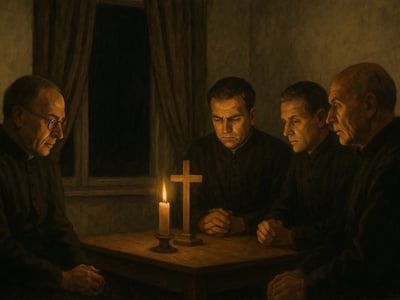
On 24 August 1951, in communist Czechoslovakia, the Slovak Jesuit Ján Chryzostom Korec was secretly consecrated a bishop. It was an act carried out far from normal public church life, at a time when the state had sharply restricted Catholic institutions, monitored clergy, and disrupted the ordinary ways the Church governed itself. The event belonged to a wider pattern of clandestine religious activity that emerged under pressure, but it also marked a particular turning point in Korec’s life and in the history of the underground Church in Slovakia.
A Church under state restriction
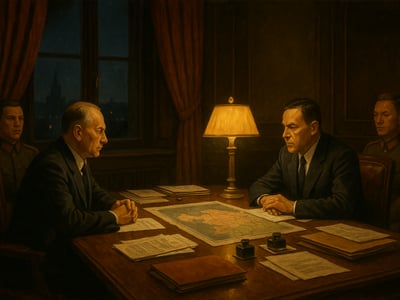
Korec had been born on 22 January 1924 in Bošany. He came of age in a period of political upheaval that would soon reshape the conditions under which religious life could exist in Czechoslovakia. After the communist takeover in 1948, the state moved steadily to limit the independence of churches. Bishops, priests, and members of religious orders faced surveillance, administrative pressure, and growing restrictions on public activity. The issue was not only belief or worship in a private sense, but control over institutions, education, appointments, and communication.
One of the clearest escalations came in April 1950, when the regime carried out Akcia K against male monasteries. This action was a major step in suppressing Catholic religious orders. Monasteries were closed or taken over, religious communities were broken up, and the space for organized ecclesiastical life narrowed dramatically. For clergy and religious already operating under pressure, the question was no longer simply how to continue normal work, but how any continuity could be maintained at all.
Akcia K and the narrowing of public life
In that setting, clandestine networks took on practical importance. They were not only expressions of resistance in a broad moral sense, but also mechanisms for preserving sacramental and organizational life when public structures had been obstructed. If bishops could not function freely, if seminaries and religious houses were disrupted, and if communications could be intercepted or controlled, then even the basic continuation of leadership became uncertain.
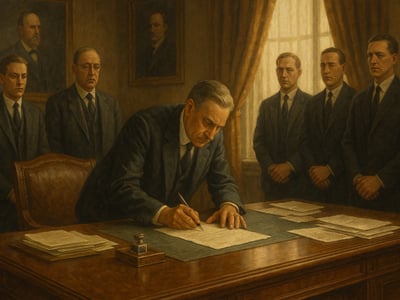
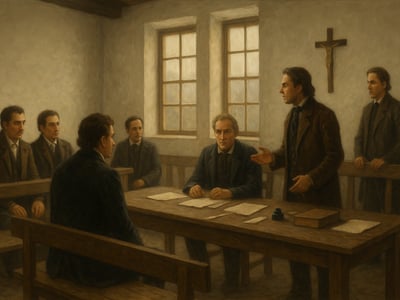
This is the context in which Korec’s consecration must be understood. Standard biographical and church-history references identify Pavol Hnilica as the bishop who consecrated him. Hnilica had himself been clandestinely consecrated in 1950, and his role suggested an attempt to preserve a chain of episcopal authority outside state-controlled public channels. Because such events were secret by design, details in the historical record require careful cross-checking across authoritative sources. Even so, the broad outline is well established: on 24 August 1951, Korec became a bishop through a clandestine ceremony in Czechoslovakia.
A clandestine consecration in 1951
The risks were substantial. A consecration of this kind was not merely a private devotional act. It had institutional meaning. It implied that church leadership would continue despite state restrictions, and that there remained people willing to assume responsibility under conditions of surveillance and possible arrest. If the ceremony had been discovered in time, it could have been disrupted. If participants or communications had been exposed, the authorities might have used the event as evidence against a wider underground network.
That danger explains both the secrecy and the significance of the act. In ordinary circumstances, the consecration of a bishop is public, formal, and visible within the life of the Church. In 1951 Czechoslovakia, secrecy reversed that pattern. The very need to conceal the ceremony showed how far normal governance had been forced out of the open. Yet secrecy also allowed a degree of continuity. A bishop could ordain, confirm, guide clergy, and help sustain structures that no longer had secure legal or public existence.
Arrest, release, and later public memory
Korec’s later life showed that the risks attached to underground religious activity did not end when a ceremony was completed. In 1960 he was arrested, and he spent years in prison before being released in 1968. That later imprisonment does not by itself explain every aspect of his clandestine consecration, but it does demonstrate the long reach of the state’s campaign against independent religious organization. Activities undertaken in secrecy in the early 1950s could still carry consequences years later.
His story also reflects a broader pattern in communist Czechoslovakia, where church-state relations were shaped by control, adaptation, and uneven confrontation. Not every response took the same form, and historical interpretations can differ depending on whether the emphasis falls on ecclesiastical memory, state documentation, or later scholarship. But the existence of an underground Church, including clandestine consecrations, is part of the documented history of the period.
Why it still matters
Korec’s secret consecration remains important because it shows how an institution adapts when its ordinary channels are blocked. Rather than treating the event only as a dramatic episode, historians can read it as a practical response to a governance crisis. The state had restricted bishops, religious orders, and church administration; clandestine consecration was one method of preserving continuity when formal structures could not operate freely.
It also offers a case study in how organizations function under one-party rule. The underground Church in Czechoslovakia depended on trust, secrecy, and personal networks, but it was not sustained by secrecy alone. It required people willing to assume roles whose significance was partly hidden and whose consequences could emerge much later. In that sense, the consecration illuminates not only church history but also the wider history of controlled societies in postwar Central Europe.
For Slovakia in particular, Korec’s name later became publicly visible again after the communist period, giving retrospective weight to what had once been hidden. Yet the lasting historical value of 24 August 1951 lies less in later symbolism than in what the act meant at the time: an attempt to maintain leadership and continuity in circumstances designed to make both extremely difficult. The secret consecration did not end state pressure, but it helped ensure that suppression did not entirely sever the Church’s internal line of succession and governance.
Timeline
- Communist takeover in Czechoslovakia
- Akcia K against male monasteries
- Secret episcopal consecration of Ján Chryzostom Korec
- Arrest of Ján Chryzostom Korec
- Release of Ján Chryzostom Korec from imprisonment
What you uncovered
Leadership in Secret
You didn't just…complete a puzzle; you traced a moment when a secret act was used to preserve church leadership outside state-controlled public structures.
This consecration mattered not only because it was hidden, but because it addressed a practical institutional problem: how to maintain leadership when normal channels had been restricted. In that sense, the underground Church was not simply resisting in symbolic terms; it was building continuity through parallel networks. The episode offers a clear example of how organizations adapt when formal structures are blocked but community life still depends on decision-making, rites, and trusted lines of authority.
Standard church-history references identify Pavol Hnilica, who had himself been clandestinely consecrated in 1950, as the bishop who consecrated Korec.
FAQ
What happened on 24 August 1951 in Czechoslovakia?
On 24 August 1951, Ján Chryzostom Korec was secretly consecrated bishop in Czechoslovakia. The ceremony took place outside normal public church structures.
Who was Ján Chryzostom Korec?
Ján Chryzostom Korec was a Slovak Jesuit born on 22 January 1924 in Bošany. He later became known for his role in the underground Catholic Church in Slovakia.
Why was Korec consecrated in secret?
The communist authorities in Czechoslovakia had restricted church governance, religious orders, and public ecclesiastical activity. A clandestine consecration was used to preserve church leadership under state pressure.
Who consecrated Ján Chryzostom Korec?
Standard biographical and church-history references identify Pavol Hnilica as the bishop who consecrated Korec. Because clandestine church events can be difficult to document, the record is often cross-checked against multiple sources.
What happened to Ján Chryzostom Korec later?
Korec was arrested in 1960 and spent years in prison. He was released in 1968.