
About this story
On 1 September 1859 English astronomer Richard Carrington, drawing sunspots at his private observatory in Redhill, Surrey, saw a brief white-light brightening on the Sun. Richard Hodgson independently reported a similar outburst the same day. Soon afterward a powerful geomagnetic storm disrupted telegraph systems and produced auroras far from the poles, later making the episode a benchmark in space-weather history.
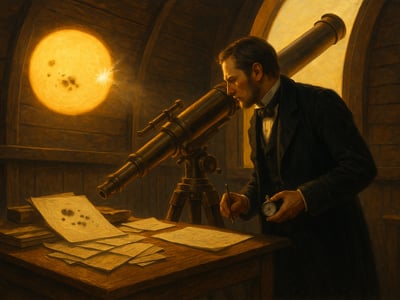
Richard Carrington’s solar observation at Redhill on 1 September 1859
On September 1, 1859, the English astronomer Richard Christopher Carrington was carrying out a familiar task at his private observatory in Redhill, Surrey: carefully studying sunspots. During that routine work, he noticed something highly unusual. Against the Sun's surface, near a group of sunspots he was drawing, he saw a sudden white-light brightening. It was brief, unexpected, and striking enough that he stopped to note the time and record what he had seen. That observation would later become one of the most famous moments in the history of solar astronomy.
A routine sunspot drawing catches a flare
Carrington was not watching the Sun casually. By the mid-19th century, astronomers had begun to study sunspots more systematically, looking for patterns in their appearance and movement. Observing the Sun required patience, method, and caution. Carrington had devoted substantial effort to mapping sunspots and understanding solar rotation. His work depended on repeated, disciplined observation rather than dramatic discovery. That makes the event of September 1 all the more notable: it appeared in the middle of ordinary scientific practice.
The brightening he saw is now described as a white-light solar flare, meaning a solar outburst visible in ordinary light rather than only through later specialized instruments. At the time, however, such an event was not part of a well-established framework. Carrington had to decide quickly whether what he was seeing was real, whether it belonged to the Sun itself, and how to document it before it vanished. The phenomenon lasted only a short time. If he had looked away, hesitated, or assumed it was an optical effect, the observation might have gone unrecorded.
Independent confirmation and a fleeting record
What strengthened the report was that Carrington was not alone. On the same day, Richard Hodgson, observing independently from Highgate in London, reported a similar solar brightening. Independent confirmation mattered greatly. In an era when unusual observations could be doubted as instrumental error or personal misperception, two accounts from different observers gave the event much firmer standing. Together, their reports provided a rare direct visual record of a sudden solar eruption.
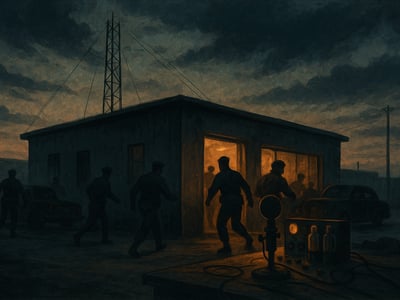
The observation became even more significant because of what followed. In the early days of September 1859, a major geomagnetic disturbance affected Earth. Telegraph systems in Europe and North America reported serious disruptions. Operators experienced erratic behavior on their lines, a reminder that even the relatively new communication networks of the 19th century were not isolated from natural forces. At the same time, auroral displays were reported at unusually low latitudes on September 2, far from the polar regions where such lights were more commonly expected.
Telegraphs, auroras, and a storm on Earth
For people living through the event, the connection between a solar observation and terrestrial disturbances was not instantly obvious in the modern sense. But the sequence drew attention. A visible outburst on the Sun had been observed, and soon afterward Earth experienced a powerful geomagnetic storm with effects that could be noticed both in the sky and in technical systems. This was not yet the mature science now called space weather, but it offered one of the clearest early cases in which an astronomical event could be linked to practical disruptions on the ground.
Telegraphy is central to why the episode became historically important. In 1859, telegraph networks were among the most advanced communication technologies in regular use. They depended on long wires, sensitive equipment, and electrical signaling over great distances. That made them vulnerable to currents induced by geomagnetic disturbances. Reports from the storm helped show that the Earth-Sun relationship was not merely theoretical or observational. Activity on the Sun could have operational consequences for human systems.
From Redhill to a space-weather benchmark
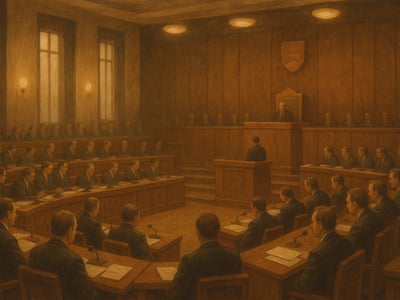
Carrington treated the matter with scientific care. He later presented his account to the Royal Astronomical Society in November 1859, placing the observation into a formal setting where it could be examined and preserved. The presentation did not instantly solve every question about cause and effect, and later science would greatly refine the understanding of solar eruptions, charged particles, and geomagnetic storms. Still, the value of Carrington's record endured because it fixed a precise visual observation to a specific date and context.
That is one reason the episode remains so prominent in scientific history. Many major natural events are recognized only after their consequences become obvious. Carrington's flare, by contrast, was observed at the source, or at least at the visible beginning of the chain as 19th-century astronomy could detect it. The record captured a fleeting solar change and placed it beside measurable disturbances on Earth. Few episodes from that period offered such a direct bridge between observation and impact.
Why it still matters
The event of September 1859 remains a reference point because it connected solar activity to communication infrastructure in a way that was unusually concrete. The telegraph was the advanced network technology of its day, and the storm showed that technical systems could be affected by conditions originating far beyond Earth. That lesson has only gained importance as societies have become more dependent on electrically and electronically connected systems.
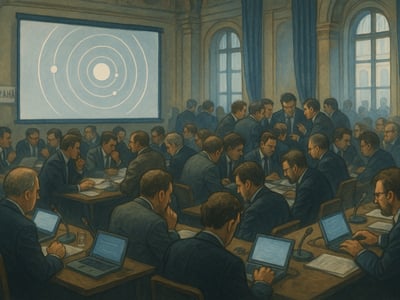
Modern researchers and operational planners often use the 1859 storm as a benchmark when discussing geomagnetic risk. The details of comparison require care, and modern systems are not identical to telegraph lines. Even so, the historical episode offers a clear example of why solar monitoring matters. Power grids, satellites, radio communication, and navigation systems all operate in environments shaped in part by solar activity. The scientific problem is no longer simply to understand that connection, but to measure, forecast, and manage it.
Carrington's observation also illustrates the lasting value of careful record-keeping. A brief event that might have seemed obscure in the moment became foundational because it was noticed, timed, described, and later compared with other evidence. In that sense, the observation at Redhill was both a product of disciplined astronomy and a starting point for a broader understanding of how events on the Sun can affect life and technology on Earth.
Timeline
- Carrington records a white-light solar flare at Redhill
- Geomagnetic storm disrupts telegraphs; auroras at low latitudes
- Carrington presents the observation to the Royal Astronomical Society
What you uncovered
When the Sun Reached Earth
You didn't just… complete a puzzle; you traced the moment a routine sunspot observation became part of a much larger story about the Sun's effects on life and technology on Earth.
What made this observation so important was not only the flash itself, but the fact that it could be connected to disruptions far from the telescope. In the 19th century, telegraph networks were among the first large technical systems spread across long distances, which made them unexpectedly sensitive to geomagnetic disturbance. That helped turn an astronomical sighting into evidence that activity on the Sun could have practical consequences on the ground. It remains a useful model for thinking about how natural events expose hidden dependencies in modern infrastructure.
Richard Hodgson independently reported a similar solar observation on 1859-09-01 from Highgate, London.
FAQ
What did Richard Carrington observe on 1 September 1859?
On 1 September 1859, Richard Christopher Carrington observed a white-light solar flare from his observatory at Redhill, Surrey. He made the observation while studying sunspots.
Who else reported a similar observation that day?
Richard Hodgson independently reported a similar solar observation from Highgate, London, on the same day. The two reports helped establish that the brightening was not a single isolated sighting.
Why is the Carrington Event linked to telegraph failures?
A major geomagnetic disturbance followed in early September 1859, and telegraph system disruptions were reported in Europe and North America. The event is associated with those failures because the storm affected communication infrastructure.
How did the 1859 event connect to later space weather studies?
Carrington presented his account to the Royal Astronomical Society in November 1859, creating an important scientific record. The event remains a key reference point for studying solar-terrestrial physics and modern space weather monitoring.