

About this story
On 31 August 1973 Slovenský kras in southeastern Slovakia was declared a Protected Landscape Area, giving one legal frame to limestone plateaus, sinkholes, and cave systems along the Hungarian border. Karst joins surface land use to underground water and caverns, so site-by-site cave protection was not enough. UNESCO inscription of the Aggtelek and Slovak Karst caves in 1995 later built on that national framework.
Slovenský kras in southeastern Slovakia entered formal landscape protection in 1973.
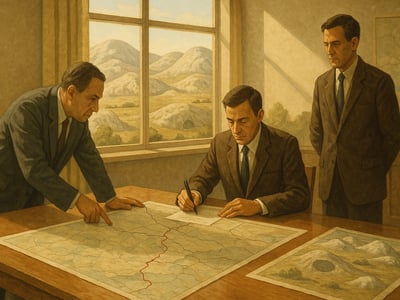
On 31 August 1973, Slovenský kras in southeastern Slovakia was declared a Protected Landscape Area, giving formal legal protection to one of the most distinctive karst regions in the Slovak part of then-Czechoslovakia. The decision concerned a borderland landscape near Hungary known for limestone plateaus, sinkholes, caves, and other landforms shaped over long geological time. By placing the area under a defined conservation regime, authorities recognized that this was not a place that could be managed effectively through scattered local measures alone.
A borderland of plateaus, sinkholes, and caves
Karst landscapes are often dramatic to look at, but their importance is not only scenic. They are systems in which surface and underground processes are tightly connected. Water moves through fissured limestone, reshaping rock and feeding cave networks. Features visible above ground, such as dry valleys, rocky plateaus, and depressions, are linked to hidden chambers and passages below. Protecting such an area therefore raises a practical challenge: damage or poorly planned land use on the surface can affect caves, water flow, habitats, and scientific sites underground.
That was part of the problem facing conservation authorities in Slovenský kras in the early 1970s. The region contained geological features of high scientific value, but also a broad living landscape rather than a single isolated monument. A cave entrance could be protected on paper, yet the wider processes that sustained it might still remain vulnerable if the surrounding area had no coordinated framework. Piecemeal administration was poorly suited to a territory whose character depended on the relationship between rock, water, vegetation, and human land use across a large area.
Why piecemeal cave protection was not enough
The Protected Landscape Area designation offered a more unified approach. In the conservation systems used in Central Europe, this category typically covered extensive territories where natural features, ecosystems, and traditional landscapes needed structured oversight rather than only site-by-site protection. For Slovenský kras, that meant acknowledging the region as a whole: not just individual caves, but the plateau systems, sinkholes, surface habitats, and geological formations that made the karst function as an interconnected environment.
The 1973 declaration also reflected a broader period in which nature protection law and administration were becoming more systematic. By the later decades of Czechoslovakia, conservation policy increasingly relied on defined categories and mapped territories. Such designations did not solve every management problem by themselves, but they created a legal and administrative basis for regulating land use, supporting scientific study, and identifying which values required special care. In a region as complex as Slovenský kras, even that foundational step mattered.
A landscape category instead of isolated sites
Geographically, the area held particular significance because it lay along the Hungarian border, forming part of a wider karst zone that did not stop at the state line. The Slovak Karst is part of a larger limestone region connected to the Aggtelek area in Hungary. This cross-border character gave the landscape an added dimension. Geological systems ignore political boundaries, and so do many of the scientific questions involved in studying caves, hydrology, and karst development. A formal protected designation on the Slovak side helped establish a framework for managing one part of a shared natural region.
Although the 1973 measure was a legal act within Slovakia's conservation system, it also marked a milestone in a longer history of research and recognition. Slovenský kras had already drawn attention from geographers, geologists, speleologists, and conservation specialists because of its extensive cave systems and limestone terrain. The declaration did not create the karst's significance; rather, it acknowledged it in administrative form. That distinction is important. Protection often comes after decades of observation, mapping, and argument, when officials decide that known value must be matched by durable institutions.
From a 1973 law to later international recognition
Seen in that light, the declaration was less a single dramatic turning point than the formalization of an idea: that the Slovak Karst required management at the scale of the landscape itself. Without such coordination, oversight could easily become fragmented. One authority might focus on forestry, another on agriculture, another on cave access, while the underlying environmental system remained indivisible. A protected landscape category created a clearer framework for balancing use, research, and conservation.
Why it still matters
The 1973 declaration still matters because it shows how conservation often begins with classification and jurisdiction rather than with spectacular rescue. A landscape can be scientifically important for years, but unless it is placed within an enforceable framework, protection may remain incomplete. Slovenský kras is a useful example of how law, geography, and ecology meet: a legal category was used to manage a landscape whose essential features extended across both surface and underground environments.
It also matters because later recognition built on such frameworks. In 1995, the Caves of Aggtelek Karst and Slovak Karst were inscribed on the UNESCO World Heritage List, giving international recognition to the cave systems of the cross-border karst region. That step belongs to a later chapter, but it helps illustrate the continuity of conservation thinking. International heritage recognition is often more visible to the public, yet it usually rests on earlier national measures that identified, mapped, and managed the place first.
Finally, the story of Slovenský kras highlights a basic principle that remains relevant in environmental policy: complex natural systems rarely fit neat administrative boundaries. Karst regions are especially challenging because what appears on the surface is only part of the whole. The 31 August 1973 designation did not end the work of protecting the Slovak Karst, but it provided a durable structure for that work to continue. In that sense, the decision stands as an important chapter in the history of Slovak conservation and in the broader effort to protect landscapes whose value lies both in what can be seen and in what lies underground.
Timeline
- Slovenský kras declared a Protected Landscape Area
- Caves of Aggtelek Karst and Slovak Karst inscribed by UNESCO
- Slovak Karst National Park established on the earlier protected area
What you uncovered
A Framework for a Karst Landscape
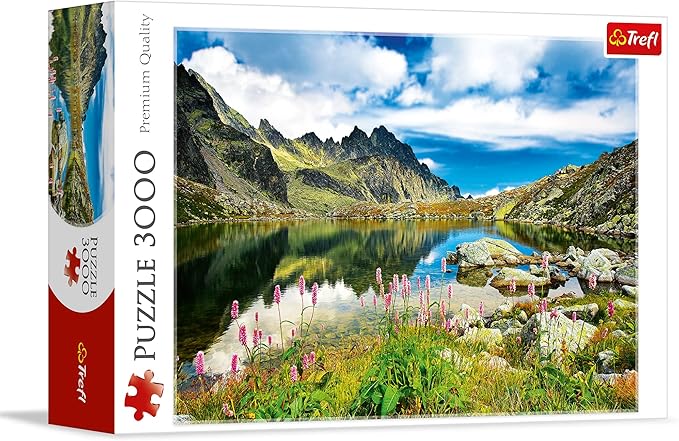
You didn't just… complete a puzzle; you traced the moment when a complex karst region was brought under a more coherent conservation framework.
Protected status mattered here not only because the landscape was valuable, but because karst systems are difficult to manage in fragments. Surface plateaus, sinkholes, and cave environments are connected, so a legal framework could treat them as parts of one system rather than isolated sites. That kind of structure also made later layers of recognition easier to build, linking local conservation practice with broader heritage protection.
The Caves of Aggtelek Karst and Slovak Karst were added to the UNESCO World Heritage List in 1995.
FAQ
What happened in Slovenský kras on 31 August 1973?
On 31 August 1973, Slovenský kras received the status of a Protected Landscape Area in Slovakia. This created a formal conservation framework for the region.
Where is Slovenský kras located?
Slovenský kras is in southeastern Slovakia, along the border with Hungary. It is the Slovak Karst, a limestone karst region.
Why was Slovenský kras protected in 1973?
The area contains caves, sinkholes, and plateaus that needed unified protection. The designation helped manage the region’s geological and ecological value under one legal regime.
What kind of landscape is Slovenský kras?
It is a karst landscape made of limestone. The region is documented for its caves, sinkholes, and plateaus.
How is Slovenský kras connected to UNESCO?
In 1995, the Caves of Aggtelek Karst and Slovak Karst were inscribed on the UNESCO World Heritage List. Slovenský kras is part of that wider cave system.