
About this story
Drégely Castle fell on 9 July 1552 during the Ottoman campaign in Hungary.
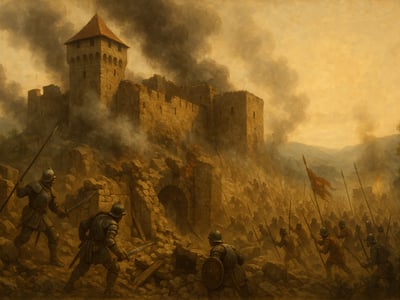
On 9 July 1552, Ottoman forces launched the final assault on Drégely Castle, a small frontier stronghold in Hont County in the Kingdom of Hungary. By the end of the fighting, the castle had fallen and its captain, György Szondy, was dead. In military terms, Drégely was not one of the largest fortresses in the region. Yet its loss captured a central reality of the mid-16th-century frontier: small castles often stood in the path of much larger campaigns, and their defenders had to decide whether resistance could still serve a purpose when the odds were plainly against them.
The siege took place during the Ottoman campaign of 1552, one of the most important campaigning years in the long struggle over central Hungary. After the defeat of the medieval Hungarian kingdom at Mohács in 1526, political authority in the region had fractured, and frontier warfare became a recurring condition of life. Castles, market towns, and river crossings mattered not only because of their local value, but because each point could help slow movement, signal danger, or protect nearby districts. Drégely belonged to this defensive world of border fortresses: not grand, but strategically relevant because it occupied a place within a wider chain of outposts.
That wider chain was under constant pressure. Ottoman armies and provincial forces were able to bring manpower and artillery to bear against isolated strongholds in ways that many local garrisons could not match. A frontier castle might have thick walls and a defensible position, but if it lacked reinforcements, supplies, or sufficient guns, its chances in a determined siege were limited. Drégely's garrison was small, and the attackers had the resources to break fixed defenses. The confrontation therefore raised a practical and human question at the same time: should a commander preserve the lives of his men by yielding, or hold the post and force the enemy to spend time and effort taking it?
György Szondy chose to continue the defense. The surviving outline of events is clear even if many details of the siege have been colored by later memory. Ottoman forces moved against Drégely as part of their operations in Hungary in 1552. The castle came under pressure from a larger besieging force equipped with artillery. Bombardment and assault were the standard means by which such a position could be reduced, especially if relief was unlikely. Drégely did not command the resources of a major fortress, but it still had to be taken in order to secure movement through the frontier zone.
In that sense, the siege was a test of the entire border system. Defensive networks depended on many small places holding long enough to complicate an invasion. If one strongpoint fell quickly, the surrounding region became more exposed. If it resisted even briefly, it could impose costs on the attackers and buy time elsewhere. This was why minor castles could matter far beyond their size. Their role was not always to win decisively, but to delay, warn, and fit into a larger strategic map.
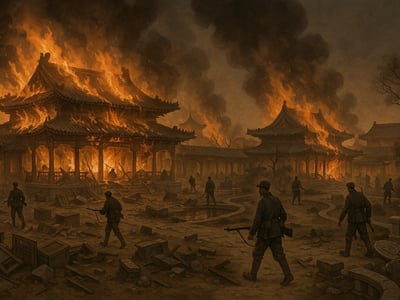
The final assault came on 9 July. Once the defense was broken, the castle fell to the attackers. Szondy was killed in the fighting, and Drégely became another Ottoman gain in the 1552 campaign. That campaign year also included other major operations in Hungary, among them the sieges of Eger and Temesvár, which helps place Drégely in proper context. It was one action within a broader offensive, but it reveals the varied scales at which that offensive operated. Great fortresses and small castles were both part of the same military geography.
Because Drégely later entered literary and commemorative tradition, it has often been remembered through the figure of Szondy himself. That later remembrance is historically important, but it should be handled carefully. Memorial traditions tend to simplify events, emphasize sacrifice, and give a clear moral shape to battles that were, at the time, bound up with logistics, regional defense, and the harsh constraints of frontier war. The basic facts are secure: a small garrison held Drégely against a larger Ottoman force, the final assault took place on 9 July 1552, the castle fell, and Szondy died in the fighting. Beyond that, historians rely on source comparison, especially because even matters such as exact Ottoman command attribution can vary across traditions.
Drégely's location also explains why the event belongs to a broader regional history. In 1552, Hont County was part of the Kingdom of Hungary, a political framework that included territories linked to what is now Slovakia as well as present-day Hungary. The castle therefore stands within a shared historical landscape of central European frontier defense, rather than fitting neatly into a single modern national story. That context matters when interpreting both the event itself and the memory built around it.
Why it still matters
The fall of Drégely helps explain how the defense of the Kingdom of Hungary worked in practice during the Ottoman wars. Large campaigns were not shaped only by famous battles or major strongholds. They also depended on whether small border fortresses could resist, delay, or at least force attackers to commit resources. Looking at Drégely makes the military geography of 1552 easier to understand: the campaign moved through a network of places, each with its own limits and importance.
The event also shows the vulnerability of isolated frontier positions. A small garrison could be disciplined and determined, yet still face overwhelming disadvantages if it lacked support against artillery and superior numbers. That is a useful reminder that early modern warfare was often decided as much by organization, supply, and concentration of force as by individual courage.
Finally, Drégely remains significant because of the way it was remembered. The death of György Szondy became part of regional literary and commemorative tradition, showing how episodes of border warfare could outlast their immediate military consequences. The castle's fall was one moment in a larger campaign, but its memory endured because it offered later generations a compact story about defense, loss, and the meaning assigned to frontier places.
Timeline
- Ottoman campaign in Hungary
- Ottoman-Hungarian frontier warfare
- Final assault on Drégely Castle
What you uncovered
Frontier Defense and Memory
You didn't just…place pieces together; you traced a moment when the fall of one small fortress exposed the pressures bearing on an entire frontier system.
Drégely matters not only because it fell, but because it shows how much early modern border defense depended on scattered strongholds that could be isolated and overwhelmed. A minor castle could still carry strategic weight by delaying movement, testing supply lines, or signaling weakness in a wider chain of positions. The event also shows how later regional memory can turn a local military loss into a lasting symbol, giving it a meaning broader than its immediate tactical outcome.
Drégely fell on 9 July 1552 during the same Ottoman campaign year that also included the sieges of Eger and Temesvár.
FAQ
What happened at Drégely Castle on 9 July 1552?
On 9 July 1552, Ottoman forces launched the final assault on Drégely Castle. The castle fell during the fighting as part of the Ottoman campaign against Hungarian frontier fortresses.
Who was György Szondy?
György Szondy was the captain of Drégely Castle. He was killed in the fighting on 9 July 1552 while defending the fortress.
Where was Drégely Castle located?
Drégely Castle was a border fortress in Hont County of the Kingdom of Hungary. It was in the region of present-day northern Hungary.
Why was the siege of Drégely part of the 1552 campaign?
The siege of Drégely was one part of the broader Ottoman operations in Hungary in 1552. That campaign year also included the sieges of Eger and Temesvár.