About this story
On 9 August 1867, Vavro Šrobár was born in Lisková. He later became a leading Slovak politician in the founding years of Czechoslovakia and a key figure in Slovak public life after 1918.
Vavro Šrobár of Lisková, later a physician and political figure in Czechoslovakia.
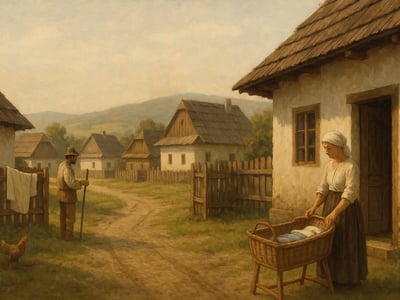
On 9 August 1867, Vavro Šrobár was born in Lisková, a village in what is now northern Slovakia but was then part of the Kingdom of Hungary within the Habsburg Monarchy. On that day, nothing in the record suggested a political turning point. It is remembered not because a public event unfolded there, but because it marked the beginning of the life of a man who would later become one of the better-known Slovak participants in the difficult transition from Austria-Hungary to Czechoslovakia.
From Lisková to a medical career
That distinction matters. A birth date is a fixed biographical fact, and in Šrobár's case it can be stated clearly: he was born in Lisková on 9 August 1867. The larger historical meaning attached to the date came only later, through the choices he made as an adult and through the upheavals of central Europe in the final years of the Habsburg state and the first months of Czechoslovakia.
Šrobár did not begin public life as a full-time politician. He trained as a physician, following a path that gave him education, social standing, and practical contact with ordinary people. In the late nineteenth and early twentieth centuries, figures from professions such as medicine, law, teaching, and journalism often moved into public life, especially in regions where questions of language, representation, and administration were tightly bound to politics. Šrobár's medical background belongs to that broader pattern. It also helps explain why later observers saw him as part of a generation of educated Slovaks who entered politics not from court circles or hereditary rank, but from professional work.
During the last decades of Austria-Hungary, Slovak public activity unfolded under constraints that shaped many careers. Political participation, cultural organization, and national advocacy did not occur in a stable or neutral environment. Men like Šrobár were formed in a setting where local initiative mattered, but where larger constitutional power remained elsewhere. For that reason, his later career cannot be understood as the natural outcome of his birth alone. It was built in response to changing institutions and the sudden collapse of an empire.
Public life under Austria-Hungary
The crucial break came in 1918. As Austria-Hungary disintegrated at the end of the First World War, questions that had long been discussed in programs, newspapers, associations, and private networks became urgent matters of government. The creation of Czechoslovakia required not only declarations and diplomatic recognition, but also administrative authority on the ground. This was the setting in which Šrobár became historically significant.
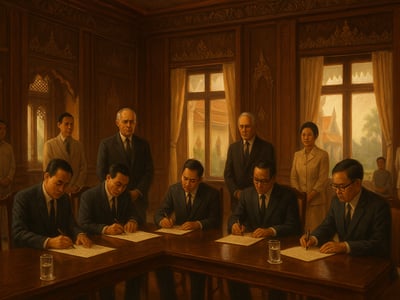
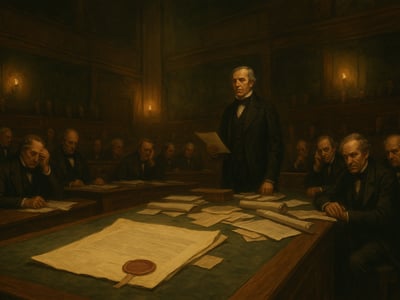
The date most securely tied to his rise in state office is 4 November 1918, when the Czechoslovak government appointed him minister with full powers for the administration of Slovakia. That title reflected the unsettled conditions of the moment. The new state existed in principle, but institutions in Slovakia still had to be organized, connected to Prague, and made workable in practice. Administration was not an abstract matter. It involved authority, communication, personnel, legality, and the basic question of who governed in a territory emerging from one state structure and entering another.
1918 and powers for Slovakia
This was a demanding position for anyone to hold. The early Czechoslovak government had to transform political claims into functioning institutions while also dealing with uncertainty, competing loyalties, and the uneven reach of central power. Šrobár's office placed him close to those pressures. His name therefore appears regularly in histories of the first Czechoslovak years, especially in accounts of how Slovakia was incorporated into the new republic's administrative framework.
His connection to the wider political transition of late 1918 also helps explain why he is sometimes mentioned alongside the events of 30 October 1918, when Slovak representatives meeting in Turčiansky Svätý Martin adopted the Martin Declaration in support of a common state with the Czechs. That episode is central to the history of Slovak participation in the founding moment of Czechoslovakia. At the same time, historians and careful summaries do not always describe each individual's exact role in identical terms, so it is important not to assign him a more specific part than the sources securely support. What can be said with confidence is that Šrobár belonged to the broader political generation shaped by that transition and soon held one of the key offices created by it.
A long career across Czechoslovak eras
His later life extended well beyond the founding moment of 1918. He remained a visible public figure across later decades of Czechoslovak history. Another verifiable point in that long career came on 14 September 1944, during the period of the Slovak National Uprising, when the Slovak National Council named Šrobár among its members. That detail links him not only to the establishment of Czechoslovak institutions after the First World War, but also to later efforts associated with wartime resistance and the anti-fascist political tradition.
Šrobár lived long enough for his biography to span several distinct eras: the Habsburg Monarchy, the founding of Czechoslovakia, the interwar republic, the crisis years around the Second World War, and the wartime resistance period. He died on 6 December 1950 in Olomouc, in Czechoslovakia. Seen across that full arc, the birth recorded in Lisková in 1867 becomes historically notable not because the day itself changed public affairs, but because it marked the start of a life repeatedly intersecting with major political transformations in central Europe.
Why it still matters
Šrobár's life remains useful to historians because it connects several levels of history that are often studied separately. At the most local level, it begins in a village setting in what is now Slovakia. At the professional level, it shows how a physician could move into politics in a period when educated elites often became organizers and officeholders. At the state level, it helps explain how Czechoslovakia's creation in 1918 depended not only on declarations and leading national figures such as Tomáš Garrigue Masaryk, Milan Rastislav Štefánik, and Edvard Beneš, but also on administrators who had to build institutions in contested and changing conditions.
His career also illustrates a broader feature of modern political history: moments of state transition often elevate people whose earlier training lay outside government itself. Šrobár's path from medicine to administration was not unusual for the period, but it is especially revealing because it unfolded during a major constitutional break. Following that path helps readers see state-building as practical work, not just as diplomacy or symbolism.
Finally, the long span of his public life links the founding of Czechoslovakia with later struggles over its survival and meaning. Because his name appears in both the early republic and the period of the Slovak National Uprising, his biography offers a thread through different chapters of Slovak and Czechoslovak history. Remembering his birth, then, is less about assigning dramatic importance to a single day than about recognizing where a consequential political life began.
Timeline
- Birth of Vavro Šrobár in Lisková
- Martin Declaration
- Appointment as minister with full powers for the administration of Slovakia
- Slovak National Council membership
- Death in Olomouc
What you uncovered
A Life That Became Statecraft
You didn't just…place a name on a timeline; you traced the starting point of a life that later entered the difficult work of building public institutions in a moment of political upheaval.
This date matters less as a turning point than as a reminder of how historians build significance carefully: a birth is documented first, and later importance comes from what followed. In Šrobár's case, that means looking to his movement from medicine into politics and to his 1918 administrative role, rather than projecting later outcomes back onto the day itself. It also shows how periods of state transition often drew professional figures into government, linking local political organization to new national institutions.
On 4 November 1918, the Czechoslovak government appointed Vavro Šrobár minister with full powers for the administration of Slovakia.
FAQ
When was Vavro Šrobár born, and where?
Vavro Šrobár was born on 9 August 1867 in Lisková. At that time, Lisková was in the Kingdom of Hungary within the Habsburg Monarchy.
Who was Vavro Šrobár in Slovak history?
Vavro Šrobár was a physician and politician who became active in public life during the final years of Austria-Hungary and the early period of Czechoslovakia. He is remembered for his later role in Slovak administration after 1918.
What office did Vavro Šrobár receive on 4 November 1918?
On 4 November 1918, the Czechoslovak government appointed Vavro Šrobár minister with full powers for the administration of Slovakia. This was part of the early organization of state authority in Slovakia.
How is Vavro Šrobár connected to the Martin Declaration?
Šrobár is often discussed in connection with the wider political transition around the Martin Declaration of 30 October 1918. The brief notes that his precise role should be confirmed from specialist sources.
What happened to Vavro Šrobár later in life?
On 14 September 1944, the Slovak National Council named Šrobár among its members during the Slovak National Uprising. He died on 6 December 1950 in Olomouc, Czechoslovakia.