
About this story
On 4 October 1941 authorities of the wartime Slovak Republic ordered about 10,000 Jews to leave Bratislava for fourteen designated towns. The state, led by President Jozef Tiso and Prime Minister Vojtech Tuka, had already imposed anti-Jewish measures, including the Jewish Code of 9 September 1941. Exemptions could turn on work the regime deemed necessary or on mixed marriage. Mass deportations from Slovakia began in March 1942.
Relocation order affecting Jewish residents of Bratislava, 4 October 1941
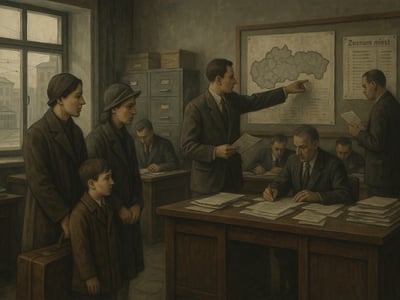
On October 4, 1941, authorities in the wartime Slovak Republic issued an order requiring about 10,000 Jews to leave Bratislava and relocate to fourteen designated towns elsewhere in Slovakia. For the capital's Jewish community, which numbered roughly 15,000 people at the time, the measure was not a minor administrative adjustment. It was a large-scale act of state persecution that disrupted homes, work, family life, and communal institutions, while tightening official control over where Jews could live.
An order to leave the capital
The order came during a period in which the Slovak state, led by President Jozef Tiso and Prime Minister Vojtech Tuka, had already introduced a growing body of anti-Jewish measures. By the autumn of 1941, Jewish life in Slovakia was increasingly shaped by legal restrictions, economic exclusion, and official classification. The Bratislava relocation order fit into that pattern. It did not stand apart from earlier discrimination; it intensified it by physically removing much of the Jewish population from the country's political and administrative center.
The measure was selective, but not in a protective sense. Exemptions depended on categories defined by the state. Some Jews whose work was considered necessary by the authorities could remain, at least temporarily. Some people in mixed marriages were also exempted. These categories reflected the logic of the regime: a person's right to stay in the city where they lived was no longer treated as a normal civil condition, but as something granted or denied according to political and administrative criteria.
Exemptions that divided people
That distinction mattered enormously in practice. A family that received no exemption could be ordered out of Bratislava regardless of how long it had lived there, whether it ran a business, or whether it was tied to local schools, synagogues, relatives, or care networks. A person's job could become the basis for remaining in place, but only if the state regarded that labor as useful. Marriage status could alter a person's treatment, not because persecution had lessened, but because officials were sorting people into bureaucratic categories that shaped how persecution was applied.
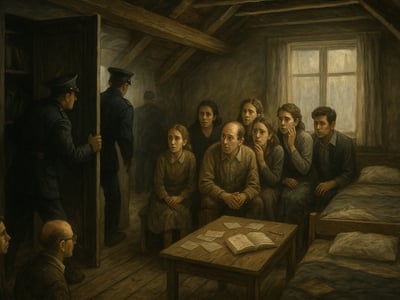
Although the order was framed through administration, its effects were immediate and human. Leaving Bratislava meant more than changing address. People risked losing housing, income, customers, neighbors, and access to institutions on which daily life depended. Community organizations that had developed in the capital could not simply be transferred intact. Forced relocation also created uncertainty in the receiving towns, where Jewish residents sent from Bratislava would be subject to wartime controls and continued surveillance.
Paperwork as persecution
The choice of Bratislava was itself significant. As the capital, it was not only the largest urban center in Slovakia but also an important site of Jewish religious, cultural, and economic life. Removing a large share of Jewish residents from that city carried symbolic as well as practical force. It reduced Jewish presence in the center of public life and demonstrated the state's power to redraw the social geography of the country. Persecution was not limited to confiscation or employment rules; it extended to determining who could remain visible in the capital at all.
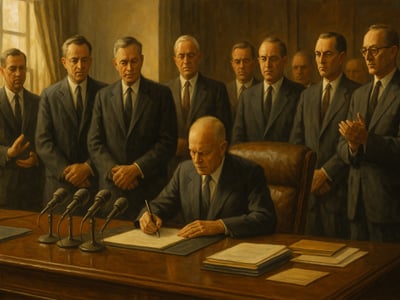
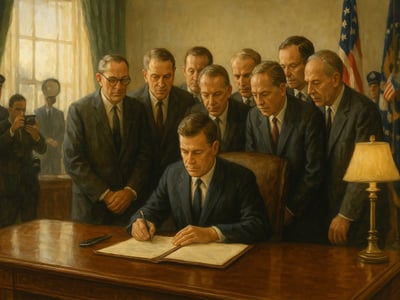
The relocation order also reveals how persecution could operate through routine paperwork and official procedure. Governments often use categories, exemptions, and designated zones for ordinary administration. In this case, those tools were used to exclude and uproot. The language of regulation could make a harsh policy appear orderly, but the underlying reality was coercion. Jewish residents were not choosing new opportunities or moving by preference. They were being compelled by state power to leave their homes under restrictive conditions.
Before the deportations of 1942
This moment is especially important because it came before the mass deportations from Slovakia that began in 1942. Looking back, the October 1941 order can be seen as part of a sequence. The Slovak state was already testing and expanding mechanisms of control: defining who counted as exempt, limiting residence, and concentrating Jewish populations in places the authorities selected. Such steps did not yet amount to deportation beyond the country's borders, but they helped prepare the administrative and political ground for more radical persecution.
Why it still matters
The Bratislava relocation order matters because it shows how anti-Jewish persecution advanced through government decisions that could be presented as administrative management. The order did not rely on battlefield chaos or spontaneous violence. It was documented, categorized, and enforced from above. That helps explain how exclusion became embedded in ordinary institutions of governance.
It also demonstrates the role of classification in persecution. Employment status and mixed-marriage status were not neutral details. They were criteria used by the state to divide people, assign unequal treatment, and make survival more precarious. Studying such measures helps clarify how bureaucratic systems can be turned into instruments of discrimination.
Finally, the event is an important part of understanding the Holocaust in Slovakia. The destruction of Jewish life did not begin with deportation trains alone. It developed through earlier measures that restricted rights, broke communities apart, and normalized official control over Jewish existence. The order of October 4, 1941, stands as one of those measures: a forced internal relocation that marked a further step in the persecution of Jews on Slovak territory.
Remembering it today means paying attention not only to the final stages of catastrophe, but also to the policies that made that catastrophe easier to carry out.
Timeline
- Slovak Republic issues the Jewish Code
- Order forces Jews to leave Bratislava
- Mass deportations from Slovakia begin
What you uncovered
Administration as Persecution
You didn't just… place pieces together; you traced how state policy pushed Jewish residents out of Bratislava through a forced relocation order.
Measures like this did not need mass deportation to do serious harm. By using residence rules, work classifications, and marital status as administrative filters, the state turned ordinary bureaucracy into a mechanism of exclusion. That helps explain how persecution could deepen step by step, before later deportations made the violence even more explicit.
The order affected about 10,000 people out of Bratislava's Jewish population of roughly 15,000 in 1941.
FAQ
What did the 4 October 1941 Bratislava order require?
On 4 October 1941, the Slovak authorities ordered about 10,000 Jews to leave Bratislava and move to fourteen designated towns in Slovakia. It was a forced relocation measure under state control.
How many Jewish residents were affected in Bratislava?
The order affected about 10,000 Jews in Bratislava. At the time, the city’s Jewish population was about 15,000.
Why were some Jews exempted from the relocation order?
Exemptions were tied to specific categories set by the authorities. These included some people in employment considered necessary and some people in mixed marriages.
Who governed Slovakia when the order was issued?
The measure was carried out during the wartime Slovak Republic under President Jozef Tiso and Prime Minister Vojtech Tuka. Bratislava was the city from which Jewish residents were removed.