
About this story
On 11 October 2001 the Mária Valéria Bridge reopened over the Danube between Esztergom in Hungary and Štúrovo in Slovakia. The iron bridge had first opened on 28 September 1895. On 26 December 1944 retreating German forces destroyed its central spans, and the direct crossing stayed broken for decades. Prime Ministers Viktor Orbán and Mikuláš Dzurinda attended the reopening, which restored everyday road and pedestrian traffic between the two towns.
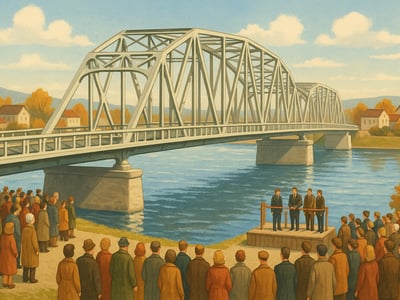
Mária Valéria Bridge reconnecting Esztergom and Štúrovo on 11 October 2001.
On 11 October 2001, the Mária Valéria Bridge over the Danube reopened between Esztergom in Hungary and Štúrovo in Slovakia, restoring a direct connection that had been missing for decades. The event marked more than the return of a local crossing. It reopened a route between two neighboring towns that could see each other across the river but had long been forced to live without a functioning bridge between them.
A late-19th-century crossing
The bridge had first opened in 1895, in the late 19th century, when bridges, railways, and roads were tying together the transport networks of Central Europe. Its position on the Danube gave it practical importance from the beginning. It linked Esztergom, a historic Hungarian town, with the settlement on the opposite bank now known as Štúrovo. For residents, traders, and travelers, it was a straightforward piece of infrastructure: a way to cross the river directly rather than detour elsewhere.
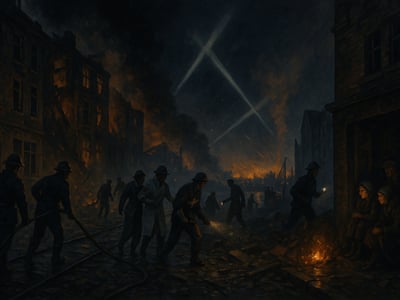
That ordinary function became impossible in the final phase of the Second World War. In 1944, retreating German forces destroyed the bridge's central spans. Like many crossings over major European rivers, the bridge became part of the wider wartime destruction of transport links. When the fighting ended, the damage remained. What had been a normal urban connection was turned into a long interruption.
The decades that followed gave the broken bridge a significance beyond engineering. Esztergom and Štúrovo were still close in geographic terms, but the direct path between them was gone. People on each bank could look across the Danube at a neighboring town while lacking the most obvious route to reach it. The absence of the crossing affected practical matters such as daily movement, local commerce, and access to services. It also became a visible reminder of how war damage can outlast the war itself.
Central spans destroyed in 1944
Rebuilding the bridge was not simply a technical question of replacing missing spans. It required political agreement, financing, and a shared willingness to make the crossing a common project. During the Cold War period, and before the broader post-1989 reshaping of Central Europe, that kind of cross-border effort was far harder to achieve. As a result, the interruption endured far longer than the original destruction itself.
After 1989, the political landscape changed. Hungary and Slovakia, now dealing with a new regional reality, had more room to pursue practical bilateral cooperation. In that environment, the Mária Valéria Bridge became an achievable and highly visible project. Restoring it offered clear local benefits, but it also carried wider meaning. A rebuilt crossing on the Danube could show that neighboring states were prepared to translate improved relations into concrete infrastructure.
A shared project after 1989
European cross-border support played an important role in making that possible. The reconstruction took place in the period before Slovakia joined the European Union, at a time when European funding and regional policy were encouraging projects that linked border regions more closely. In that sense, the bridge fit a broader Central European pattern: infrastructure was being treated not only as transport policy, but also as a tool for regional cooperation.
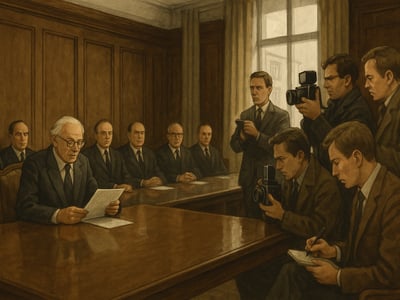
When the bridge reopened on 11 October 2001, the ceremony reflected that larger significance. Hungarian Prime Minister Viktor Orbán and Slovak Prime Minister Mikuláš Dzurinda both attended. Their presence signaled that the event was not merely municipal or technical. It was a bilateral occasion, tied to relations between the two countries as well as to the daily life of the two towns.
Traffic returns in 2001
Yet the meaning of the reopening remained grounded in ordinary use. A bridge matters most when people can cross it. The restored structure again allowed direct road and pedestrian movement between Esztergom and Štúrovo. That changed how residents could move through the area, how nearby businesses could interact, and how the river functioned in everyday life. Instead of marking a break, the Danube at that point once again had a practical crossing.
The Mária Valéria Bridge is therefore a useful example of how infrastructure can carry several layers of history at once. It began as a late-19th-century transport link, became a casualty of war in 1944, stood for decades as a sign of interrupted connection, and returned in 2001 as part of a new era of cross-border cooperation. None of those meanings replaced the others; they accumulated around the same physical structure.
Why it still matters
The bridge still matters because it shows how strongly transport links shape daily life in border regions. A missing crossing can limit mobility, complicate access to jobs and services, and weaken routine economic exchange even when two towns lie only a short distance apart. Reopening a bridge can therefore have effects that are both immediate and cumulative.
It also remains relevant as a post-1989 example of cooperation in Central Europe. The reconstruction depended on agreement between Hungary and Slovakia and on forms of European support designed to encourage cross-border projects. That combination of local need, bilateral coordination, and external funding became an important model in the region during the years after communism.
Finally, the story of the Mária Valéria Bridge is a reminder that the consequences of war often continue long after formal peace. Damage to a bridge can alter patterns of movement for generations. Rebuilding it does not erase the interruption, but it can change what a border means in practice. In 2001, the reopening between Esztergom and Štúrovo showed how a long-broken connection could be restored through planning, cooperation, and sustained political will.
Timeline
- Mária Valéria Bridge opens between Esztergom and Párkány
- Retreating German forces destroy the central spans
- Bridge reopens between Esztergom and Štúrovo
What you uncovered
A Bridge Beyond the Border
You didn't just… complete a puzzle; you retraced how restoring a single bridge helped turn a long break in everyday connection into a shared link across the Danube.
Bridges do more than carry traffic: they organize daily routines, local trade, and access to services in ways that become most visible when they disappear. The reopening of the Mária Valéria Bridge shows how infrastructure can survive political rupture as an idea, then return as a practical instrument of regional cooperation. In that sense, rebuilding it was not only about repairing war damage but about restoring a workable relationship between two urban communities facing each other across a border.
The Mária Valéria Bridge had originally opened in 1895, decades before its destroyed central spans were reconstructed for the 2001 reopening.
FAQ
When did the Mária Valéria Bridge reopen?
The Mária Valéria Bridge was formally reopened on 11 October 2001. The reopening restored a direct crossing between Esztergom and Štúrovo.
Which places does the bridge connect?
It connects Esztergom in Hungary with Štúrovo in Slovakia. The bridge crosses the Danube River.
Why had the bridge been unusable for so long?
Its central spans were destroyed in 1944 by retreating German forces during the Second World War. After that, the bridge remained out of use for decades.
Who attended the 2001 reopening ceremony?
Hungarian Prime Minister Viktor Orbán and Slovak Prime Minister Mikuláš Dzurinda attended the ceremony. Their presence marked the formal reopening of the bridge.
What helped make the reconstruction possible?
The reconstruction received European cross-border support before Slovakia joined the European Union. It was also part of broader Hungarian-Slovak cooperation after 1989.