
About this story
On 18 October 1748 diplomats at Aix-la-Chapelle, today Aachen, signed the treaty that ended the War of the Austrian Succession. The war had opened when Emperor Charles VI died in 1740 and Frederick II of Prussia seized most of Silesia. The peace confirmed Maria Theresa in the Habsburg hereditary lands and left most of Silesia with Prussia.
Treaty of Aix-la-Chapelle, signed in 1748 to end the War of the Austrian Succession
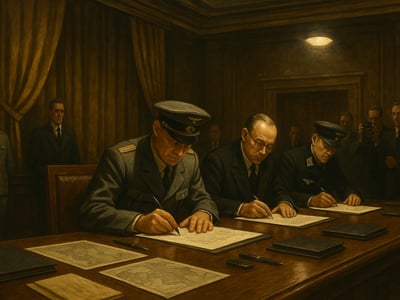
On 18 October 1748, diplomats at Aix-la-Chapelle signed the treaty that ended the War of the Austrian Succession, bringing to a close eight years of fighting over dynastic rights, territory, and the balance of power in Europe. The agreement did not restore everything to its prewar state, nor did it resolve every rivalry. Instead, it fixed the outcome that the war itself had already made difficult to reverse: Maria Theresa remained in possession of the Habsburg hereditary dominions, while Prussia kept most of Silesia.
A death, then Silesia
The road to that settlement began in 1740, when Emperor Charles VI died. For years he had worked to secure acceptance of the Pragmatic Sanction, the legal arrangement meant to allow his daughter Maria Theresa to inherit the Habsburg lands. In principle, many European powers had recognized it. In practice, his death opened an opportunity. Rival claimants challenged the succession, and several states moved quickly to pursue their own interests.
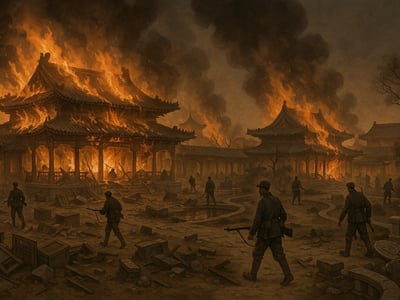
Among the most consequential moves was that of Frederick II of Prussia, who seized most of Silesia in 1740. Silesia was economically valuable and strategically important, and its loss would become one of the defining facts of Maria Theresa’s reign. What had begun as a dispute over dynastic legitimacy soon widened into a larger European conflict involving multiple powers, including Britain, France, Spain, Prussia, and the Habsburg Monarchy. The war spread across several theaters, linking court politics to campaigns on the ground.
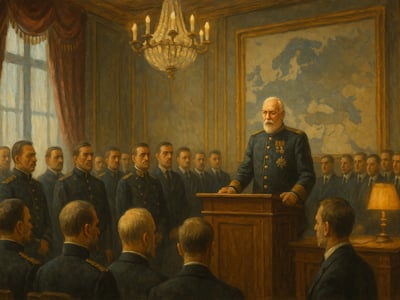
By the middle of the 1740s, the conflict had become the kind of war in which military victories did not easily produce a simple political conclusion. Armies fought, territories changed hands, and alliances pulled states in different directions. George II, Louis XV, Frederick II, and Maria Theresa all stood at the center of political systems that had to weigh prestige, cost, security, and the practical limits of continued war. Even when rulers hoped for better terms, they also faced mounting reasons to negotiate.
A congress at Aachen
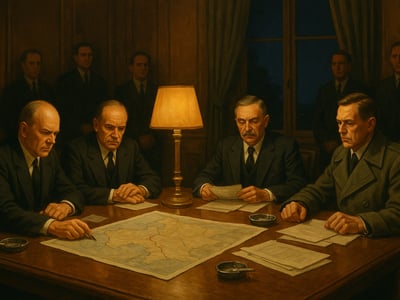
Aix-la-Chapelle, known today as Aachen, became the site of the diplomatic congress that attempted to transform battlefield realities into a formal peace. Negotiations in the eighteenth century were rarely about a single principle. They involved rank, legal claims, strategic geography, and reciprocal concessions. No major participant could expect a settlement that perfectly matched its aims. Peace required acceptance of compromise, and compromise meant recognizing gains that had once been fiercely contested.
That was especially true in the case of Maria Theresa. The treaty confirmed her in the Habsburg hereditary dominions, a crucial point after years in which her right to rule had been challenged. This mattered not only to Vienna but to the many lands governed within the Habsburg framework. At the time, the territory of present-day Slovakia formed part of the Kingdom of Hungary within the Habsburg Monarchy. The treaty was therefore not a distant abstraction for those lands. It helped define the dynastic and constitutional order under which they were administered, even though local populations had no direct role in the negotiations.
Recognition with a lasting loss
Yet recognition came with limits. The settlement also confirmed Prussian possession of most of Silesia, the wartime gain that Frederick II had secured and defended. This was one of the central concessions of the peace. For the Habsburg side, retaining the core hereditary dominions mattered greatly, but so did the reality that one of the monarchy’s most significant provinces would not be recovered in 1748. The treaty ended the war without undoing one of its most important territorial transformations.
Other terms reflected a broader effort to restore stability through mutual restitution. Several conquests were returned, including the Austrian Netherlands to Habsburg rule in 1748. Such provisions were typical of eighteenth-century diplomacy, in which settlements often balanced recognition of major changes with restoration elsewhere. Peace was not the same as victory in every theater. It was an attempt to produce a workable order after prolonged conflict.
A peace that settled the war, not the rivalry
This helps explain both the strength and the fragility of the treaty. It succeeded in ending the immediate war among the main belligerents. That was no small achievement after years of campaigning and political strain. But the peace did not erase the deeper competition between the Habsburg Monarchy and Prussia, nor did it remove the significance of Silesia from central European politics. The treaty marked a stopping point, not a final resolution of every issue that had surfaced since 1740.
For Maria Theresa, however, the settlement created room to consolidate rule. Recognition of her possession of the hereditary lands mattered because it transformed contested succession into accepted political fact. In the years that followed, she could govern from a more secure position than she had at the start of the war, even if the cost of that security was substantial. The treaty therefore represented both success and limitation: dynastic survival, but not complete restoration.
Why it still matters
The Treaty of Aix-la-Chapelle remains important because it shows how eighteenth-century Europe often functioned through a combination of dynastic law, military force, and negotiated settlement. The war had begun with a succession crisis, but its outcome depended as much on what armies held and what diplomats would finally acknowledge as on any original legal principle.
It also mattered for the balance between the Habsburg Monarchy and Prussia. By confirming Prussian control of most of Silesia, the treaty recognized a change that would shape later central European diplomacy. The rivalry between those two powers did not end in 1748; in many ways, the settlement clarified its new terms.
For lands within the Kingdom of Hungary, including the territory of present-day Slovakia, the treaty is a reminder of how political frameworks could be settled from above. Decisions made at a European congress determined the structure of rule under which these lands were governed, despite the absence of local representation at the negotiating table. That makes the treaty a useful example of how large diplomatic settlements could define everyday political realities far beyond the city where they were signed.
In that sense, Aix-la-Chapelle was more than the formal end of a war. It was a statement about what Europe’s leading powers were prepared to accept in 1748: Maria Theresa in possession of the Habsburg lands, Frederick II in possession of most of Silesia, and a peace built not on perfect justice for every claim, but on a settlement strong enough to hold for the moment.
Timeline
- Death of Charles VI
- Prussian seizure of Silesia
- Treaty of Aix-la-Chapelle signed
What you uncovered
The Limits of Peace
You didn't just… complete a puzzle; you traced how a peace agreement could secure Habsburg rule while also accepting new limits on that rule.
The Treaty of Aix-la-Chapelle did more than stop a war: it turned a contested succession into a workable political order. But that stability came with a boundary, because recognizing Maria Theresa also meant accepting that some wartime changes, especially in Silesia, would endure. For lands governed within the Habsburg Monarchy, the settlement shows how major diplomatic decisions could define the framework of rule without local participation.
The 1748 peace also restored the Austrian Netherlands to Habsburg rule as part of a broader exchange of conquered territories.
FAQ
What happened on 18 October 1748?
On 18 October 1748, the Treaty of Aix-la-Chapelle was signed at Aix-la-Chapelle. It ended the War of the Austrian Succession among the main European belligerents.
Who was recognized by the treaty?
Under the settlement, Maria Theresa was recognized in possession of the Habsburg hereditary dominions. The treaty helped confirm her position after the succession crisis.
What did the treaty decide about Silesia?
The 1748 treaty confirmed Prussian possession of most of Silesia. This kept the territorial change Frederick II had secured during the war.
How was present-day Slovakia connected to the treaty?
Present-day Slovak territory was part of the Kingdom of Hungary within the Habsburg Monarchy. The treaty mattered there because it helped define the dynastic state framework governing those lands.